


Paper tiger or stealth titan: China’s top nuclear submarine may be leaking location
The Type 094 is China’s answer to America’s Ohio-class nuclear warhead submarines. But how does it compare?

0:00 / 0:00
China’s Type 094 Jin-class submarine is its first bona fide nuclear deterrent at sea. Nuclear-powered and nuclear-armed, this underwater missile silo is a true feat of Chinese engineering.
But how does it compare to U.S. and Russian counterparts? Despite its capability to launch long-range nuclear missiles, experts are less than impressed by it. With reports of excessive noise, is the Type 094 a serious threat or a paper tiger?
Let’s find out.
What is the Type 094 submarine?
The Type 094, nicknamed the “Jin” class by NATO, is a nuclear-powered ballistic missile submarine (SSBN) that forms the vanguard of China’s naval nuclear deterrent force. Operated by the People’s Liberation Army Navy, six are considered operational, with at least two currently planned.
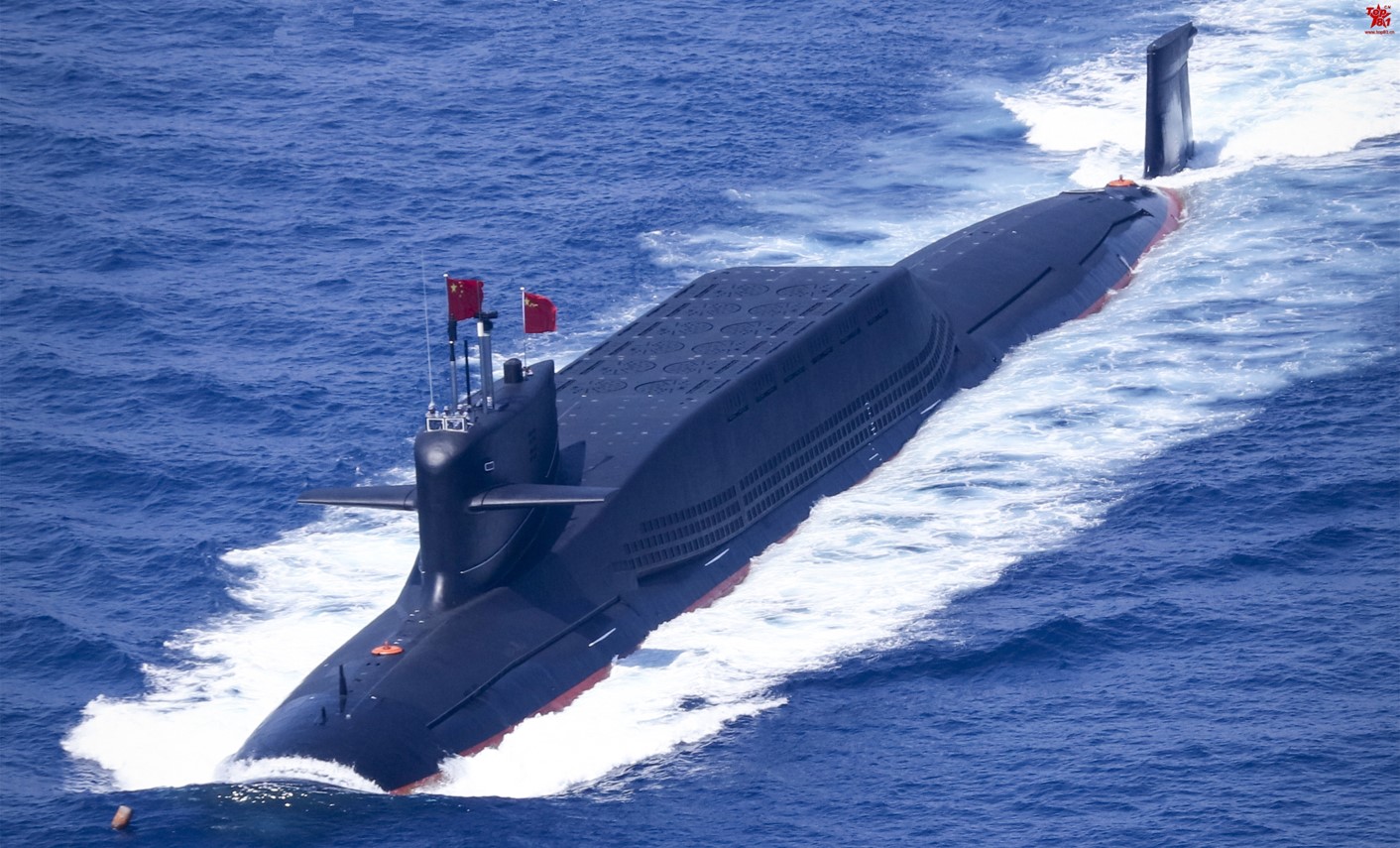
First laid down in 2001, the first of its class, the Changzheng 10, was shortly followed by its sister, the Changzheng 11, the following year. A third was laid down in 2004, and China has never officially disclosed how many it has on its roster.
Since the introduction of the Changzheng 10, further refinements and advancements have been made to the design, culminating in the Type 094A variant. The first of which was commissioned in 2018.
Experts believe China has at least two of these in operation. The Military Today has reported two more Type 094s (likely Type 094As) were launched between 2017 and 2018.
The submarine’s design is based on the Type 093 nuclear-powered attack submarine and replaced China’s only known predecessor, the Type 092 SSBN. Like other nation’s SSBNs, the Type 094 is armed with a submarine-launched ballistic missile (SLBM), including China’s 4,500 miles (7,200 km) range Julang-2 (JL-2) and improved 6,200 miles (10,000 km) JL-3 missiles.
Each Type 094 reportedly carries a complement of 12 missiles, each carrying a single nuclear warhead. Theoretically, this complement of missiles could enable the Type 094 to hit targets in Guam, Hawaii, and possibly Alaska.
Those armed with the longer-range JL-3 missiles could theoretically threaten continental United States targets. Such capabilities have prompted the United States Department of Defence (DoD) to state that it is China’s “first credible sea-based nuclear deterrent.”
Should NATO be worried?
The class is set to be replaced by the larger and more advanced Type 096 (NATO nickname “Tang”) by the end of the 2030s. However, little else beyond speculative imagery of pressure hull construction at the Huludao shipyard is known about this class.
While the Type 094 is a vast improvement over its predecessor, it appears to suffer from similar problems. Namely, it is not the quietest of boats around.
In fact, according to those in the know, the submarine is much louder than its American or Russian equivalents. According to the U.S. Office of Naval Intelligence, the Jin-class submarines are noisier than the Soviet-era Delta III SSBN.
Some reports indicate that it has an acoustic signature of around 120 decibels. That is about as “quiet” as America’s aging Los Angeles-class nuclear-powered attack submarine. The first of this class was commissioned in the 1970s, with the United States Navy retiring all but twenty-four to date.
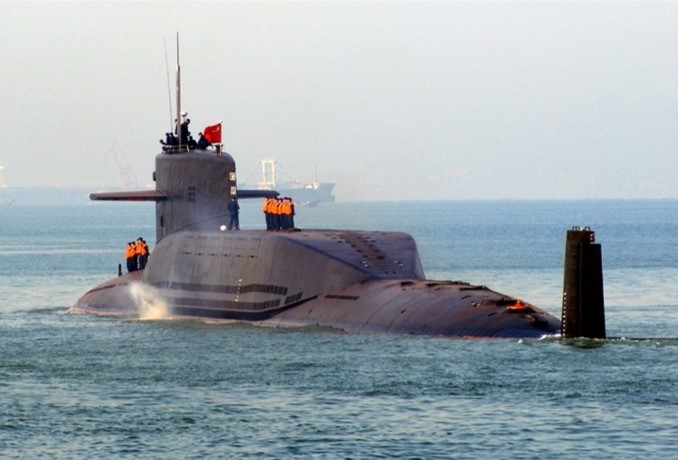
This less-than-ideal running noise would make the submarine relatively easy to detect and track, mainly as it would need to travel in bluewater to present an actual deterrent to potential adversaries. It would, therefore, struggle to avoid interception from the United States’ naval assets.
One arm tied behind its back
Another issue, as pointed out by the National Interest, is Beijing’s nuclear doctrines. As they report, the Center for Strategic and International Studies has discovered that the Chinese military is reluctant to deploy its nuclear warheads in peacetime, preferring to keep its warheads detached from their delivery systems until needed.
While sound from a safety and security point-of-view, such doctrine severely hampers the ability to deploy such weapons rapidly. Unlike the U.S. and Russia, whose SSBNs remain on continuous patrol with fully armed missiles, China’s reluctance to mate warheads with their missiles reduces the effectiveness of its deterrence.
The PLA also lacks the extensive experience that other navies, like the United States and Russia, have regarding this kind of nuclear deterrent. For this reason, to borrow a phrase, many see the Type 094 as something of a paper tiger.
Loud and proud
One hundred twenty decibels is roughly as loud as a clap of thunder or a chainsaw in action on land. To put it mildly, that is deafening when it comes to a war machine that is supposed to be as stealthy as possible.
However, a direct comparison of this kind is not helpful as the “noise” of a submarine spreads out rapidly throughout a body of water. Any quoted figures, like those for Type 094, are typically derived from standardized methods called the source level (SL).
How this is calculated varies between nations, but the United States typically calculates it by placing a recording sensor a set distance from the hull. The process is a lot more complicated than this, but this helps provide a way to compare the acoustic performance of submarines under certain conditions (like depth and running speed).
It is also important to remember that the decibel scale is not linear but logarithmic. So, a change of 10 decibels is ten times bigger. So, to put the Type 094’s acoustic performance into perspective, the famed Russian Akula-class is ten times “quieter” with an SL of 110 dB.
Most modern American submarines, like the Virginia-class attack submarine, can sneak around under the ocean, emitting no more than 95 decibels. The United States Navy’s own SSBN, the Ohio-class is also noted as being very quiet, but no publically recorded SL are available, for obvious reasons.
Silent but deadly
It is also important to note that the sea is not the quietest place on Earth. Sound levels vary, but on average, the ocean’s background noise approaches something like 90 dB.
Anything close to this ambient noise level can effectively allow a submarine to “blend in” to the background. It is important to note that the relative sound of a submarine depends on various factors like speed (lower speed = less cavitation = less noise), the ship’s design, and its use of sound-dampening technology.
This could include anechoic tiles to absorb sonar, quiet propellers and turbine electric drives, and pump-jet propulsion. The latter is considered the most advanced and “stealthiest” submarine propulsion.
And that is your lot for today.
While the Type 094 has pushed China’s sea-based nuclear deterrence forward, its limitations raise questions. How effective it is as a nuclear deterrent is yet to be seen, but let’s hope it never has to be put to the test.
For all our sakes.
Recommended Articles
0COMMENT
Christopher graduated from Cardiff University in 2004 with a Masters Degree in Geology. Since then, he has worked exclusively within the Built Environment, Occupational Health and Safety and Environmental Consultancy industries. He is a qualified and accredited Energy Consultant, Green Deal Assessor and Practitioner member of IEMA. Chris’s main interests range from Science and Engineering, Military and Ancient History to Politics and Philosophy.
- 1Allag-E: Interceptor aircraft can hunt and kill drones flying at 124 mph like an eagle
- 27 of the world’s most powerful tidal turbines generating megawatts under sea
- 3US firm unveils low-cost exoatmospheric interceptor to kill missiles mid-flight
- 4Sodium EV battery beats lithium in charging speed and temperature stability: Study
- 5World’s first mass-producible nuclear reactor making company gets funding boost


