


Russia’s satellite games are testing the boundaries of space deterrence
Analysts warn the Russian satellite could be maneuvering in preparation for a potential future attack on its American counterpart.

0:00 / 0:00
‘Front Lines,’ Christopher McFadden’s’ column, examines warfare past, present, and future. McFadden analyzes cutting-edge military tech, and global defense policies, highlighting the forces shaping our world’s security landscape.
On June 28, 2025, a Russian satellite deployed a smaller subsatellite near a US spy satellite, USA 326. The move has sparked fresh concern within the national security and space communities.
The Russian spacecraft, Kosmos-2558, has been shadowing USA 326 since 2022. Now, by releasing a new object into a nearly identical orbit, Russia may be signaling new intent or capability in space-based countermeasures.
Whether this was a deliberate show of strength or a covert weapons test remains unknown. But it is feeding growing concerns around Russia’s space-based weapon system capabilities. Russia’s advances in anti-satellite (ASAT) technology are particularly concerning, especially those disguised as so-called “inspector” satellites.
So what are we witnessing here? A provocation? A capability test? Or the first steps in the militarization of low Earth orbit?
ASATs in disguise?
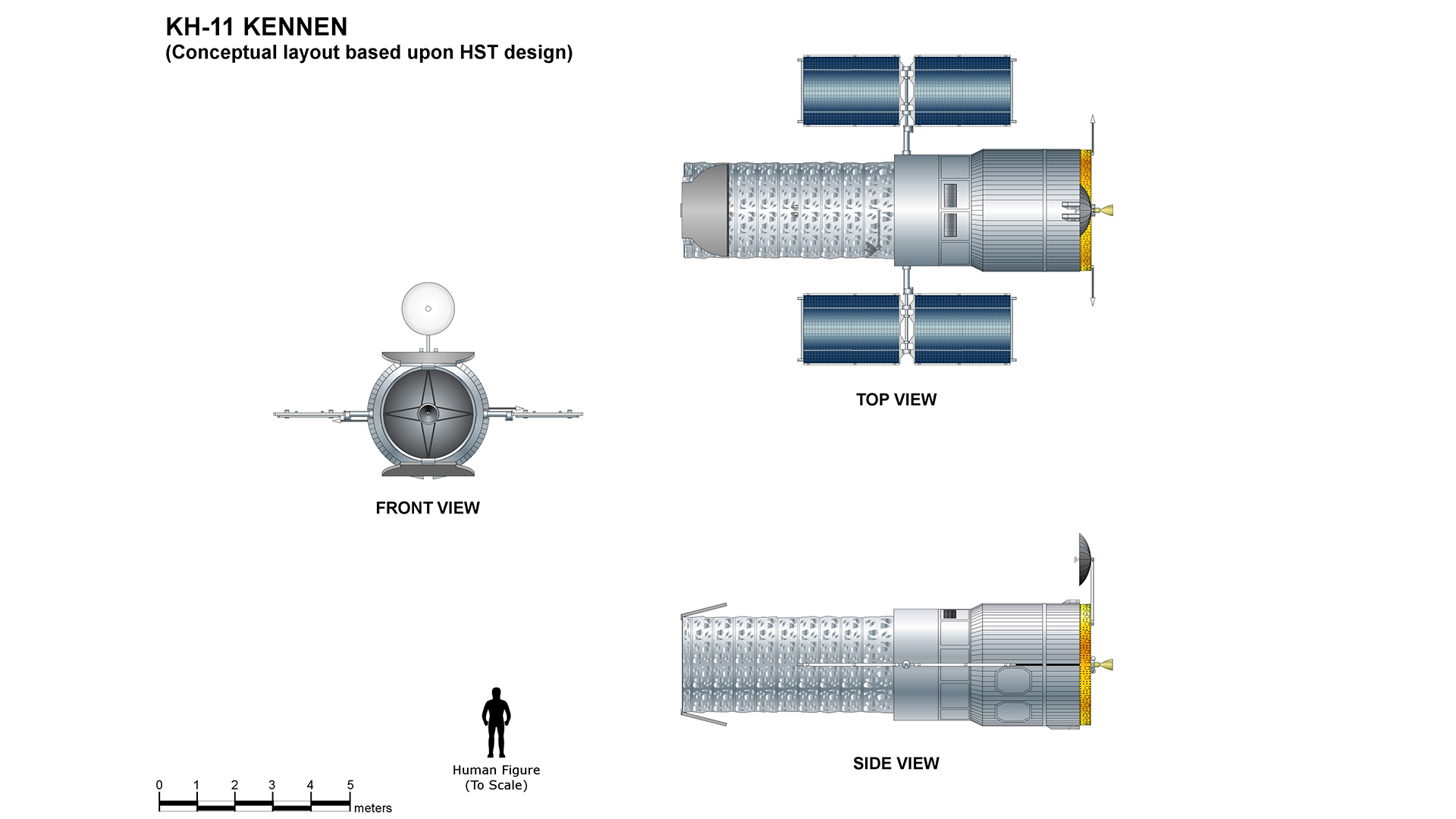
Kosmos-2558, launched in August 2022 from Russia’s Plesetsk Cosmodrome aboard a Soyuz-2.1b, has maintained close proximity to USA 326, a classified American reconnaissance satellite believed to be a KH-11 “KENNEN” Enhanced Crystal optical imaging platform.
In June 2025, it deployed a subsatellite—catalogued as Object C (NORAD ID 64627)—just 16 seconds after passing a tracking frame. This is a move seen by analysts as deliberate and timed.
The subsatellite appears highly maneuverable, and US analysts believe it may be armed with kinetic ASAT capabilities, meaning it could disable or destroy other satellites. However, it is essential to note that this is pure speculation, and no aggressive actions have yet occurred.
“Although these missions are officially described as inspection operations, I’ve repeatedly expressed concerns that we’re actually witnessing the deployment of dormant anti-satellite systems,” Dr. Marco Langbroek, a lecturer at the Delft Technical University in the Netherlands, wrote in his analysis.
“Personally, I find it strange that a Russian satellite has been trailing one of America’s most valuable space assets for over three years. What more is there to ‘inspect’ at this point?” he wrote.

Russia has done this before
Analysts have also noted that it is crucial to recognize Russia’s history of similar behavior. Previous “inspector” satellites (Kosmos-2519, 2542) also deployed subsatellites (2521, 2543) that fired projectiles in space, widely interpreted as anti-satellite tests.
Amateur space sleuths also note that “two other Nivelir satellites (Cosmos-2576 and 2588) are co-planar with USA 314 and USA 338, respectively,” as reported on Sat Obs.
Experts have likened this nesting behavior to “space matryoshka dolls” (AKA Russian Dolls) where satellites may serve to conceal secondary payloads or weapons until the right moment.
“Both of those [Russian] satellites showed significant manoeuvring capability and each fired a high-speed projectile that the Pentagon interpreted as an anti-satellite weapon,” Bart Hendrickx, a long-time space researcher and Russian space program expert, wrote in his blog.
“This happened when they were flying in the vicinity of other Russian satellites,” he added. What is interesting to note is that the long delay (nearly 3 years) between Kosmos-2558’s launch and the deployment of Object C is unusual.
It’s seen as a sign that the satellite was either waiting for a strategic moment or had a covert mission timeline. The satellite is still closely mirroring USA 326, maintaining similar altitude, speed, and orbital plane in a maneuver called “space stalking.”
Is the US overreacting?
In short, it appears not.
USA 326, launched aboard a SpaceX Falcon 9 in February 2022 from Vandenberg Space Force Base, is one of the US’s most advanced real-time imaging assets. It is believed to be operated by the National Reconnaissance Office (NRO). A Russian satellite maneuvering so closely to such a high-value American platform raises legitimate alarm.
Deploying potential weapons in orbit risks turning space into an active military domain. If an ASAT system were used, it could spark conflict or escalate tensions rapidly.
Russia is also suspected of developing space-based nuclear weapons, which would be a significant violation of international treaties (notably the Outer Space Treaty of 1967).
Complicating matters, China is reportedly launching satellites on behalf of sanctioned Russian-linked firms. It is also believed to be pursuing its own orbital weapons and high-speed space vehicles, suggesting a possible three-way space arms race.
The real Star Wars?
This isn’t new territory. Russia and the US have been developing space weapons since the earliest days of the Cold War. Apart from the ASATs above, which this new Russian satellite could be an example of, other high-profile weapons systems have been proposed for many decades.
One well-known example is the “Rods from God” weapon system. While theoretical (as far as we know), this system would rely on tungsten projectiles dropped from space at hypersonic speeds.
Another, called Molten Metal Railguns (MMR), is a US-developed technology that shoots jets of molten metal in space. However, these new Russian satellites are less dramatic by comparison.
If bona fide ASATs are used, they’ll likely employ less sophisticated kinetic weaponry to knock out rival satellites in orbit. However, while it is unlikely to be used to wreak havoc on Earth, the implications of destroying adversary space-based assets are still a worrying development.
And that is your lot for today.
While no hostile action has occurred, the pattern of behavior by Kosmos-2558 fits a concerning trend. Coupled with China’s rising activity and limited transparency, Russia’s deployment adds pressure to the US and NATO space strategy.
Expect more investment in satellite hardening, responsive launch systems, and space situational awareness. These incidents may renew calls to update or enforce space arms treaties, but geopolitical tensions suggest consensus may be elusive.
For now, the skies remain quiet, but carefully watched.
Recommended Articles
0COMMENT
Christopher graduated from Cardiff University in 2004 with a Masters Degree in Geology. Since then, he has worked exclusively within the Built Environment, Occupational Health and Safety and Environmental Consultancy industries. He is a qualified and accredited Energy Consultant, Green Deal Assessor and Practitioner member of IEMA. Chris’s main interests range from Science and Engineering, Military and Ancient History to Politics and Philosophy.
- 1Allag-E: Interceptor aircraft can hunt and kill drones flying at 124 mph like an eagle
- 27 of the world’s most powerful tidal turbines generating megawatts under sea
- 3US firm unveils low-cost exoatmospheric interceptor to kill missiles mid-flight
- 4Sodium EV battery beats lithium in charging speed and temperature stability: Study
- 5World’s first mass-producible nuclear reactor making company gets funding boost


