


Falcon 9 can’t be the only rocket that matters
Rocket Lab’s Neutron and New Glenn mark the first serious challenge to SpaceX’s dominance. The stakes go well beyond launch costs.

0:00 / 0:00
Chris Young’s Beyond Earth column explores the intersection of space technology and policy, providing thought-provoking commentary on the latest advancements and regulatory developments in the sector.
We are on the verge of a new era in spaceflight. On August 29, New Zealand and US-based space firm Rocket Lab announced the opening of its first Neutron rocket pad, Launch Complex 3. At NASA’s Wallops Flight Facility on Wallops Island, Virginia, the pad will host the company’s new reusable rocket, Neutron, a direct challenge to SpaceX’s long-running dominance with Falcon 9.
Rocket Lab’s founder, Sir Peter Beck, has made no secret of his ambitions. Last year, he told Interesting Engineering that Neutron will “restore balance to the medium launch category.”
Balance is exactly what the sector needs. For the better part of a decade, SpaceX has operated with little meaningful competition. That monopoly has delivered extraordinary technical progress, but it has also left the rest of the industry playing catch-up.
Rocket Lab will be joined by plenty of other competitors.
SpaceX’s Starship and Falcon 9: The benchmark for modern launch systems
On August 27, just two days before Rocket Lab announced the opening of its Neutron rocket pad, SpaceX’s Starship rocket took off for its tenth flight test. After months of setbacks for Elon Musk’s private space company, the latest launch was a rousing success. Starship achieved several key milestones.
Starship, the largest and most powerful rocket ever built, deployed Starlink simulator satellites into orbit during its tenth integrated flight test (IFT-10). The upper stage, Ship 37, then performed a controlled splashdown over the Indian Ocean. The Super Heavy booster performed its own splashdown in the Gulf of Mexico.
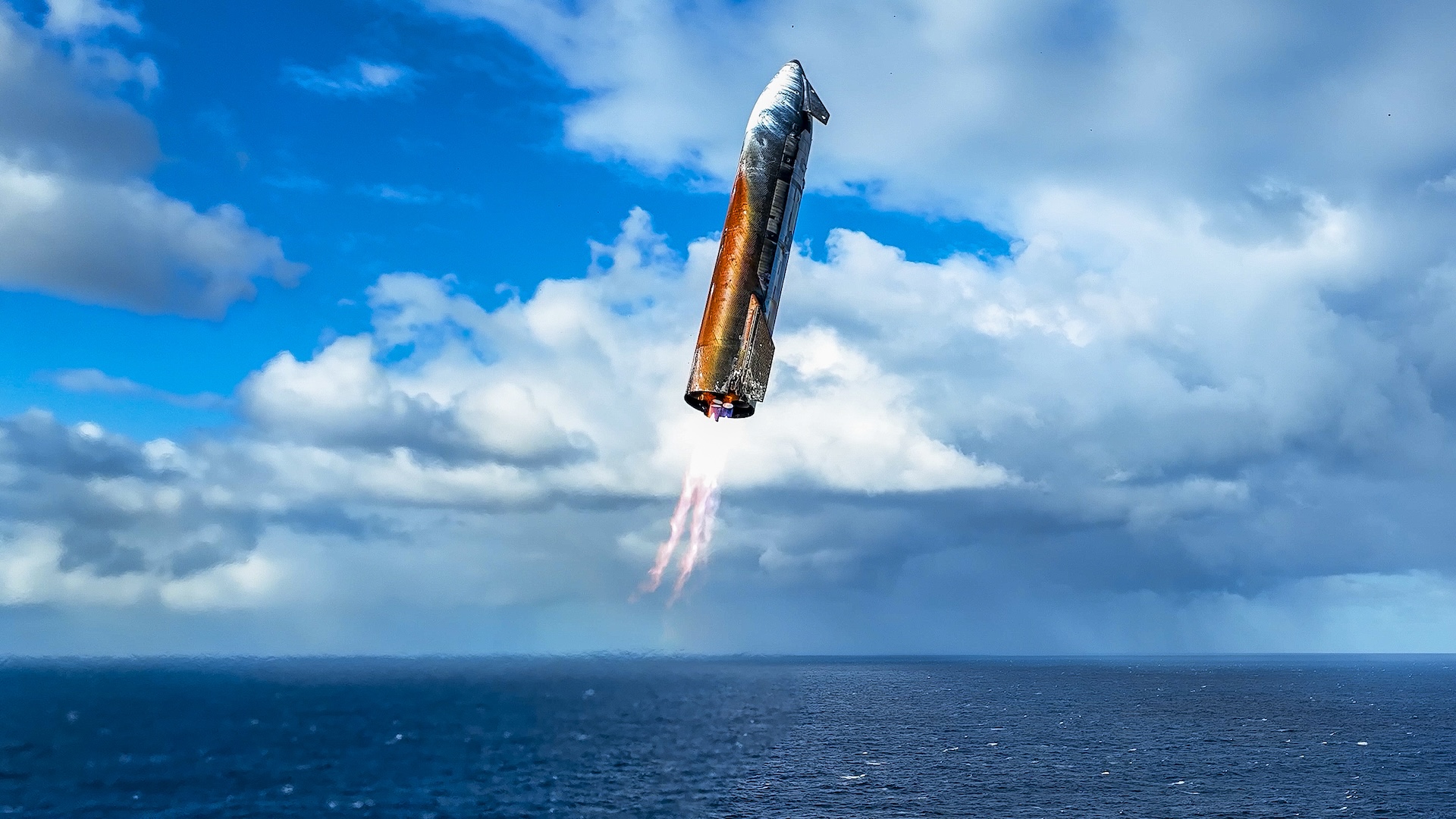
Questions do remain over Starship, especially regarding its on-orbit refueling capabilities. However, SpaceX will be happy to have bounced back from a string of less-than-optimal flight tests prior to IFT-10.
Falcon 9, meanwhile, is the gold standard for privately built medium-lift rockets. The Falcon 9 program pioneered reusable vertical rocket technologies and has achieved an unprecedented launch cadence in recent years – in 2024 alone, the partially reusable rocket flew 132 times. Falcon 9 has suffered just two in-flight failures and one partial failure, giving it an impressive success rate of roughly 99.44%. The rocket has more than 530 flights under its belt.
Neutron: Rocket Lab’s reusable contender
The Neutron rocket is a medium-lift launch vehicle capable of lifting payloads to 28,660 pounds (13,000 kilograms) to low Earth orbit. The rocket will stand 141 feet (43 meters) and its first stage will be fully reusable. Nine of the company’s Archimedes engines, fueled by liquid methane and liquid oxygen, will power the first stage skyward.
Neutron will perform vertical landings like those pioneered by SpaceX’s Falcon 9 program. The new rocket has a few surprising tricks up its sleeves, though. One example is an innovative reusable captive ‘Hungry Hippo’ fairing that stays attached to Neutron’s first stage.

Rocket Lab has stood apart over the years with its unconventional helicopter rocket capture attempts – ultimately, the company decided the method wasn’t feasible. It also has a successful operational rocket, Electron, that has flown 70 times, with a success rate of 94.3 percent. Rocket Lab is on track to launch Neutron for the first time by the end of the year, thanks in part to the opening of its new rocket pad in Virginia.
New Glenn: Blue Origin’s first orbital rocket
It’s easy to forget that Jeff Bezos founded his private space company in 2000, two years before Elon Musk started SpaceX. Despite being an older company, Blue Origin has flown to orbit just once with its NG-1 mission in January this year.
Still, New Glenn has great potential in positioning Blue Origin as a strong SpaceX competitor. The rocket stands 320 feet (98 meters) tall, roughly the equivalent of a 32-story building. Though it flew with a reduced payload capacity on its first flight, New Glenn will eventually carry 99,000 lb (45,000 kg) to LEO. That’s nearly double the 50,265 lb (22,800 kg) Falcon 9 flies to LEO.
In reality, New Glenn is part of the heavyweight class of launch vehicles, competing with the more powerful Starship. It’s worth pointing out that New Glenn was designed to be operational from its first flight. Unlike Starship, which is undergoing a long and explosive flight test campaign, New Glenn should be capable of achieving operational mission objectives by its second flight.
In theory, this means that Blue Origin is in possession of the world’s most powerful operational single-booster rocket. Of course, that’s not to say it will have the same success or that it will be anywhere near as prolific as Falcon 9. In fact, it’s been a long time coming, but New Glenn is finally set to fly for the second time later this month. The rocket will launch two NASA Mars probes to space, with a launch date currently set for September 29, according to Blue Origin.
Honorable mentions
Blue Origin and Rocket Lab are arguably in the best position to challenge SpaceX with their next-generation rockets. However, traditional contractors are also looking to regain their edge.
For example, the United Launch Alliance’s Vulcan Centaur has flown three times to date. The rocket, which stands 202 feet (61.6 meters), can lift 60,000 lb (27,200 kilograms) to orbit. Vulcan’s “SMART Reuse” system aims to recover BE-4 engines via parachute, but this remains unproven.
Meanwhile, European contractor Arianespace’s Ariane 6 rocket can lift up to 47,400 lbs (21,500 kilograms) to orbit, depending on its configuration. Much like Vulcan Centaur, it is not reusable.
Many young startups are also looking to edge their way into contention. One outlier, Spain’s PLD Space, recently announced ambitious plans to take on SpaceX from Europe. It has much to prove, though, as it has only flown one mission to date – a suborbital launch of a reusable rocket, Miura 1, that was never recovered.
The first flight of PLD Space’s orbital Miura 5 rocket is expected early next year. In December last year, the company announced a new line of reusable Miura rockets and a European reusable crew capsule called LINCE.
In short, the future of space cannot be left to a single company, no matter how innovative. SpaceX has transformed launch economics, but it has also become the de facto gatekeeper for governments and private firms alike. That concentration of power is strategically risky.
The emergence of Neutron and New Glenn suggests a shift is underway. If either achieves even half the cadence and reliability of Falcon 9, the private space industry will finally move from a one-horse race to a true competition. And competition matters.
In the 21st century, the ability to reach orbit is not just a commercial advantage, it is geopolitical leverage. The companies that master reusability and scale will hold the keys to space, and by extension, to power on Earth.
Recommended Articles
0COMMENT
Chris Young is a journalist, copywriter, blogger and tech geek at heart who’s reported on the likes of the Mobile World Congress, written for Lifehack, The Culture Trip, Flydoscope and some of the world’s biggest tech companies, including NEC and Thales, about robots, satellites and other world-changing innovations.
- 1US: Last Energy raises funds to mass produce steel-encased micro nuclear reactors
- 2China: World’s largest-diameter boring machine reaches 6-mile tunneling milestone
- 3Sweden unveils Europe's first car park constructed using recycled turbine blades
- 4China's ultra-hot heat pump could turn sunlight into 2,372°F thermal power for industries
- 5Solar storm could cripple Elon Musk's Starlink satellites, causing orbital chaos


