
Explained: Order reserved
The landmark judgment was about laying down yardsticks for defining social, economic backwardness in changing India.
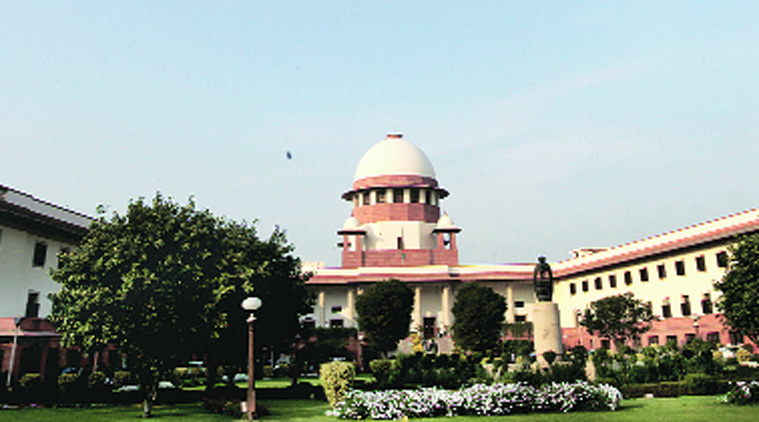 The landmark judgment wasn’t just about Jats, it was about laying down yardsticks for determining and defining social and economic backwardness in changing India.
The March 17 Supreme Court verdict on Jat reservation broke new ground in the legal and constitutional scrutiny of affirmative action by the state. The landmark judgment wasn’t just about Jats, it was about laying down yardsticks for determining and defining social and economic backwardness in changing India. UTKARSH ANAND explains how.
What does the Constitution say about reservations?
Under Art 15(4) and 16(4), the state can make special provisions, including reservation in public employment, for the advancement of any socially and educationally backward class, SCs and STs. Under Art 38, the state must work to eliminate inequalities in status, facilities and opportunities amongst groups of people. Art 46 asks the state to promote educational and economic interests of weaker sections, particularly SC/ST, and protect them from social injustice and exploitation. Art 355 says claims of SC/STs shall be taken into consideration for government jobs.

How has the SC interpreted the state’s powers to make special provisions?
The 1992 Indra Sawhney (Mandal Commission) judgment laid down the limits of the state’s powers: it upheld the ceiling of 50 per cent quotas, emphasized the concept of “social backwardness”, and prescribed 11 indicators — under the broad heads of social, economic and educational — to ascertain backwardness. In a concurrent judgment, one of the judges on the nine-judge bench said: “It can hardly be argued that once a backward class, always a backward class. That would defeat the very purpose of the special provisions made in the Constitution…” Indra Sawhney also established the concept of qualitative exclusion, such as “creamy layer”.
[related-post]
Subsequently, in M Nagaraj’s case, the Supreme Court held that if the state decides to allow reservation in promotions, it would have to collect quantifiable data showing backwardness of the class and inadequacy of its representation in public employment.
How is a class included in the OBC category?
Backward Classes are not defined in the Constitution. Art 340 empowers the President to appoint a commission to investigate conditions of socially and educationally backward classes and adduce reports. Under Art 341 and 342, the President may specify certain castes/tribes to be SC/ST. As directed by the Supreme Court in Indra Sawhney, the National Commission for Backward Classes (NCBC) was created under an Act. The commission can consider requests for inclusion in the lists of backward classes, and complaints of over-inclusion or under-inclusion. It advises the government on inclusion and exclusion, and its advice is ordinarily binding. State commissions carry out this exercise for the state lists.
How did Jats come to be included in the central list of OBCs?
In eight of the nine states (barring Gujarat) in which Jats were included in the central list, they are already treated as OBC, as per recommendations of state commissions. Over a period of time, the NCBC conducted surveys and rejected Jat claims for inclusion in the central OBC list except in Rajasthan (excluding Bharatpur and Dhaulpur districts). In 2011, NCBC was empowered to review its earlier recommendations – accordingly, it asked the Indian Council of Social Science Research to survey the socio-economic status of the Jat community in UP, Haryana, MP, Rajasthan, Himachal Pradesh and Gujarat. In February 2014, NCBC submitted its report, saying Jats were not entitled to be included as OBC. The government overruled the advice and, a week later, issued a notification adding Jats as OBC.
What did the Supreme Court say?
After examining the facts on record and reports submitted by the NCBC, it held that Jats were not backward – socially, economically or even politically. It noted that NCBC’s advice had to be “ordinarily binding” on the government and, if it wished to differ, must have tenable reasons. The court also noted that if Jats were not backward more than 10 years ago when the NCBC conducted its first survey, to infer that they had become backward now would suggest “retrograde governance”.
How does the judgment impact the reservation policy?
The judgment has collated the criteria laid down in previous rulings by larger benches, and added to it by prescribing fresh yardsticks. Reliance on contemporaneous data, identification of new emerging social groups like transgenders, exclusion from the list of those who are now better off, and strict adherence to “social backwardness” as the prime criteria are among the factors that must guide the central and state governments now on, while seeking to include a class in the OBC list.
 Share
Share


