


“They used to be able to yell at me. Now that doesn’t work.” The stolen identity of Yulia Lipnitskaya: a sad story and the unpublished interview by the Championt’s former editor-in-chief
The untold interview: Yulia Lipnitskaya reflects on fame, challenges, and her journey after Sochi 2014
original source: Championat March 18th 2025 by Evgeni Slyusarenko
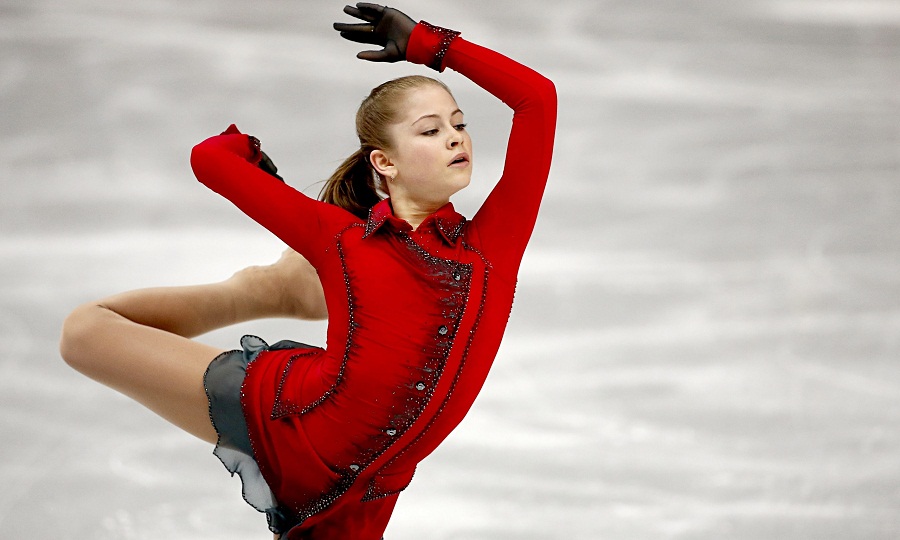
FS Gossips presents a translation of a story shared by Evgeny Slyusarenko, former editor-in-chief of “Championat” (2018–2021), about his unused interview with Sochi 2014 star Yulia Lipnitskaya. Slyusarenko recounts the complexities of interviewing the young Olympic champion, why the interview was never published, and how the experience still resonates in today’s sports media landscape.
“In early March, a representative of 18-year-old figure skater Kamila Valieva silenced journalists, dictating which questions they were allowed to ask and which ones they were not.
I deliberately chose not to participate in the ensuing public discussion – heavens, how much longer can this go on? As the saying goes, wake me up in 100 years and ask what is happening in Russia, and I will tell you: sportspeople and their hangers-on are still teaching journalists their profession while grateful readers cheer approvingly and run for popcorn.
Almost 10 years ago, in late January 2015, I – then the deputy editor-in-chief of Championat – was offered the chance to conduct an exclusive interview with Yulia Lipnitskaya, the star of Sochi 2014 and the first truly famous student of Eteri Tutberidze, an absolutely iconic figure among the masses of that era.
Frankly, I never understood where it all came from. Somehow, I missed the birth of this mania. Prior to the Olympic season, Lipnitskaya was a complete unknown to the public, and within three months – despite not achieving anything particularly remarkable (she failed in the individual event at the Olympics and didn’t win at the post-Olympic World Championships) – she had ignited an irrational frenzy and hysteria surrounding herself.
I remember attending some glamorous party featuring the heroes of Sochi, where the then-15-year-old Lipnitskaya was present. A seasoned figure, who was once considered a prominent producer, would occasionally mockingly tease the schoolgirl, who was clearly uncomfortable:
“Yulia, do you want to get married? To whom?”
“Oh, don’t ruin our little Yulia,” the event organizer Lena L. chimed in coyly. “By the way, Yulia, who do you like more – blondes or brunettes?”
Honestly, if the earth had split open at that moment and devils with pitchforks had emerged, it wouldn’t have seemed out of place.
Back then, I didn’t understand what was happening. She had the appearance of a typical teenager. Her story was typical too – a classic figure skating child deprived of childhood – there were no deeply moving tales about her rise to prominence. Yes, there was the girl in red, the poignant performance to Schindler’s List – but beyond that, what? Later, there would be Medvedeva, Zagitova, and Trusova. But I still feel that none of them reached Lipnitskaya’s prime level of fame. At least, they weren’t on the cover of Time magazine, nor did they meet Putin for a personal congratulations.
So, clearly, I was missing something – and I was genuinely curious to find out what. Therefore, when the unique opportunity came to speak one-on-one with the young star (the athlete hadn’t spoken to anyone after Sochi), I, of course, didn’t hesitate.
What follows is a cautionary tale of how I failed my chance, and how Championat lost a worldwide exclusive.
Mistakes Piled on Mistakes
Let me take full responsibility right off the bat. I made several mistakes. First, I relied on intermediaries. It went like this: my “representatives” spoke with the athlete’s representatives and arranged everything. What exactly they had agreed upon, I didn’t bother to verify. I assumed it was self-evident that we could talk about everything – otherwise, what’s the point of the interview?
When we arrived, it turned out the organizers wanted something akin to a Karavan Istoriy-style monologue: tearful stories, waking up at six a.m., a troubled childhood – all of that. Essentially, they wanted the kind of narrative no one had ever clearly formulated about Yulia. Maybe because there was nothing to formulate, or maybe because the athlete herself wasn’t prepared for that level of openness. In half an hour, of course.
Time was also tight: a 30-minute session – my second mistake. I knew I could only skim the surface – the events of the past year, maybe with a touch of psychological insight. Our goals didn’t align.
This led to an unpleasant scene. During a brief pause (Yulia received a call), one of her representatives started scolding me, saying I was asking the wrong questions and suggesting I ask different ones. Needless to say, if this were a regular interview, it would have ended right there. But people don’t treat me like that.
You can’t treat people who respect themselves and their work like that. But beside me was a 16-year-old girl, and I felt it would be wrong for her to witness a conflict involving grown-ups – a situation she had no connection to.
Mistake number three? I shouldn’t have even attempted to write the interview afterward. Given the earlier points, it was clear nothing good would come of it. But I felt sorry for the time spent and wanted to please my beloved Championat. Besides, this was Lipnitskaya herself – the nation’s darling (clickbait galore, quotability, hype potential, thought the little Slyusarenko inside me as I rubbed my hands together). What if I could find some kind of compromise?
Predictably, compromise failed. The interview came back to me heavily edited, critical pieces erased, and segments inserted that Yulia hadn’t said. For example, the topic of Eteri Tutberidze – whom she had planned to leave – was completely removed. Or her sense of relief at not making the European Championships roster – merely for the chance to avoid seeing the ice she had grown to dread.
In this sequence of mistakes, at last, I made the right call: I refused to publish it. Back then, Championat’s editor-in-chief, Samvel Avakyan, supported my decision, for which I am grateful to him. It was a courageous move on his part. Why?
Because what followed was pressure from the figure skater’s team. Let me make it absolutely clear: she had nothing to do with it. These people had set out to create a “Russian IMG” and viewed Lipnitskaya as their primary launch asset for this business venture. And here was some journalist daring to reject the favor they had so graciously deigned to offer.
I remember watching their aggressive commotion with bewilderment. Not because I was surprised by the moral qualities of their leader – there were no illusions there (just as, presumably, law enforcement, who are now handling his criminal case, have no illusions). My bewilderment was more about how they planned to turn Yulia Lipnitskaya into a media star and influencer for years to come – a kind of Maria Sharapova on ice. Because that sort of transformation requires a narcissistic personality type, someone who craves constant attention and feeds off societal approval like it’s nourishment. You know, as in the famous children’s rhyme: drama club, photography club, and oh yes, I want to sing too.
But she’s just not like that, I thought. Half an hour of conversation was enough to understand that Yulia was an intensely private, self-contained introvert.
When necessary, she could be charming and had a natural way with people (she wasn’t terribly shy during the interview and even remarked right off the bat that I looked like Fyodor Klimov, and if that was the case, we’d get along just fine). When necessary, she could also be firm (“I’m not going to answer that question. You want vanilla answers from me?”). She was exhausted from all the noise around her and couldn’t understand why it was happening to her, in particular (“I’m already afraid to even go to the store”). She was desperately wanting to escape the grind (“I leave the house around nine in the morning to make it to the first practice. The last one ends around nine in the evening. By the time I get home, it’s already 11 or midnight. I do have one day off, though.”).
In essence, these people decided to overwrite her authentic personality to suit their agenda without even bothering to ask whether she fit their criteria.
So, my (now sadly former) colleagues at Championat and I thought: why not commemorate our shared milestone by giving back to the public the 16-year-old Yulia Lipnitskaya, just as she was? Naturally, without edits – everything exactly as she said it back in January 2015.
Here you go – your reward for reading to the end. The real Yulia Lipnitskaya, uncensored. The unpublished interview.
“They used to be able to yell at me. Now that doesn’t work.” The unpublished interview with Yulia Lipnitskaya.
Olympic figure skating champion Yulia Lipnitskaya shared her thoughts on ending her season, battling internet addiction, and how she’s grown accustomed to the frenzy surrounding her.
For Yulia Lipnitskaya, recognized as Russia’s most popular figure skater globally, the current season has been disjointed – ranging from issues with her boots to defeats at qualifying events. The problem, however, was that it had been nearly impossible to gain clarity on what was really happening – Lipnitskaya, a symbol of the Sochi Games, had rarely given detailed interviews. Recently, the athlete signed a contract with the Telesport company, which will now manage and promote her career. Championat was the first to benefit from her team’s new communication policy, allowing us to ask the most pressing questions of the moment.
Q: I remember a year ago, I was riding Sochi’s Lastochka train and saw some foreign tourists. They were playing with dolls and calling them “Yulia Lipnitskaya.” At that moment, I realized just how serious everything had become. Have you managed to find an explanation for the hysteria surrounding you that has been ongoing for a year now?
Yulia Lipnitskaya: It’s still a mystery to me. I didn’t understand it then, and I don’t understand it now. I used to think: maybe it’s because I’m so young and I’ve already become an Olympic champion, perhaps that’s what attracts people? But time has passed – the Olympics ended nearly a year ago – and nothing has changed.
Q: Does it complicate your life a lot?
Yulia Lipnitskaya: There are moments that are genuinely hard to deal with. But I’ve gotten used to many things and hardly notice them anymore.
Q: For example?
Yulia Lipnitskaya: I can’t walk down the street peacefully. It’s difficult to go shopping. Let’s say I need to buy clothes for an event. The sales assistants always seem to know better than me: “I saw you on the ice; I’m absolutely sure this won’t suit you.” It’s frustrating, but you get used to it. What’s harder to adjust to is the attention from strangers. In the first few months, my phone practically wouldn’t stop ringing. Several dozen calls from unknown numbers every day! I couldn’t figure out – how do all these people know my number? Thankfully, things have calmed down a bit, although it still happens occasionally.
Q: How do you protect yourself from all this?
Yulia Lipnitskaya: I try to read and listen to as little as possible about myself. There are certain places on the internet you can visit, and others you shouldn’t set foot in at all. For instance, specialized forums – athletes are better off avoiding them entirely. There are so many people out there who support you and wish you well, but there are also those whose sole intent is to shake your confidence, plant insecurities, and spread negativity. Why do I need that? Of course, it’s impossible to completely shield yourself – friends and colleagues still manage to share all the “insider” stories anyway.
Q: You mentioned that you were once very reliant on the internet.
Yulia Lipnitskaya: Yes, there was a period when it completely sucked me in. I would sit down for what was supposed to be 10 minutes, and suddenly an hour would have passed. It was like this: I’d sit down, get absorbed in the screen, and that was it – I wasn’t present anymore. Here I’d read something, there I’d look at photos, and elsewhere I’d write something. Gradually, I’ve been trying to move away from that. Just last month, when I wasn’t skating, I spent no more than an hour online each day. Ideally, I’d want to completely disconnect from the internet. But I understand that it’s no longer realistic now. So, I stick to certain social networks where I chat with acquaintances, and that’s enough for me. I’d like to believe I’m over it.
Q: Let me ask you one last question about the internet. If you search “Yulia Lipnitskaya supports…” two teams pop up – Moscow’s Spartak and Chelsea. So, who is your favorite football team?
Yulia Lipnitskaya: That’s nonsense. I don’t follow football, except maybe tournaments like the World Cup or the European Championship. I can say for sure that I don’t root for anyone.
Q: These days, the European Championships are taking place in Stockholm, and on Thursday, you flew there as a spectator. What are your feelings about watching the ice?
Yulia Lipnitskaya: At first, I was really upset that I didn’t make the team – I even cried at one point. The Russian Championships marked my fourth unsuccessful event of the season in a row. My short program felt incredible to me, but my free skate just wouldn’t come together – time after time, it failed, and it didn’t work this time either. After cooling off, to be honest, I felt relieved that I didn’t have to go anywhere. What’s the point? To suffer again? I fought, I tried, but nothing worked. That means it’s better to stay home and focus on preparing for the future.
Q: Who are you particularly following in Stockholm?
Yulia Lipnitskaya: In every discipline, I’m keeping an eye on all the Russian competitors and those who display something unusual. For instance, the French dance pair who became European champions. I still remember them from juniors when we skated together – they didn’t stand out much back then. But now, I really like them; their first place is absolutely deserved. The men’s singles competition is turning out to be fascinating. When was the last time Europe had a tournament where almost the entire top ten was worth following? Now it truly is.
Q: Speaking of your own situation, how have you spent the past month?
Yulia Lipnitskaya: I’ve hardly skated and likely won’t return to the ice until around February 10. It wasn’t exactly planned this way – things just sort of turned out that way. First, I flew home to Yekaterinburg and stayed there for a week. Then something or other kept coming up – no tickets, or something else. In the end, I decided to let it all go and focus calmly on my own things. Nobody bothered me for a few days, and that was the most important thing.
Q: Judging by your training schedule, it seems this season is over for you.
Yulia Lipnitskaya: There were some possibilities – perhaps competing in stages of the Russian Cup or attempting to qualify for the World Championships. But I see no point in that, especially considering the level of competition in women’s figure skating right now. Instead of competing, it’s better to focus on working – on technique, skating skills, spins. We discussed this during a meeting with Deputy Minister Yuri Nagornykh, and together we came to the conclusion that it’s better to rest first and then concentrate on training. There will be no more competitions for me this season.
Q: Maybe it would have been worth skipping the post-Olympic season entirely, considering the immense workload you faced in the Olympic year?
Yulia Lipnitskaya: We considered that option. But then we decided that you can’t escape a tough period no matter what. Everything feels the same, yet nothing works. And this is something you can’t control. It’s better not to avoid this situation but to go through it as quickly as possible. I doubt I would have gained much by skipping the entire season.
Q: So, it wasn’t surprising to you that serious difficulties could arise after Sochi?
Yulia Lipnitskaya: I talked to a lot of people – athletes, coaches. Everyone said this could happen, and you just have to endure it. I’m maturing – physically and psychologically. Even boys go through this, but they say it’s twice as hard for girls.
Q: How does your maturity manifest itself – aside from the obvious physical aspects? How are you changing?
Yulia Lipnitskaya: I need a different kind of motivation, a different relationship with my coach. When I was little, you could yell at me or force me to do something. I’d get angry and, fueled by that anger, I’d jump and skate with all my might. But now, if someone tries to make me do something against my will, I immediately lose interest and feel repulsed by it – I get lazy right away. Instead of trying to prove something, as I used to, I just want to take offense and walk away. The way they work with beginners doesn’t work for me anymore – I need a different approach.
Q: What kind of “different” approach?
Yulia Lipnitskaya: I want to start enjoying skating. Not just jumping and skating mechanically as the coach dictates, but developing and understanding what I’m doing and why I’m doing it. And it’s a good thing I now have the time to think carefully about all of this.
Q: What does your coach, Eteri Tutberidze, think about this?
Yulia Lipnitskaya: Right now, we’re not in contact much and haven’t discussed this. Eteri Georgievna is in the middle of the competitive season, with many of her students participating in events.
Q: So, does that mean there’s some truth to the rumors about you switching coaches?
Yulia Lipnitskaya: I haven’t left her or gone to anyone else. I’m going through a difficult period, and I simply want to take a break from everything – be it the rink, the monotony, or even the coach herself. There’s nothing unusual about that. Eteri Georgievna herself has said that things have become routine for us, and routine is the most dangerous thing in our profession. That means it’s time to take a pause.
Q: How many students are in Tutberidze’s group?
Yulia Lipnitskaya: That’s also a challenge. I counted 18 people. It’s like a “junior factory,” as I call it. Obviously, no matter how much the coach tries, it’s impossible to give everyone the attention they need. People say Tutberidze’s group has enough ice time – four rinks. But is it really enough? There are four training sessions, each lasting 1 hour and 20 minutes. Everyone skates two sessions, which amounts to 2 hours and 40 minutes a day. In my opinion, for someone at my level, that’s not much.
Q: And during those 2 hours and 40 minutes, do you train alongside the others in the group?
Yulia Lipnitskaya: Of course. In Tutberidze’s group, everyone is equal, from beginners to Olympic champions – that’s her coaching principle. But with so many skaters on the ice, it’s hard to imagine how an individual approach could even be implemented. I feel like, to return to a high level, I need more attention. Not because I’m demanding or spoiled but simply because it’s the only way to win. Here’s a classic example: why did Elizaveta Tuktamysheva suddenly have such a breakout season, after years of inconsistency? As soon as her coach, Alexei Nikolaevich Mishin, had the opportunity to focus solely on her, the results started coming.
Q: You mentioned that you spent New Year’s at home in Yekaterinburg. Is your home still there?
Yulia Lipnitskaya: My home is now in Moscow. After the Olympics, I was given an apartment, and we recently finished renovations. The kitchen is in, and I’ve even started cooking. Having my own apartment is amazing. From childhood, I knew that winning at the Olympics earned you an apartment, a car, and good prize money. And I really wanted to achieve that. But I never imagined it would happen so soon. Conversations about Sochi were always around me for as long as I can remember. Then, suddenly, it was time for me to compete.
Q: So, from the start, your plan was to compete in Sochi?
Yulia Lipnitskaya: Yes, that’s exactly why we moved from Yekaterinburg to Moscow. My mom and I told the coach upfront that I met the age requirements and that we really wanted to compete in the home Olympics – that’s why we moved.
Q: It sounds like the move came with significant financial costs, is that right?
Yulia Lipnitskaya: For a while, we rented out our apartment in Yekaterinburg, but eventually, we had to sell it. Let’s put it this way: my mom put everything she had into my career. And I’m very glad it wasn’t in vain. At the very least, we now have a place to live, and that alone is a lot. In Yekaterinburg, we still have my grandmother and some relatives, but there’s no longer a home to stay in there.
Q: You were nine years old at the time – how did you feel about it back then?
Yulia Lipnitskaya: I don’t remember feeling any strong emotions. It seemed like it wasn’t happening to me, as if I were watching myself from the outside. We loaded all our belongings into a car and drove to Moscow – a journey that took two days. I looked out the window at how beautiful everything was and didn’t think about figure skating at all. Then we got to the rink, and suddenly, I had to start landing triple jumps, which I had never done before in my life. But I just went ahead and did it.
Q: Can you recall what it was like to come to a big city as a little girl?
Yulia Lipnitskaya: I don’t find it very interesting to recall. I have to tell the same stories over and over again. Everyone wants to know all this sugary-sweet stuff about me – it happened, and that’s that. I try to live in the present.
Q: But I think much of your current outlook and personality was shaped during those years. It would be interesting to understand what strengthened you.
Yulia Lipnitskaya: I think my childhood ended around 11 years old, naturally – life forced it. Yes, I do feel like I’m more emotionally mature than my peers, but that’s simply the influence of sports. Many figure skaters grow up quickly, especially those who leave home at a young age. I’m not unique in that.
Q: Is it hard for you to communicate with others who aren’t involved in sports?
Yulia Lipnitskaya: I hardly interact with them at all. It just so happens that our worlds don’t intersect.
Q: What does your daily schedule look like?
Yulia Lipnitskaya: Until recently, it was like this: my first training session would start around noon, and the last one would finish by 9 p.m. By the time I got home, it would be 11 or even midnight. I did have one day off a week, though.
Q: Don’t you feel sorry that at just 16, you’ve barely experienced an ordinary life, and sport has taken over everything?
Yulia Lipnitskaya: I don’t think about it. Maybe in the past, I would have reflected on it or regretted something. But I stopped doing that a long time ago. Thanks to sports, I have almost everything I ever wanted.
Over the past 10 years, Yulia Lipnitskaya, as far as one can tell – she still doesn’t enjoy giving interviews – hasn’t changed much. She guards her private life, is married, has two children, works as a children’s coach, and, as they say, resembles Eteri Tutberidze in her teaching style. It seems this is exactly what she wanted.
The same can be wished for Kamila Valieva, who is just beginning down this difficult path: to live her own life and do what she truly desires. To stay far from those who want to steal her identity. To fight for herself and fearlessly face any question – just as she did on the ice.”
Related topics: Julia Lipnitskaya, Yulia Lipnitskaya
Wow, great authentic work. No sugar added.
Thank you so much for this interview.