On July 4, 2025, President Donald Trump signed into law H.R. 1, the One Big Beautiful Bill Act (OBBBA). The OBBBA is a comprehensive budget reconciliation bill, with impacts on taxation, border security, energy, and other sectors, including the Supplemental Nutrition Assistance Program (SNAP).
On average, more than 590,000 South Carolina residents receive SNAP benefits each month. Roughly 48% of recipients are under the age of 18, and nearly a quarter are over the age of 50. Under current law, those designated as “Able-Bodied Adults without Dependents,” or ABAWD, are not eligible for SNAP for more than 3 months within a 36-month period unless they are working and/or complying with a work program for 20 hours a week. For more information on the changes, please visit the U.S. Department of Agriculture Food and Nutrition Services website here
Changes Regarding Older Children In a Household
|
The OBBBA limits the exception for a parent or other household member with responsibility for a dependent child to children under 14 years of age. Previously, this exception applied to a parent or other household member with responsibility for a dependent child under 18 years of age. With this change, adults in a SNAP household with children between the ages 14 and 17 are now subject to the time limit, unless they meet another exemption category, including caring for a child in the household under the age of 14. |
Exemption Changes Under OBBBA
|
The OBBBA removes the temporary exceptions for the following populations, which were added by the Fiscal Responsibility Act of 2023 (FRA):
These individuals are once again subject to the time limit, as they were prior to the 2023 FRA, unless they meet another exception. |
| SECTION | EXPLANATION | STATE/DSS IMPACT |
|---|---|---|
|
Section 10102 – Modifications to SNAP Work Requirements for Able-Bodied Adults |
Under the current law, those designated as “Able-Bodied Adults without Dependents” (ABAWD) are not eligible for SNAP for more than 3 months within a 36-month period unless they are working and/or complying with a work program for 20 hours a week.
|
Currently approximately 3% of SNAP clients are designated as ABAWD and subject to work requirements. It is anticipated that the number of ABAWDs will increase significantly based on these changes; however, the actual impact will depend on how the federal regulations are constructed. |
ATTENTION!
Announcing a new and convenient way for households to view their SNAP/TANF benefit issuance information.
SNAP/TANF Benefit Inquiry Portal
How does DSS help?
|
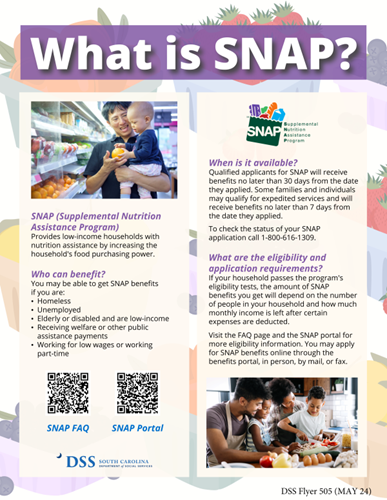
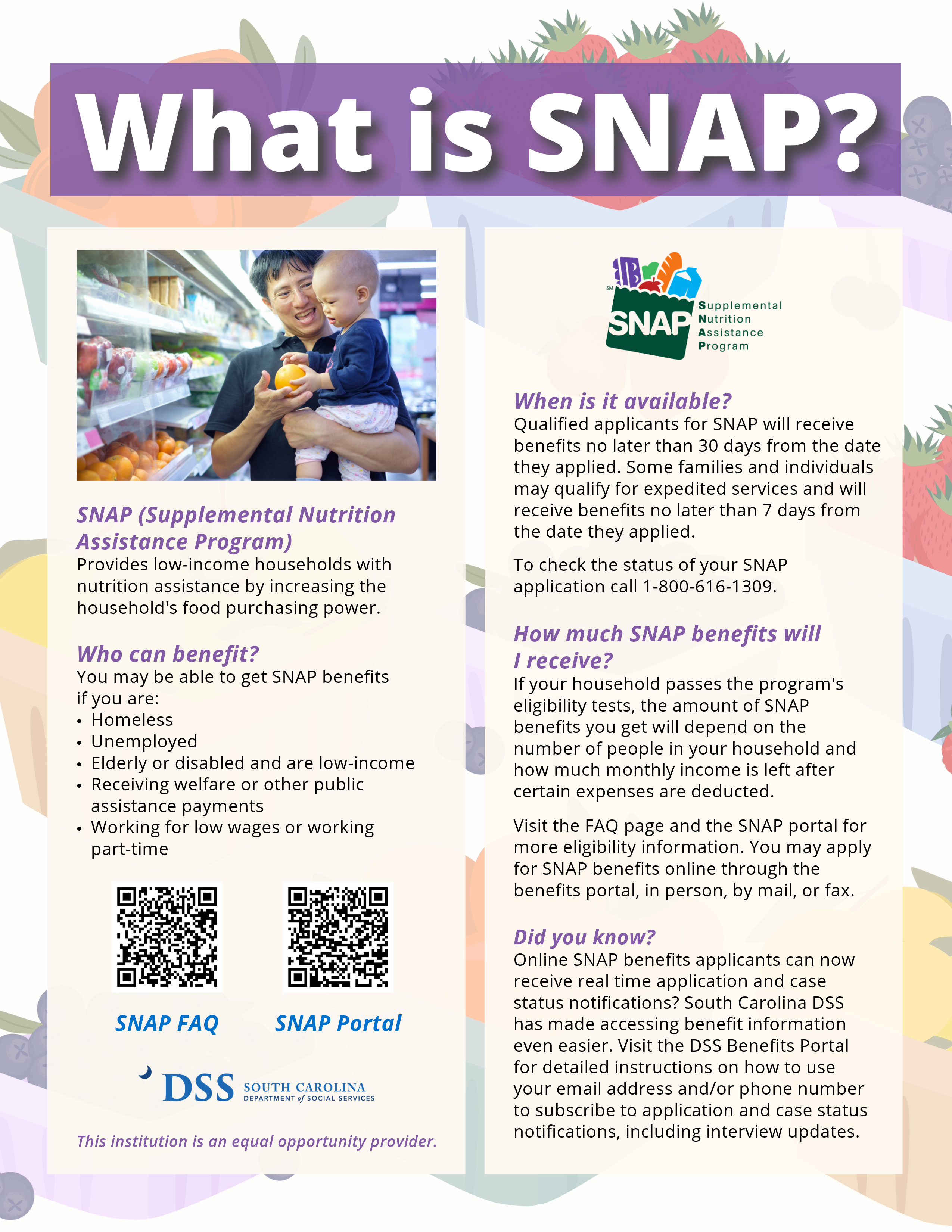
Households, individuals, seniors, and the homeless may all be eligible for SNAP benefits. People who are working and need help to stretch their income to purchase food may also be eligible for SNAP benefits as well as those receiving Social Security benefits, child support, or unemployment. DSS administers SNAP through DSS county offices. Eligibility caseworkers interview applicants and approve those who qualify to receive the food benefit. Qualified applicants for SNAP begin receiving benefits within 30 days of their application. Some families and individuals need expedited benefits, which begin within seven days of application. |
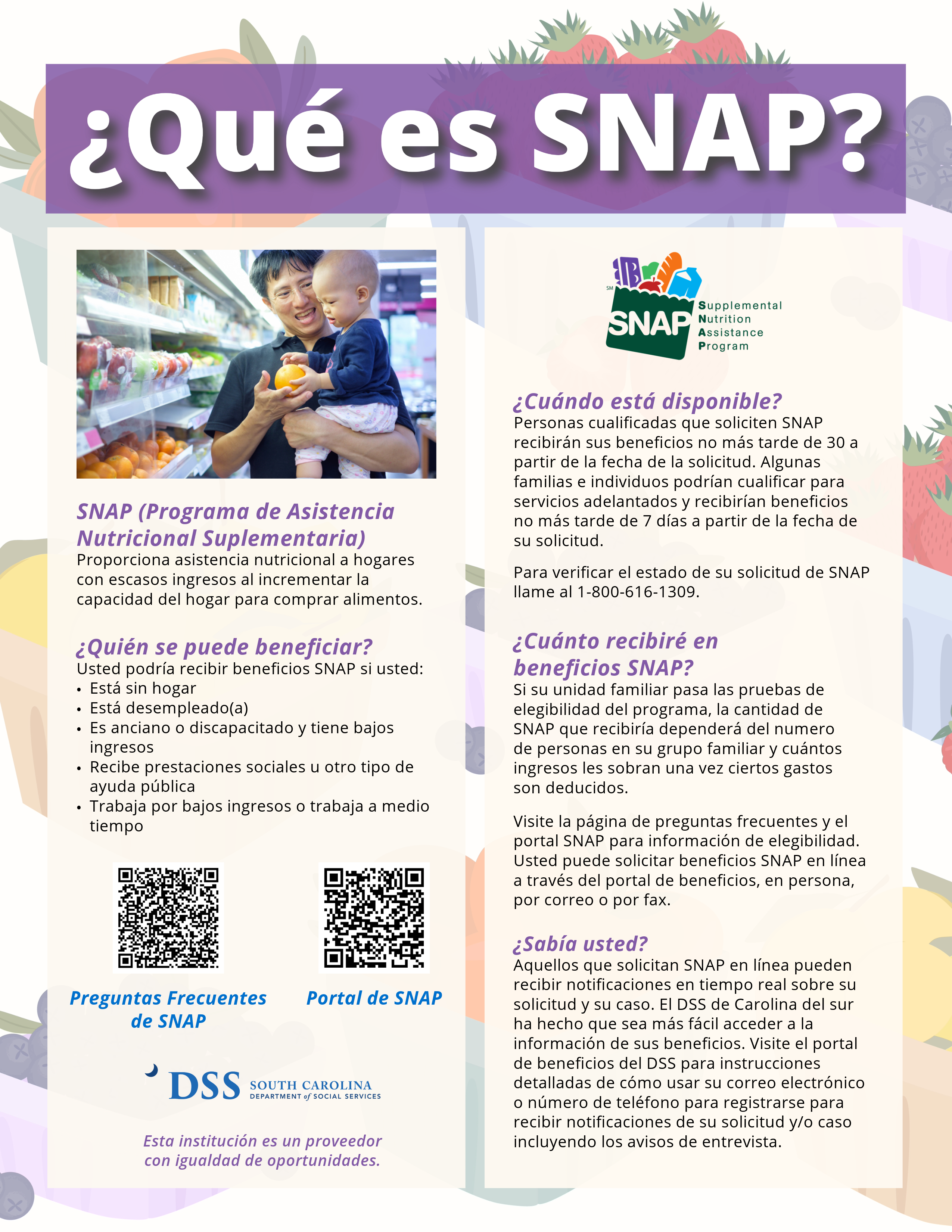
Apply Online for SNAP Benefits
SNAP FRAUD ALERT from the USDA
SCDSS partners with organizations across South Carolina who support our mission by, generously, providing discounts and incentives to those we serve. Click HERE to learn more!