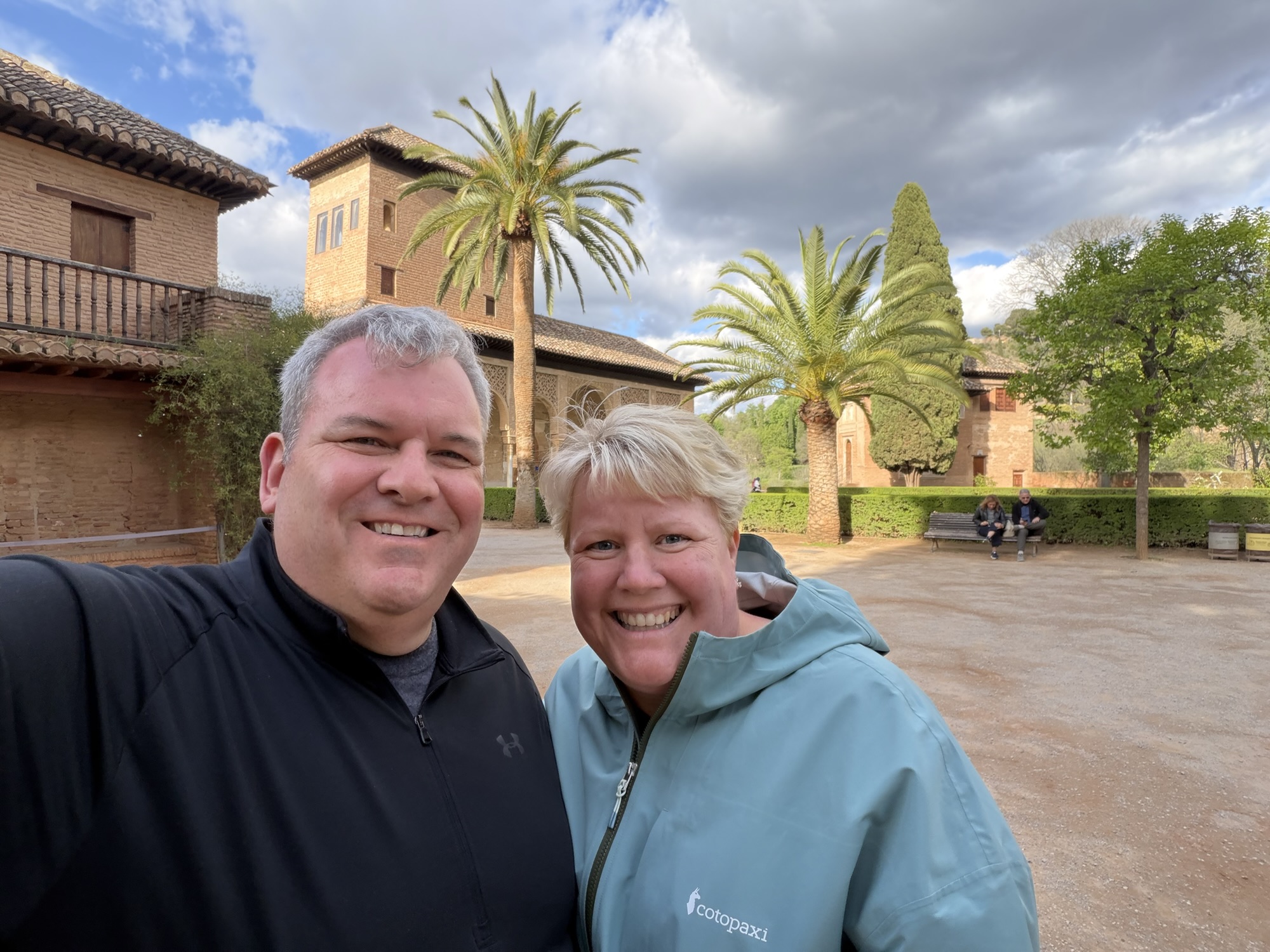
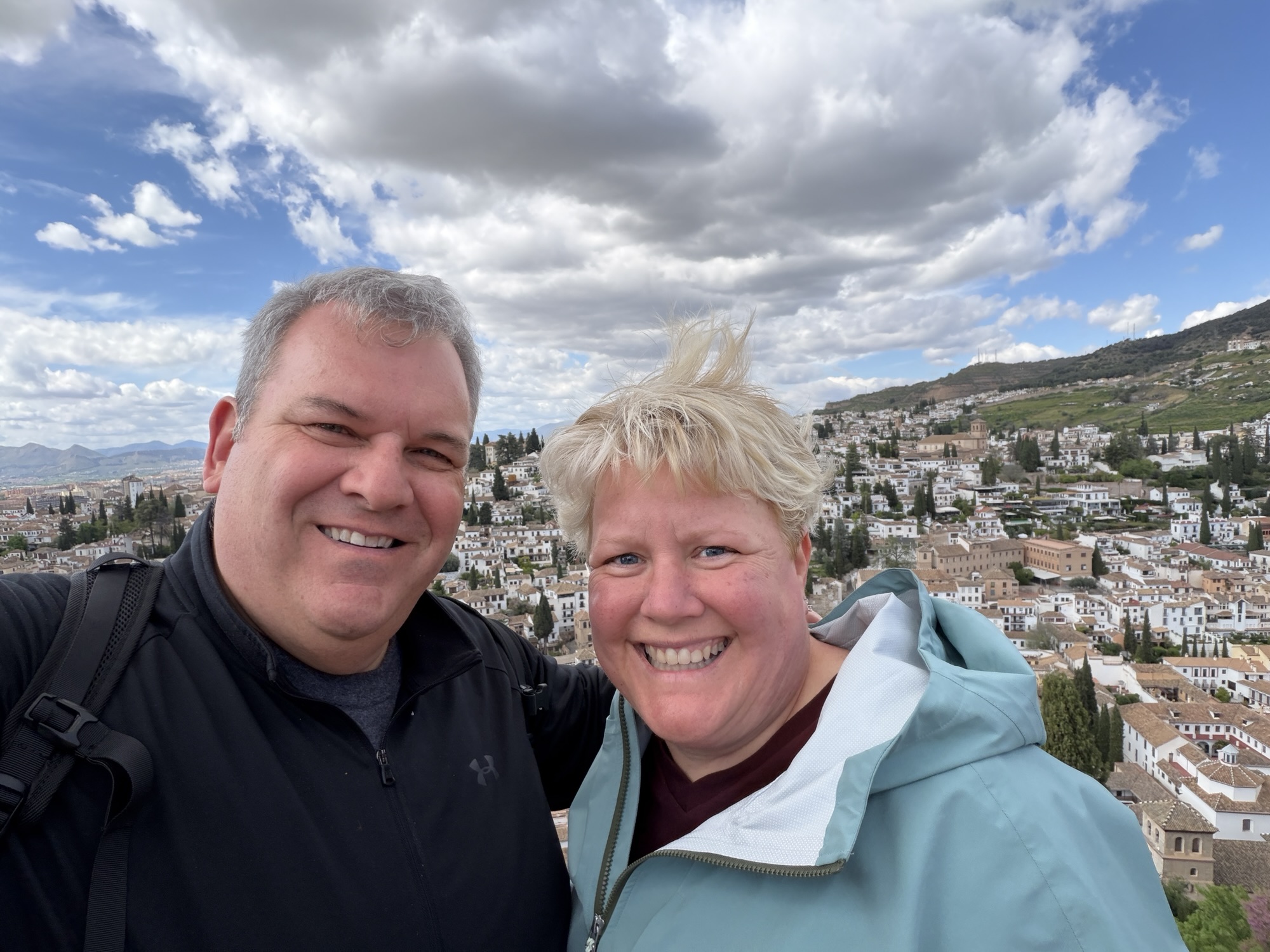
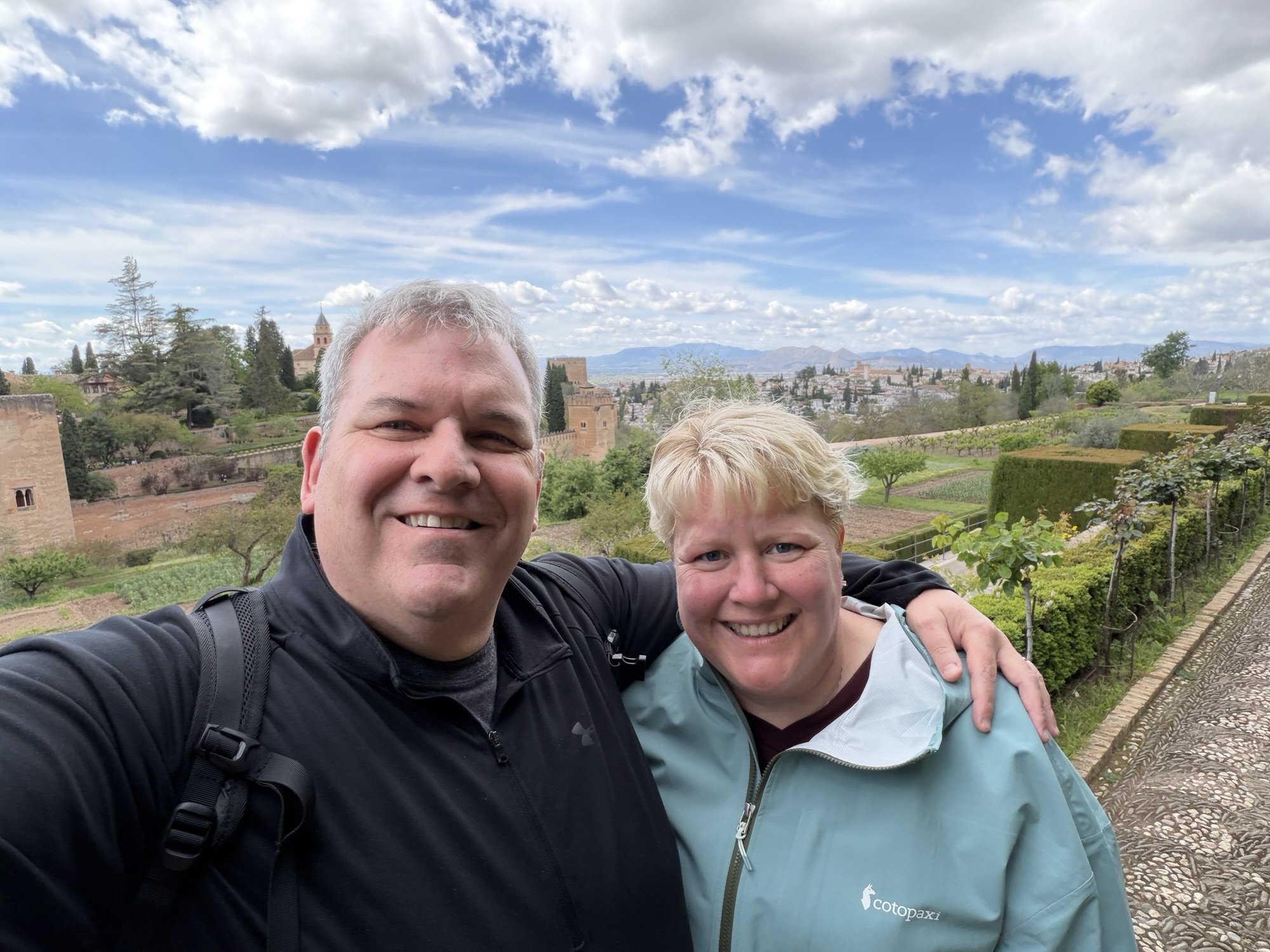
After a full day of sightseeing and 22,224 steps (according to my iPhone) we decided to treat ourselves to dessert that night. Now, the next day, we’re off to Sevilla by train! #travel #Spain #Grenada
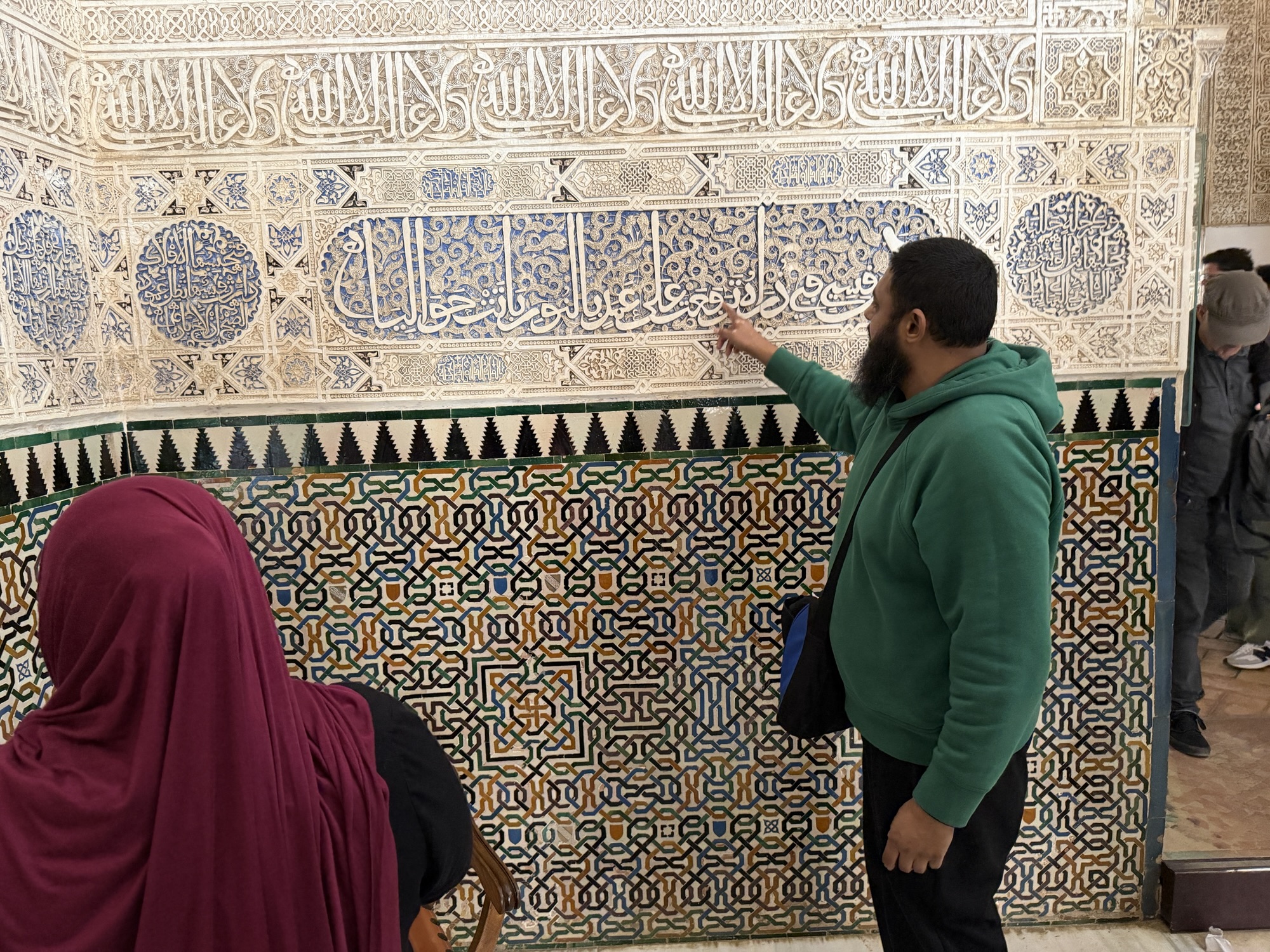
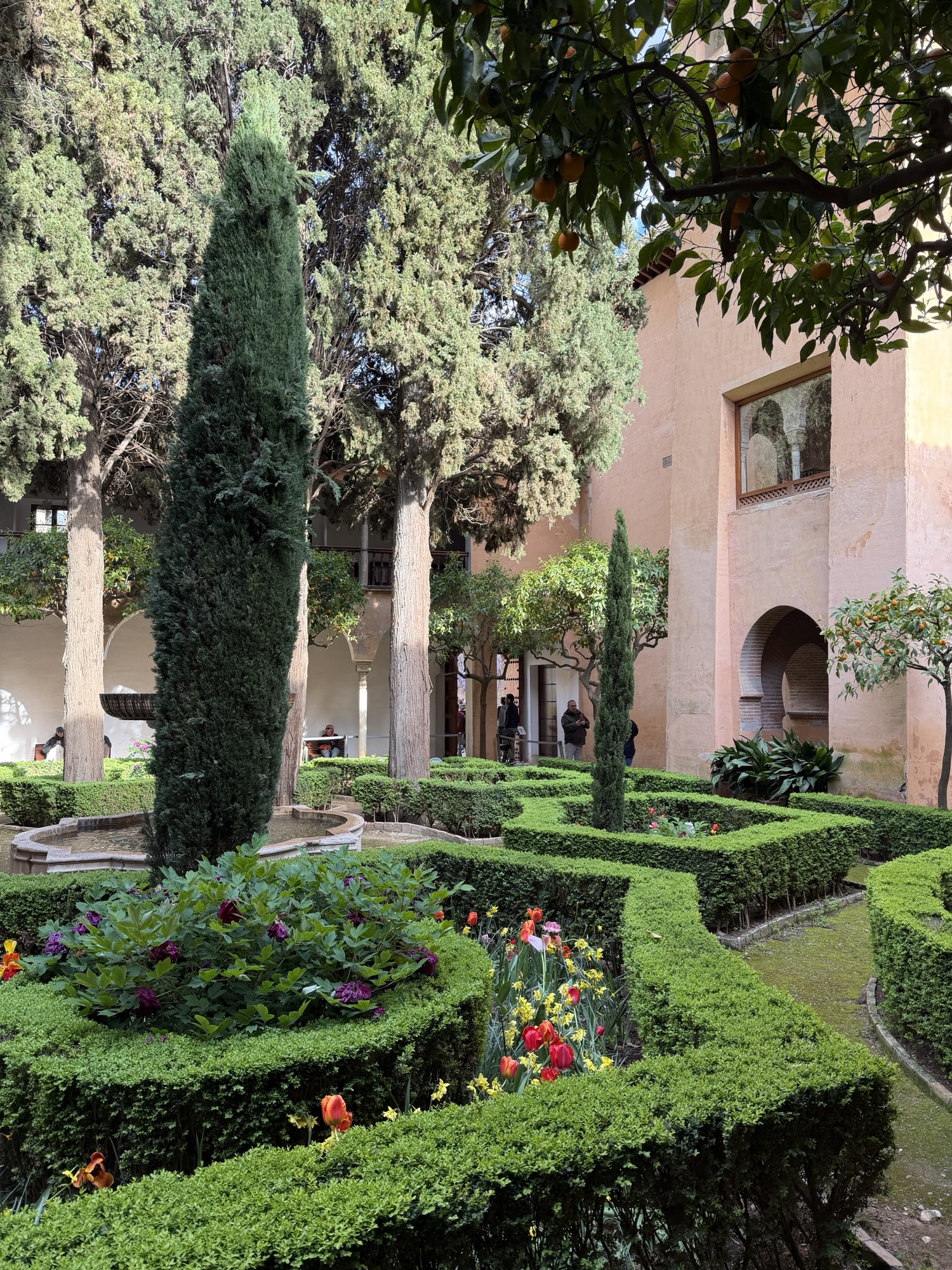
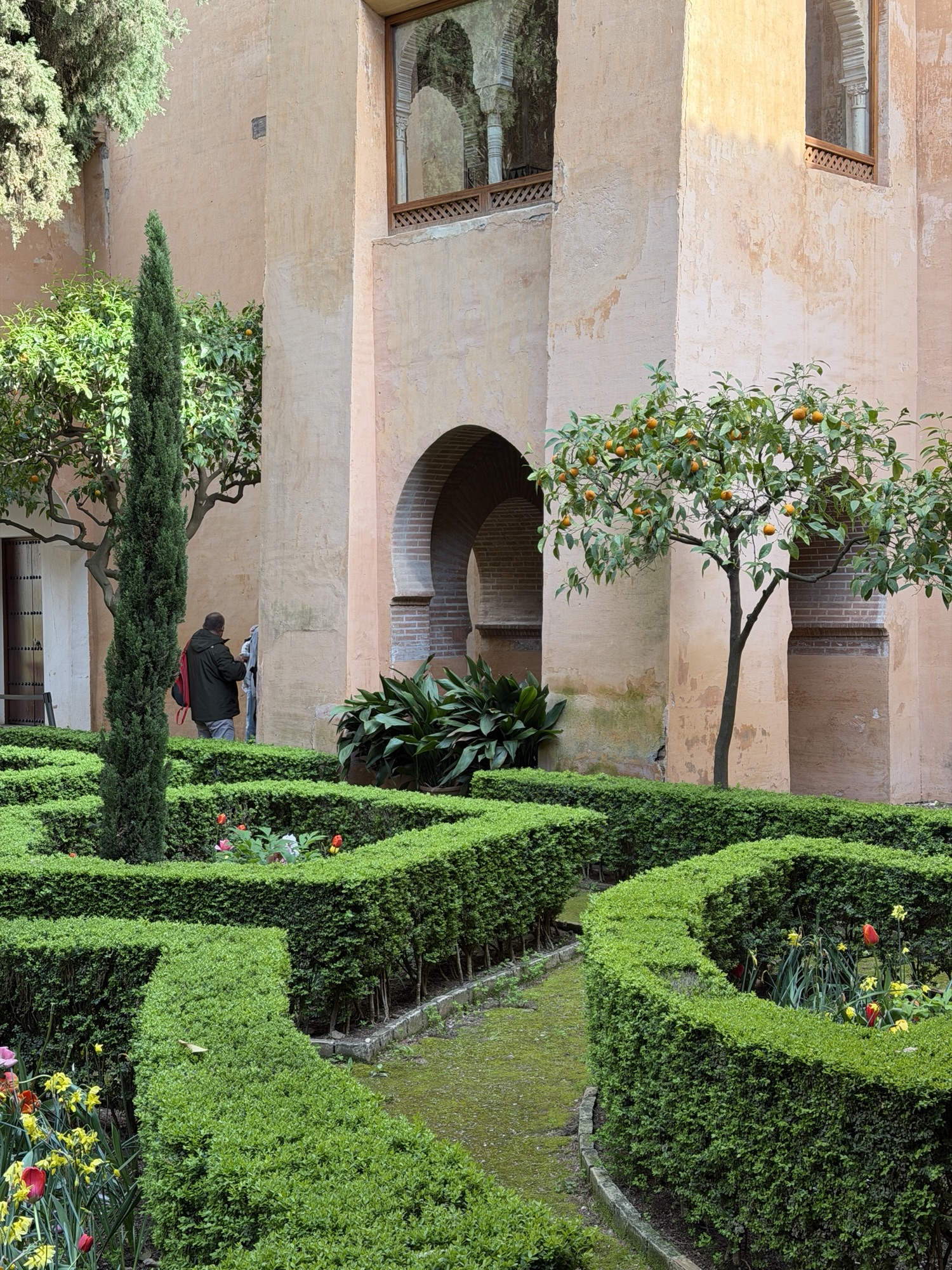
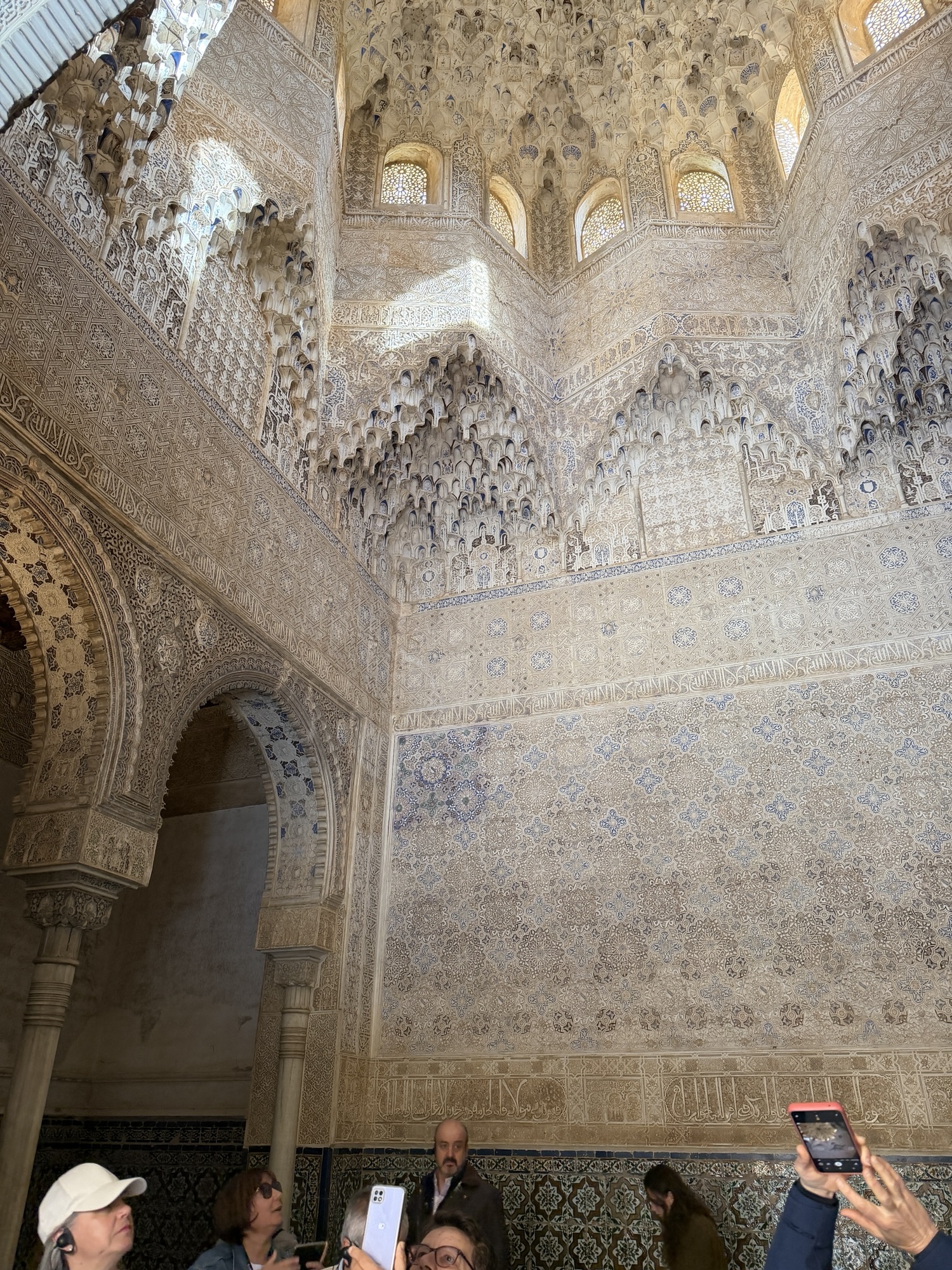
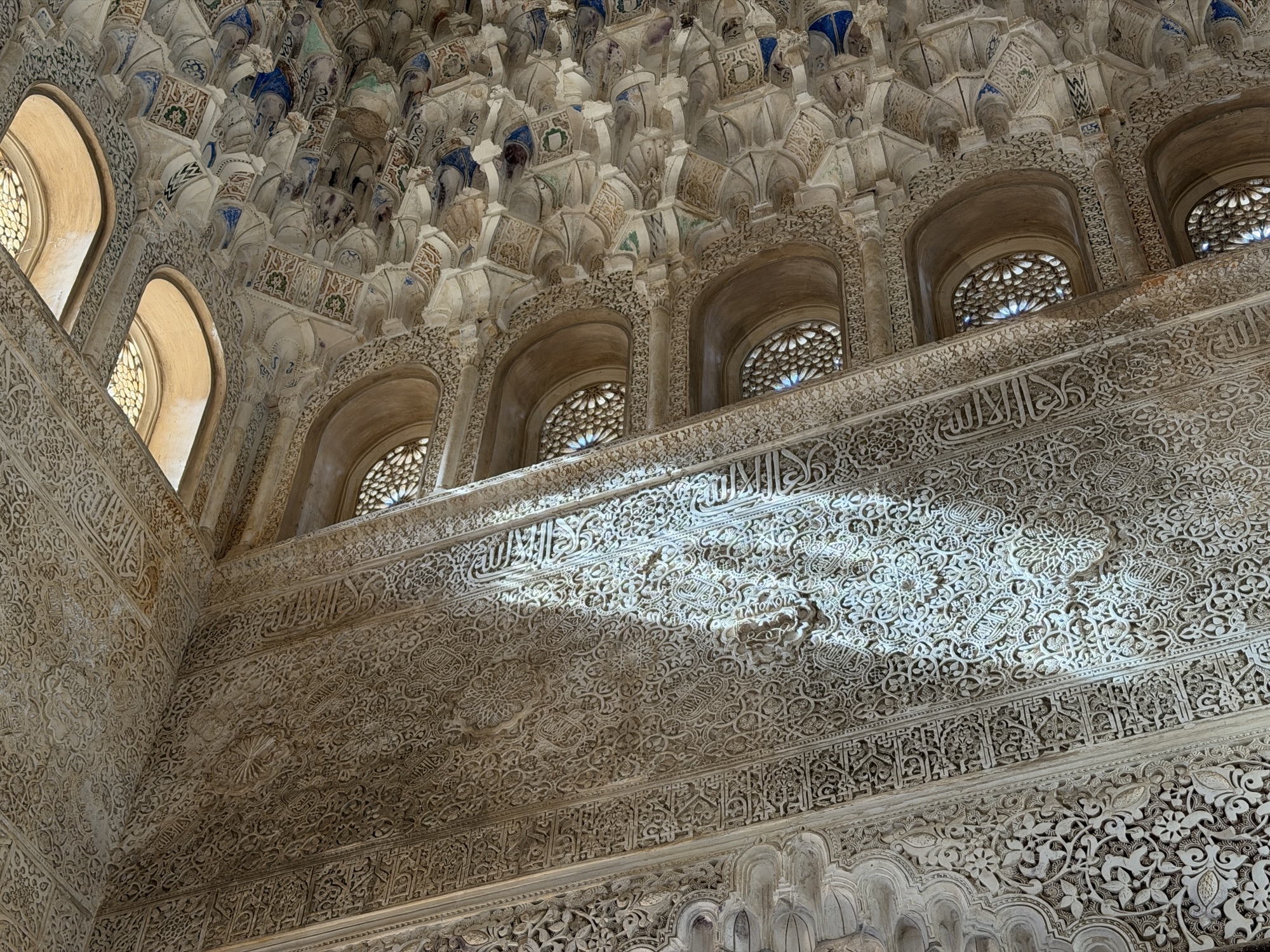
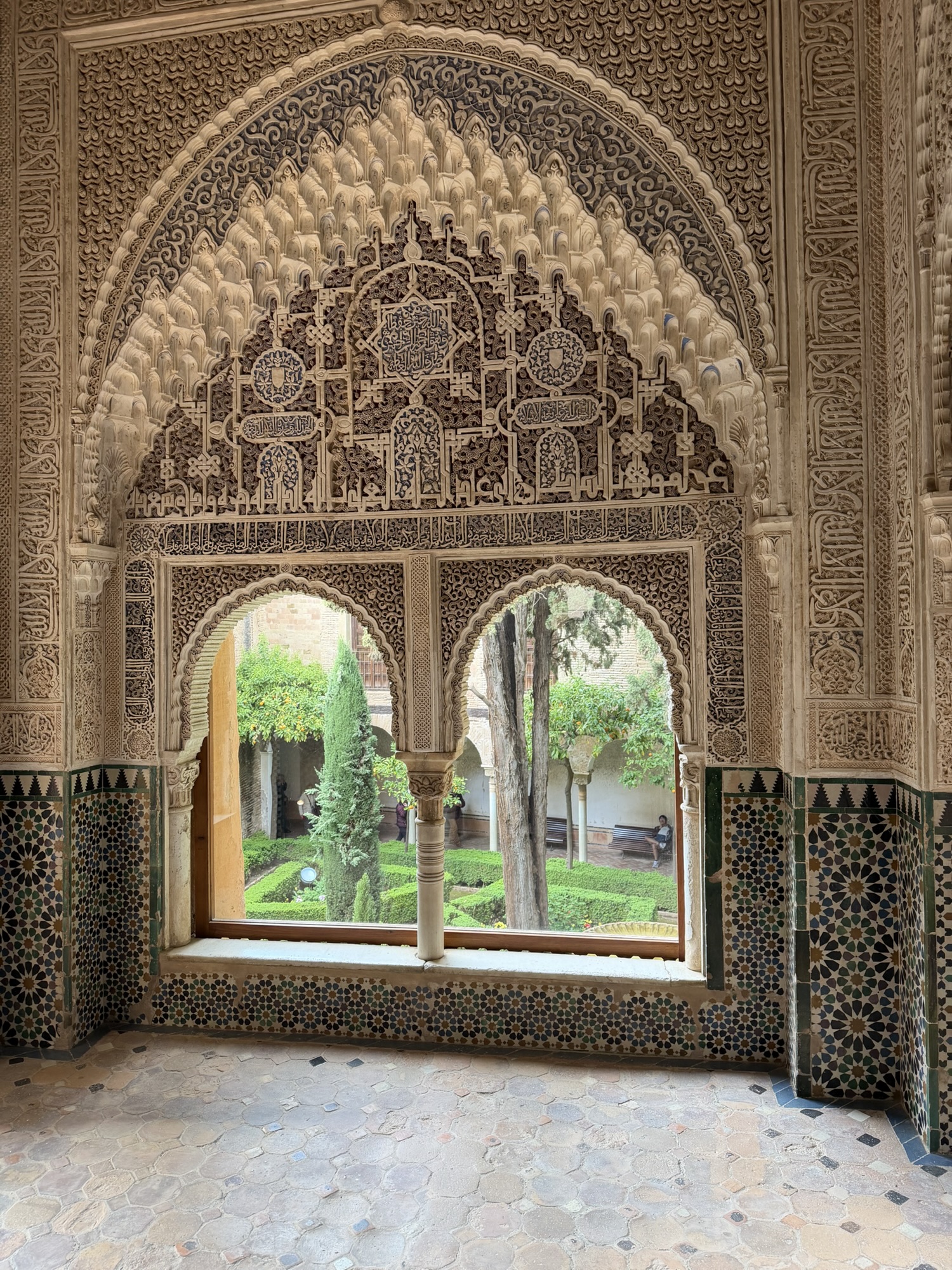
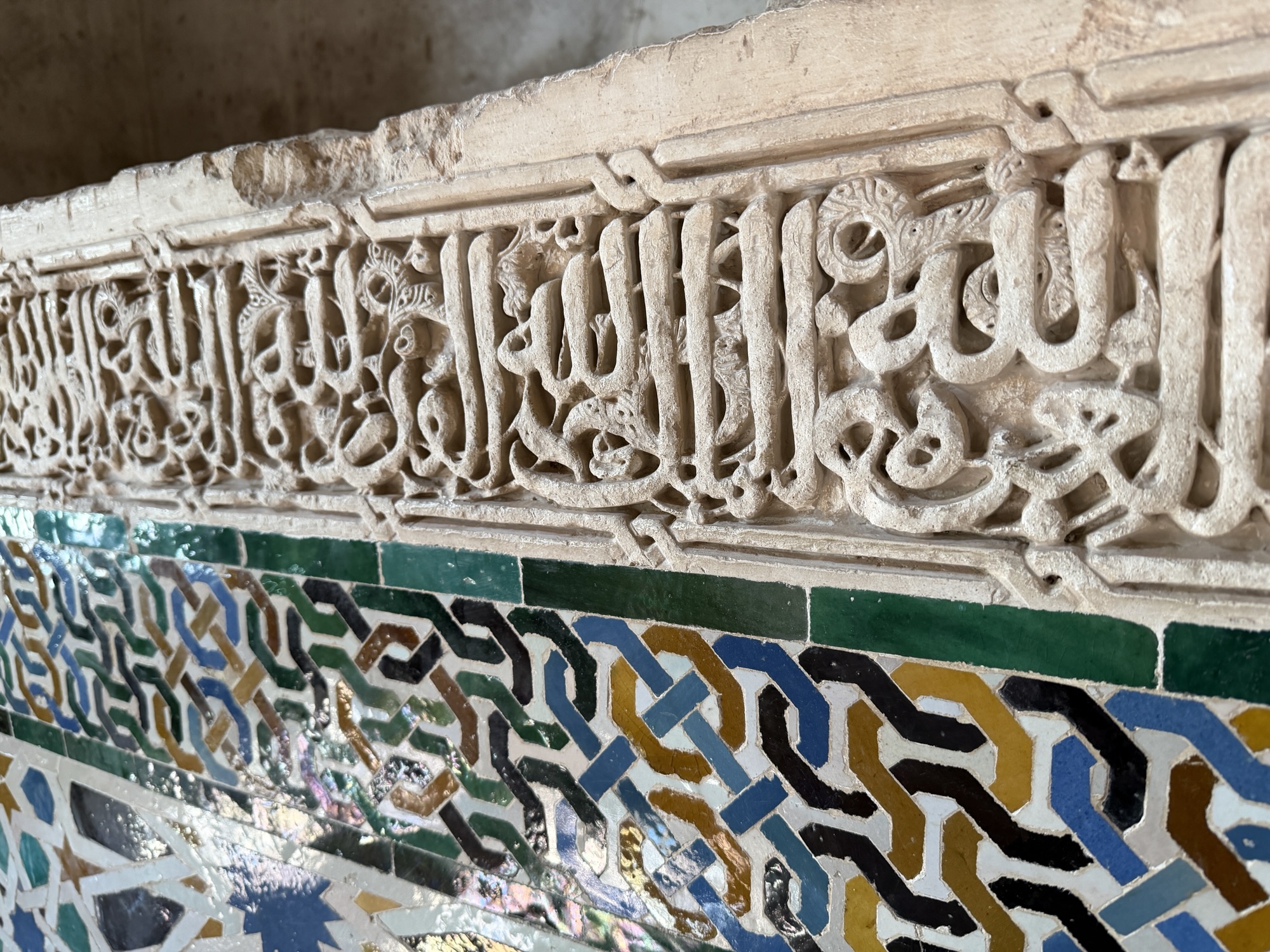
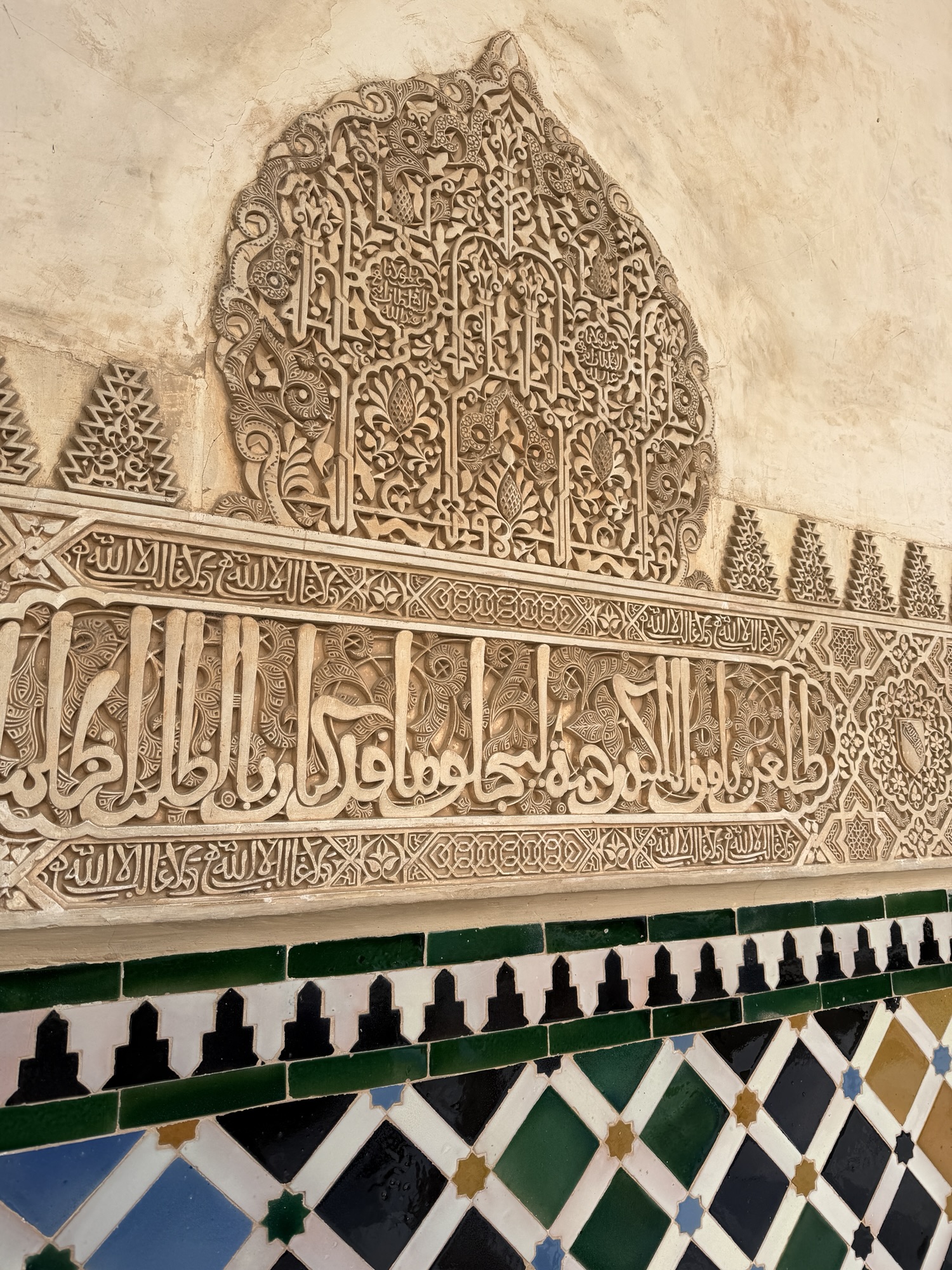
Yet more photos from Palacios Nazaríes. The man pointing at the wall was reading the Quran verses carved into the stone. It’s amazing to me that the elaborate script, all these centuries later, is still recognizable and readable to a modern day person (even if it took some effort to puzzle out). I know that I would certainly struggle to read Middle English from the 14th century! #travel #Spain #Granada
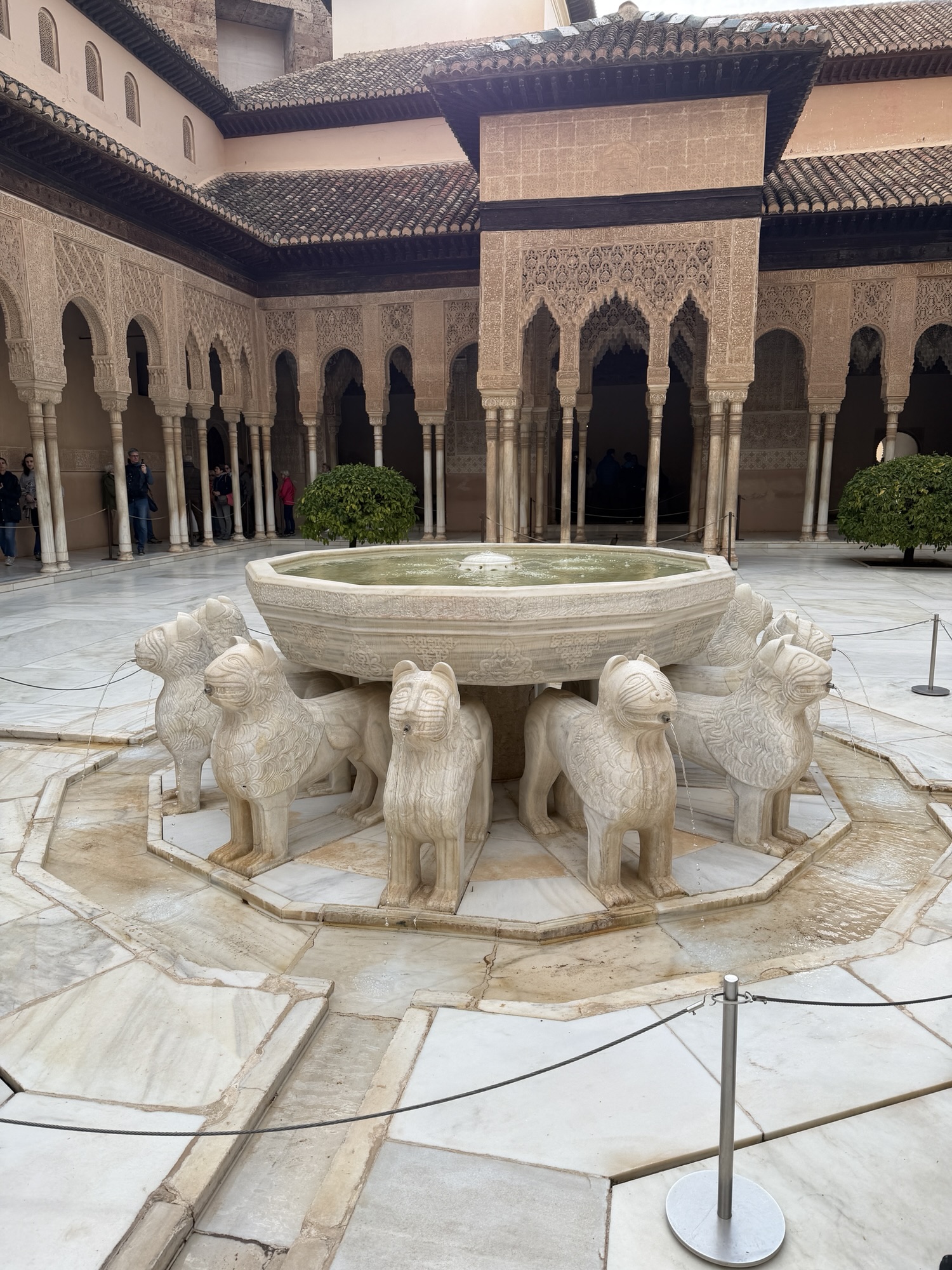
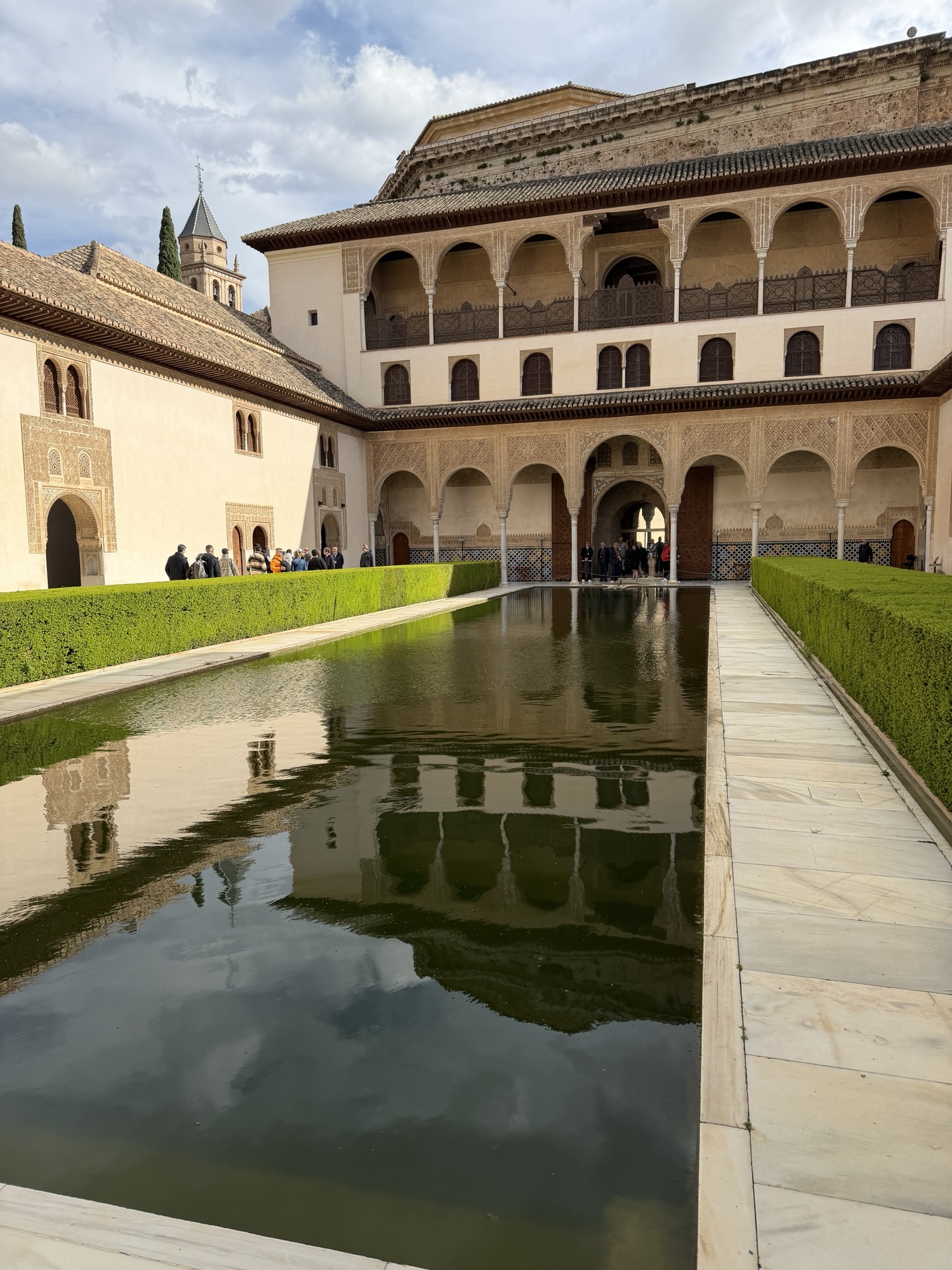
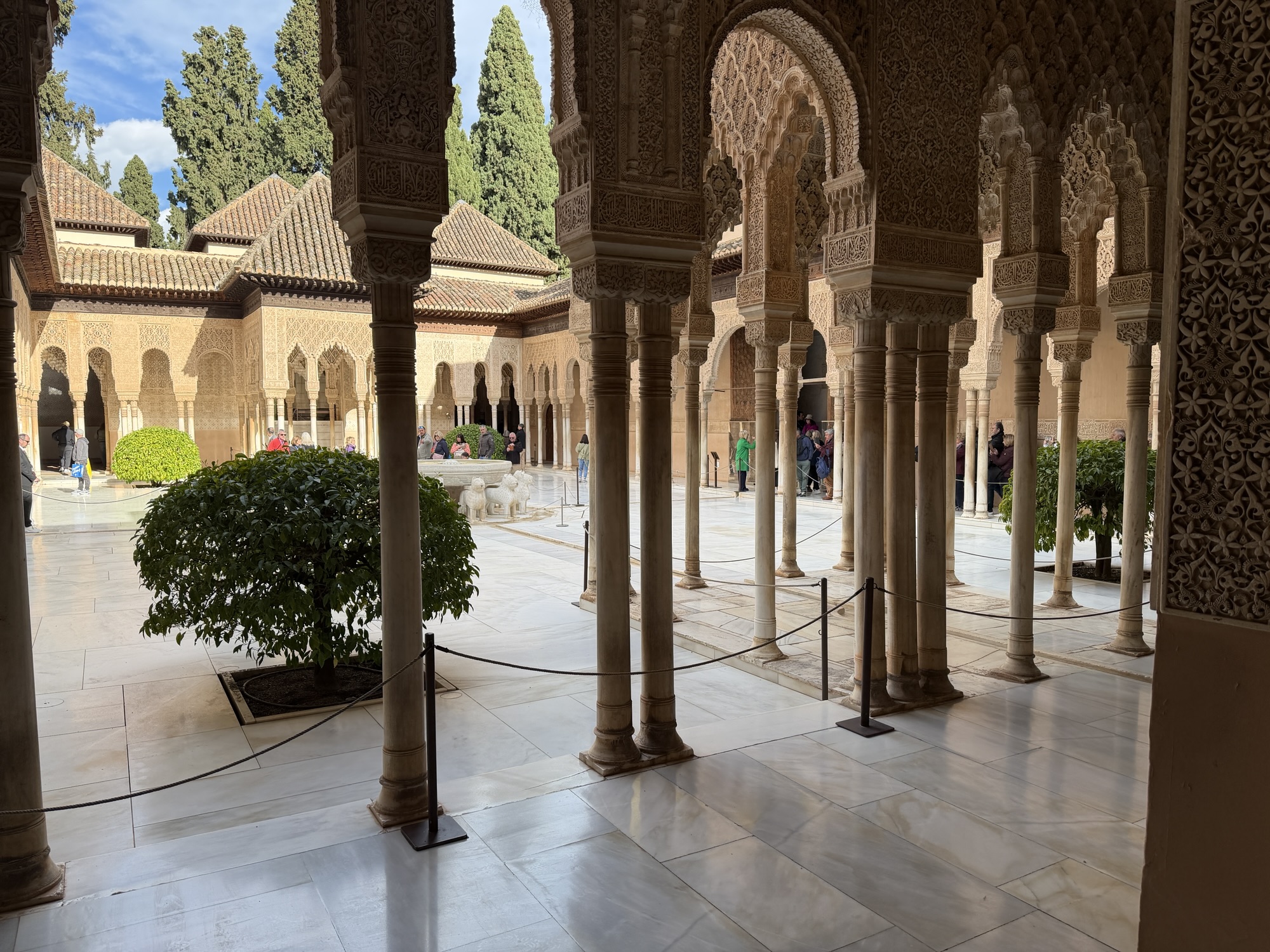
The Palacios Nazaríes is the Moorish palace at Alhambra, and is the reason Alhambra became so well known. It was built in the 14th century, and the intricate stone carvings and plasterwork in its walls and ceilings are remarkably well preserved. Unlike Christian sites, you don’t see many representations of animals or people. Instead, the walls are covered in geometric patterns and verses from the Quran. #travel #Spain #Granada
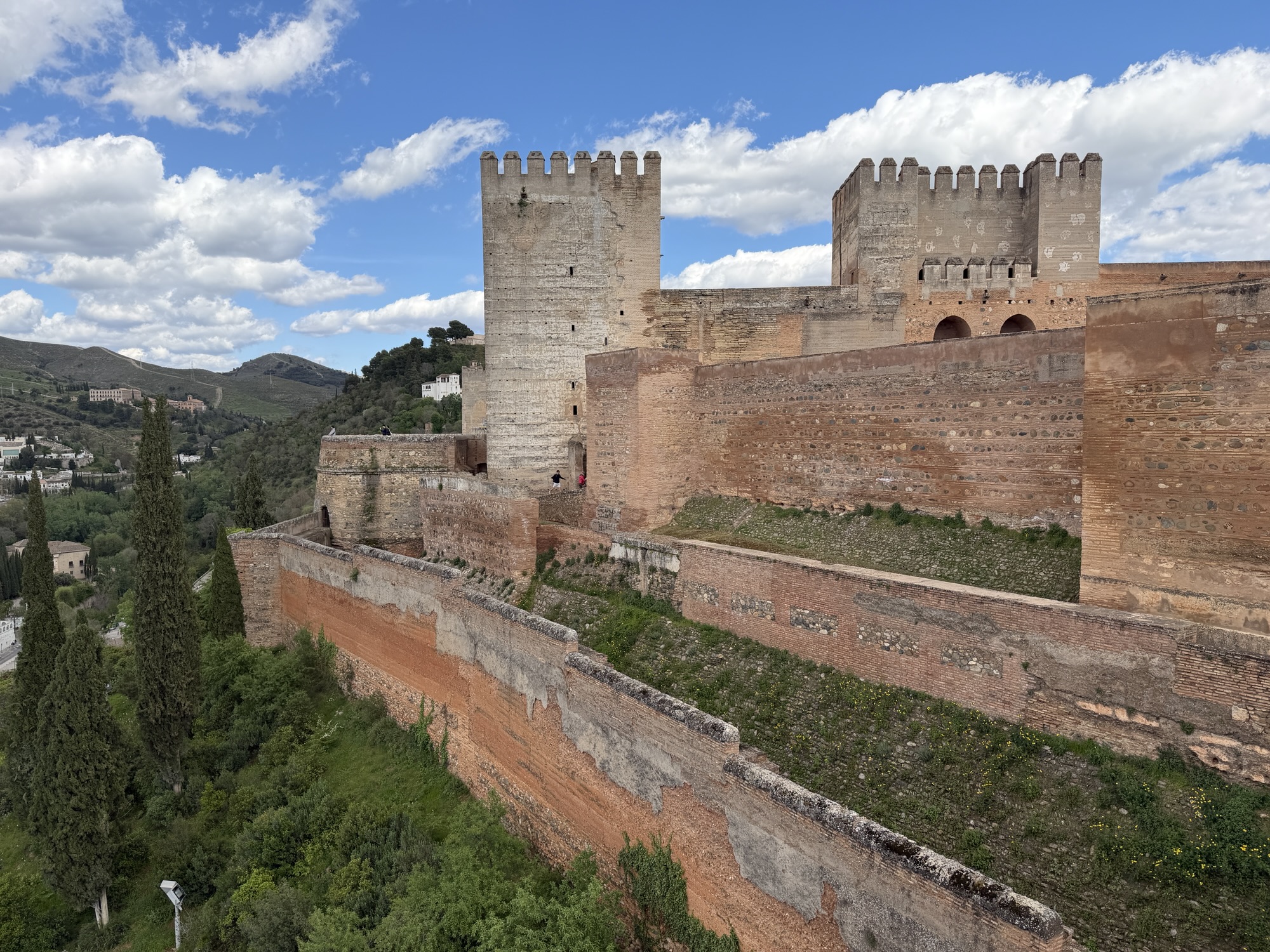
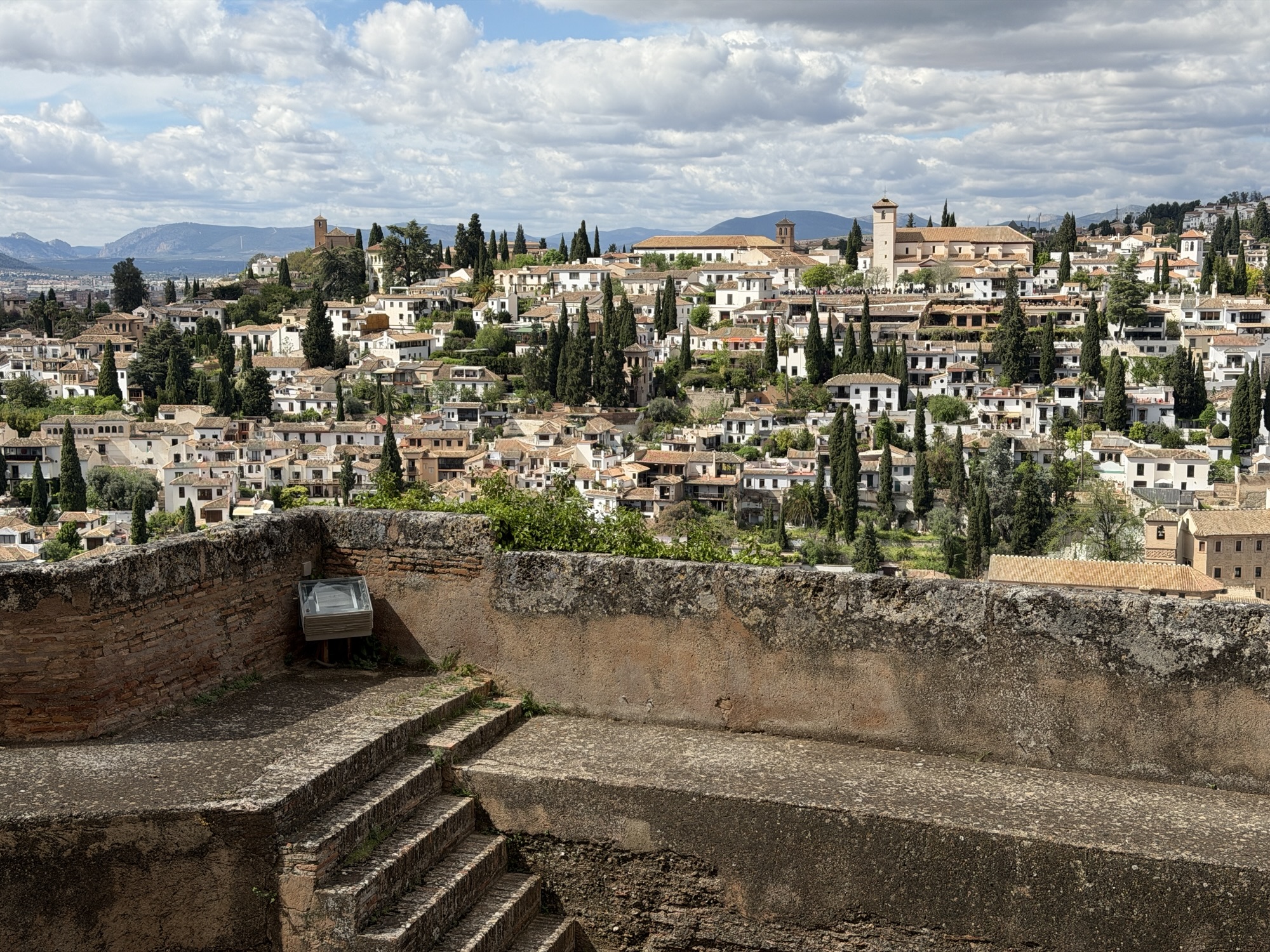
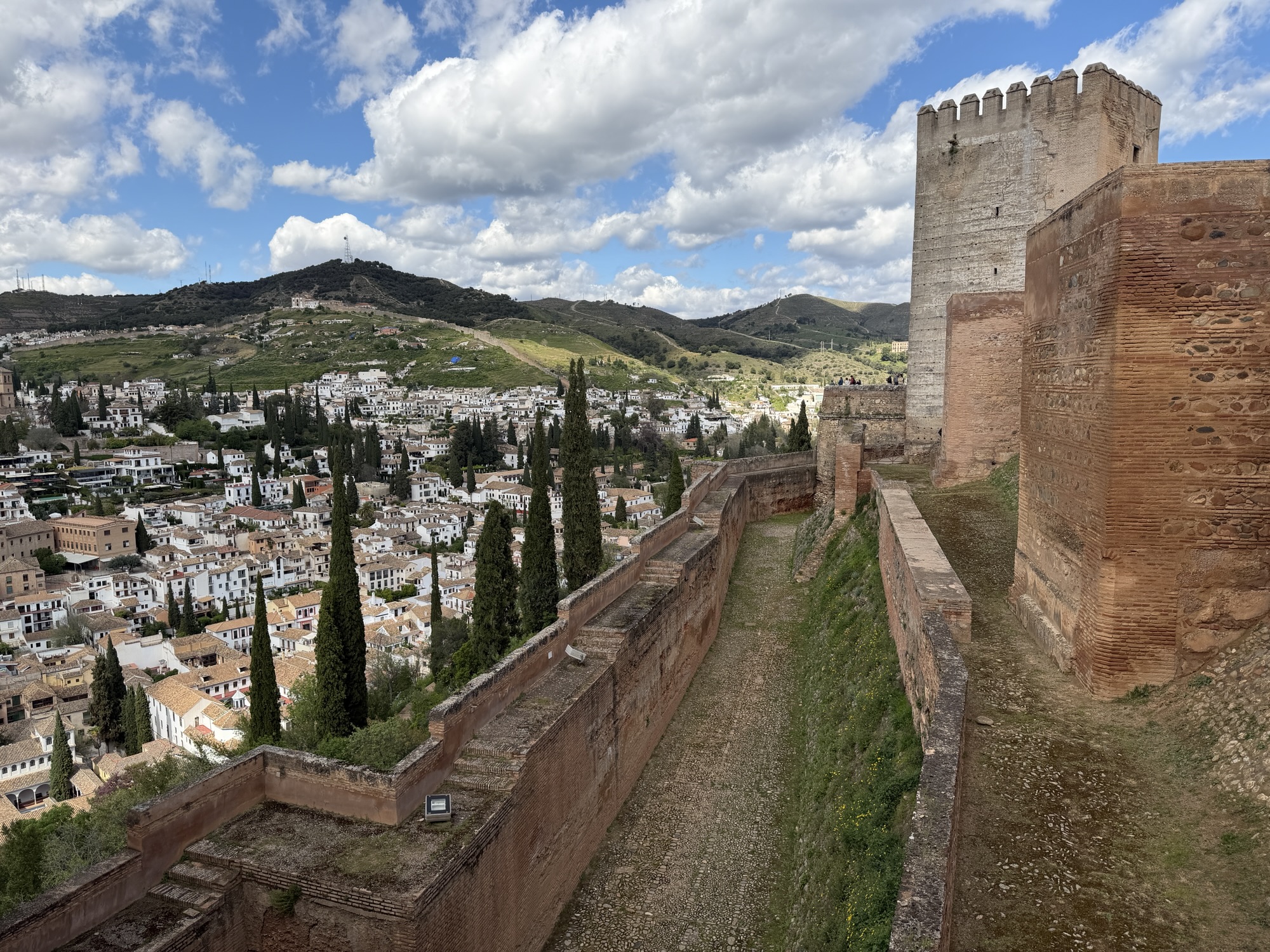
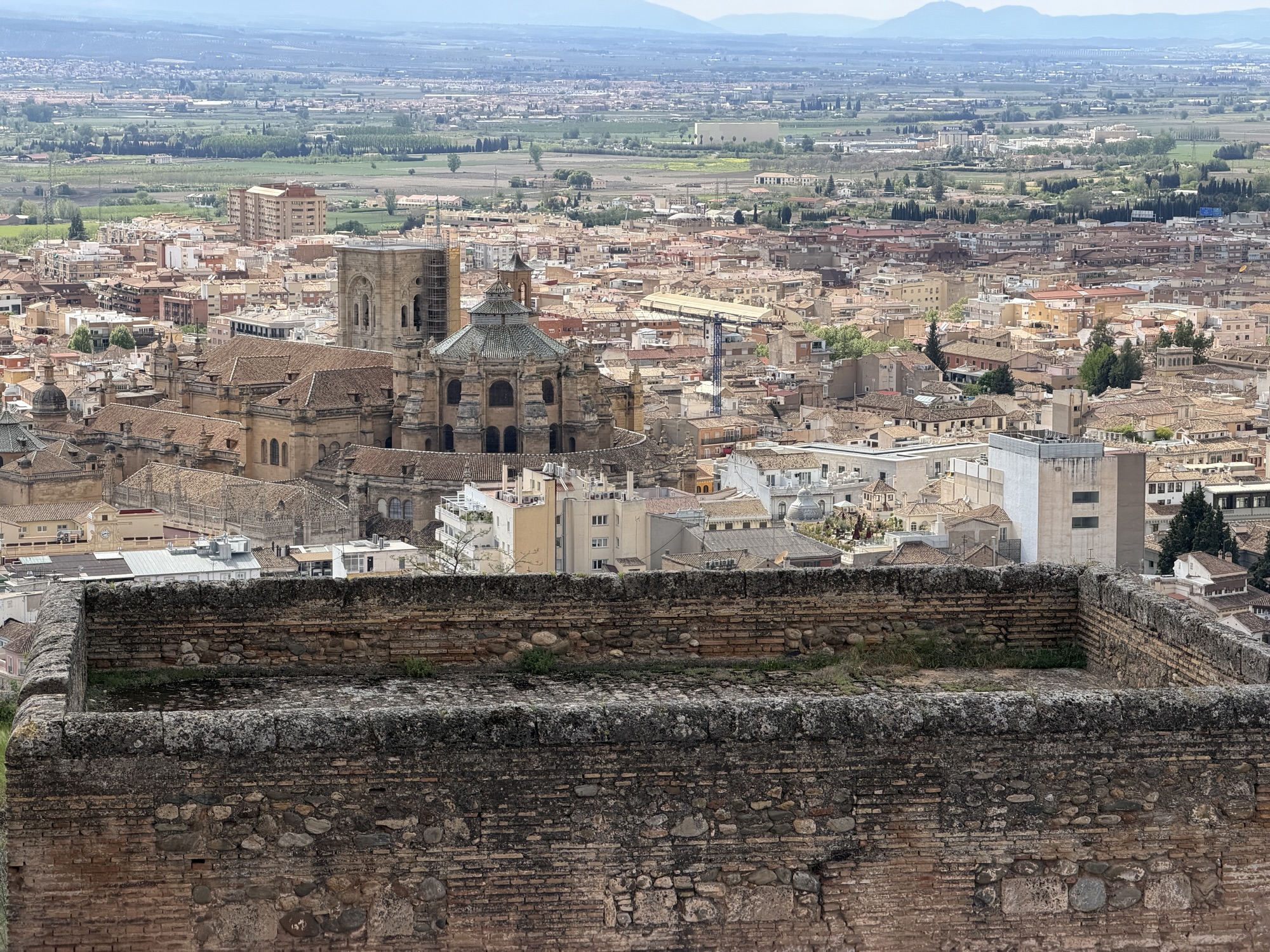
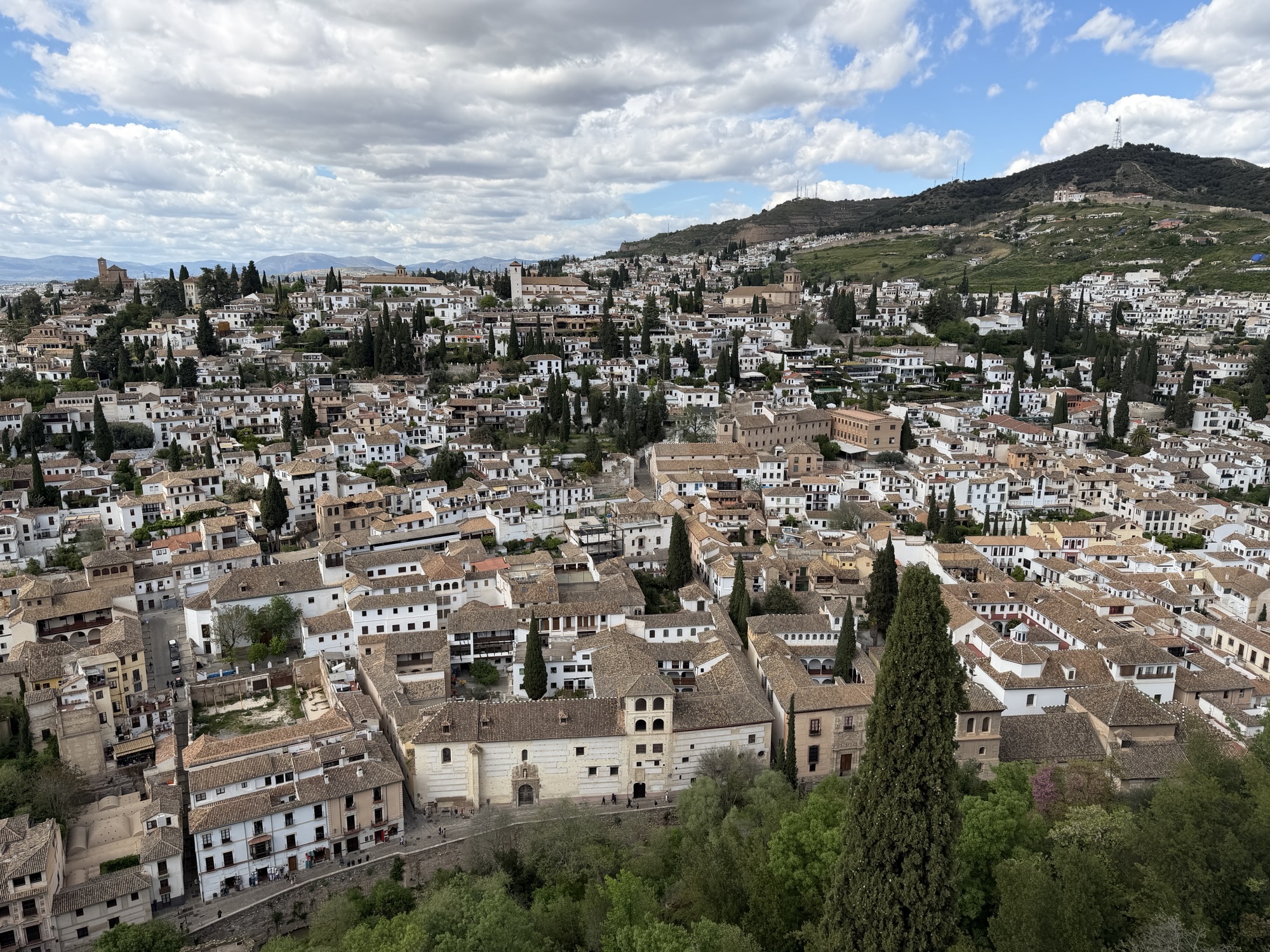
We then visited the ruins of Alcazaba, a Moorish fortress built in the 13th century. If you like old castle ruins, this is a great one. The views from the fortress walls were incredible. #travel #Spain #Granada
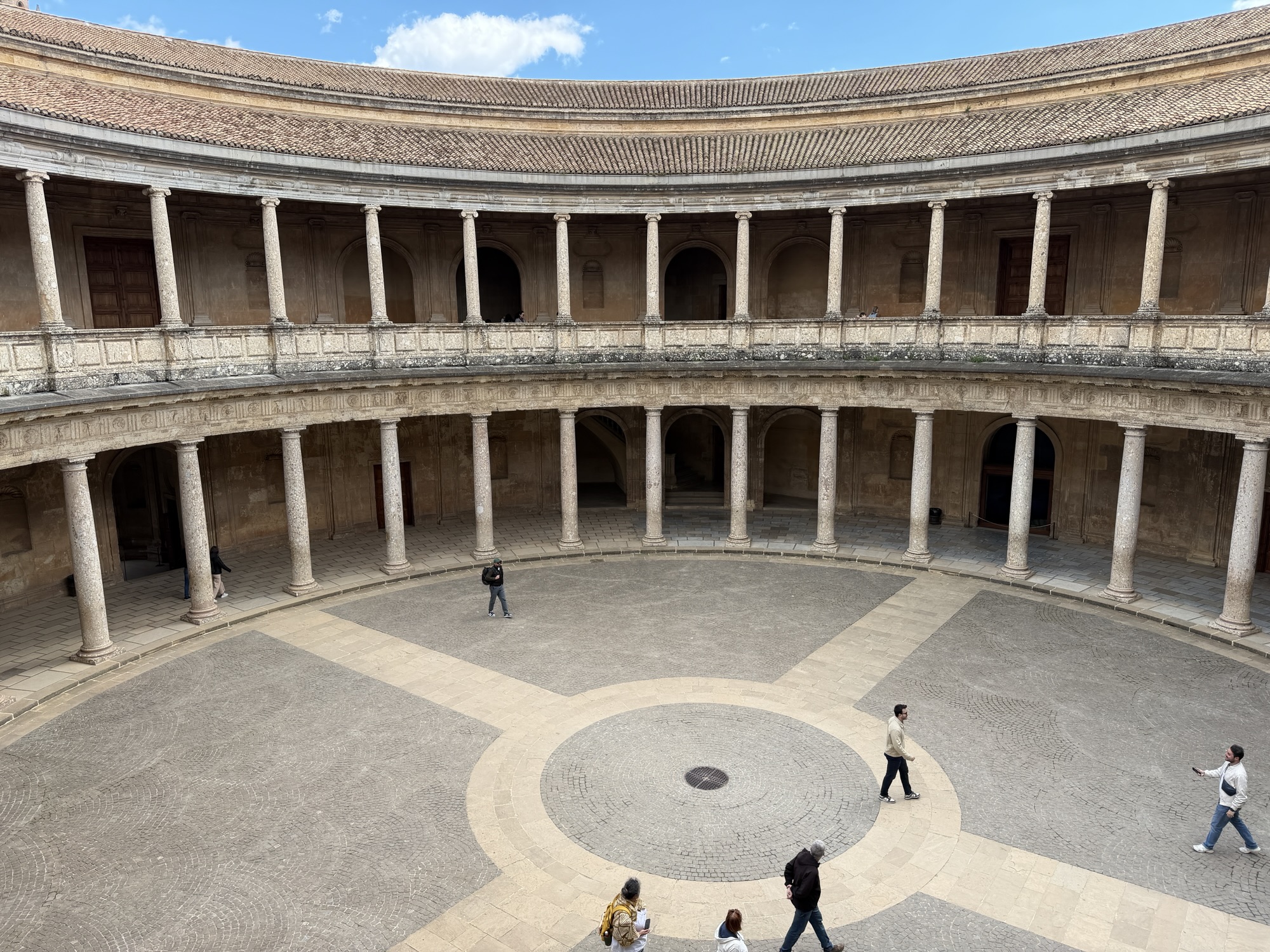
After the gardens we popped into the palace of Carlos V. It’s a huge building with beautiful Renaissance architecture, but you can only really visit the central courtyard and the surrounding balconies. #travel #Spain #Granada
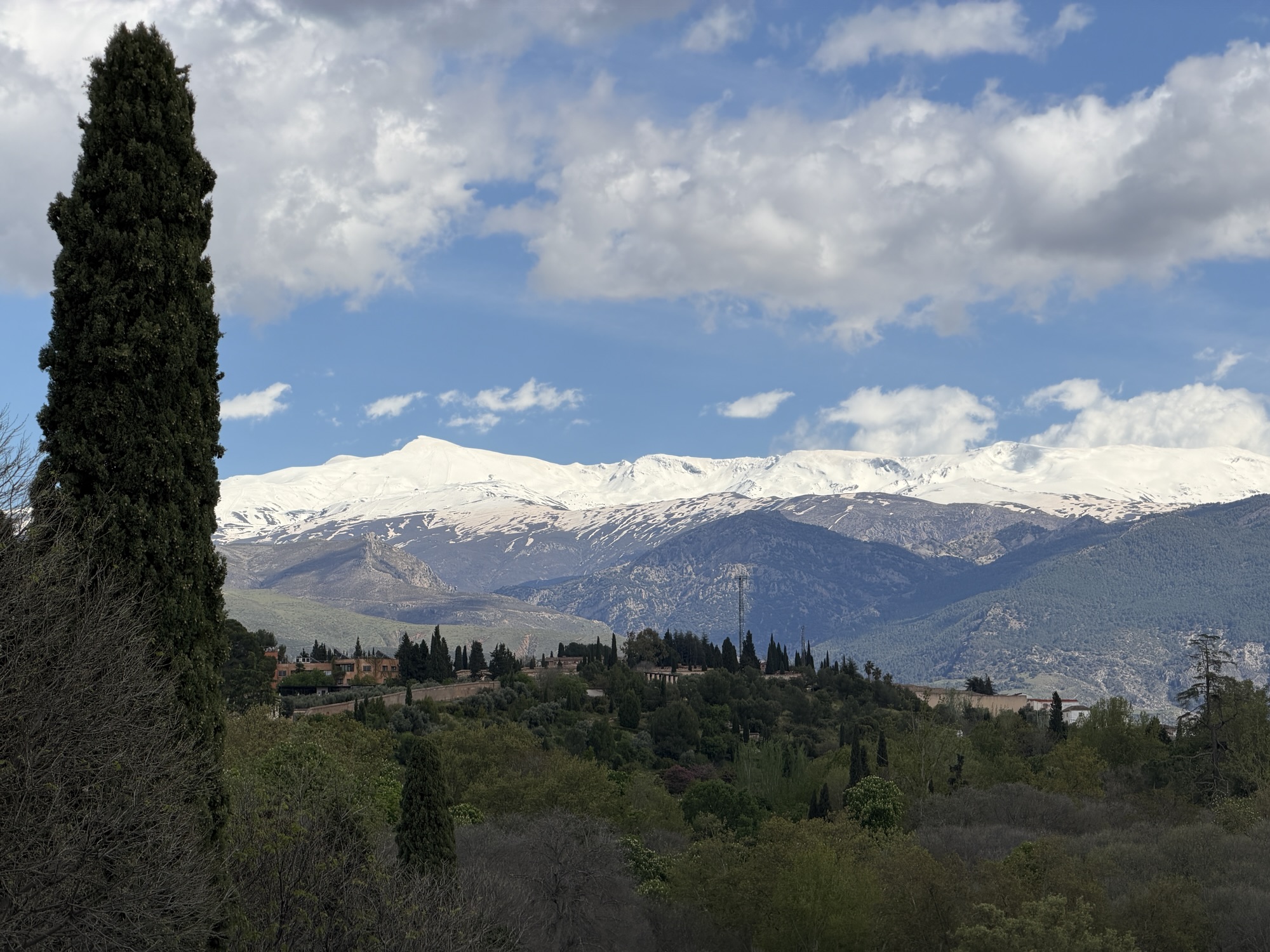
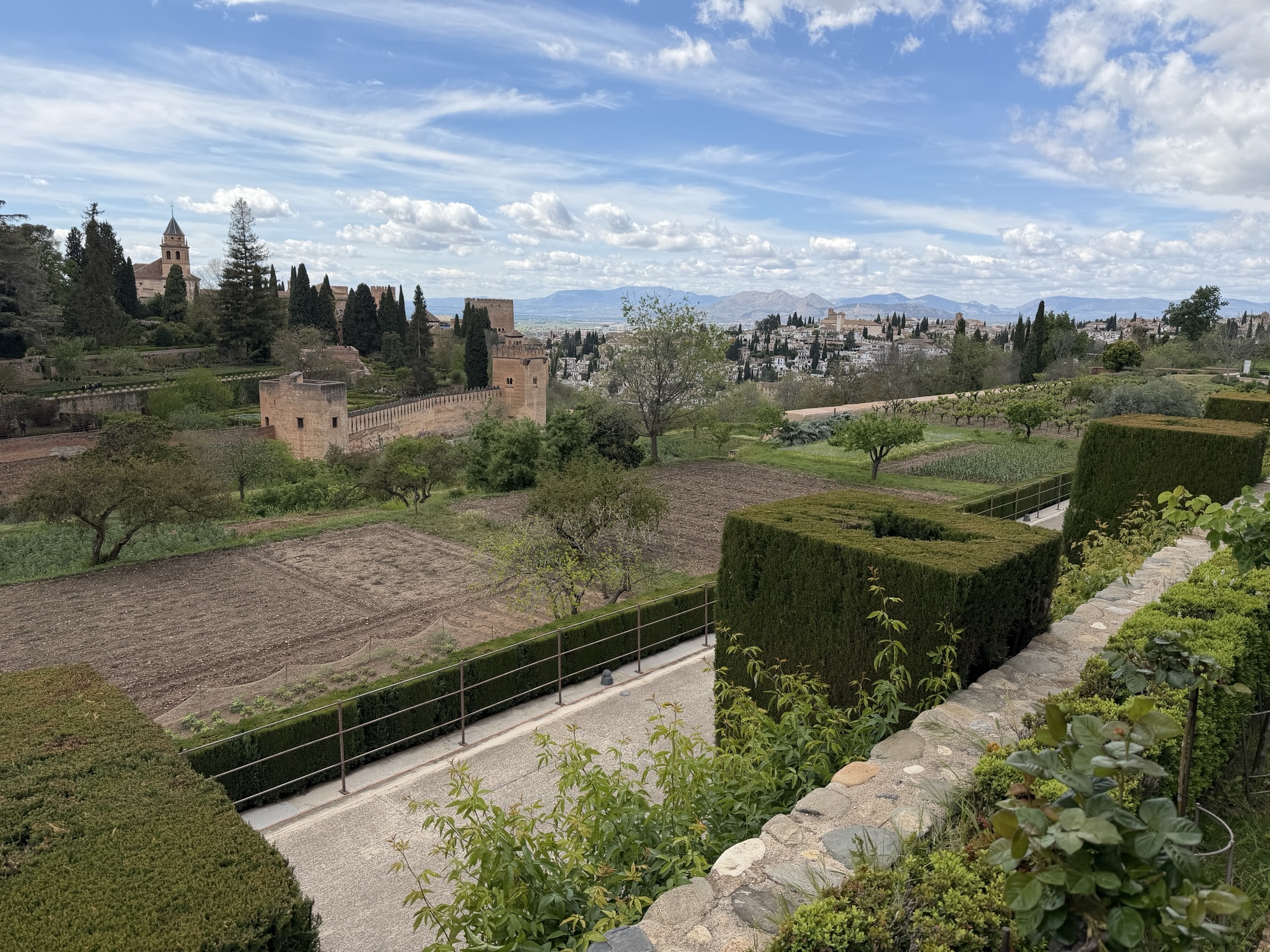
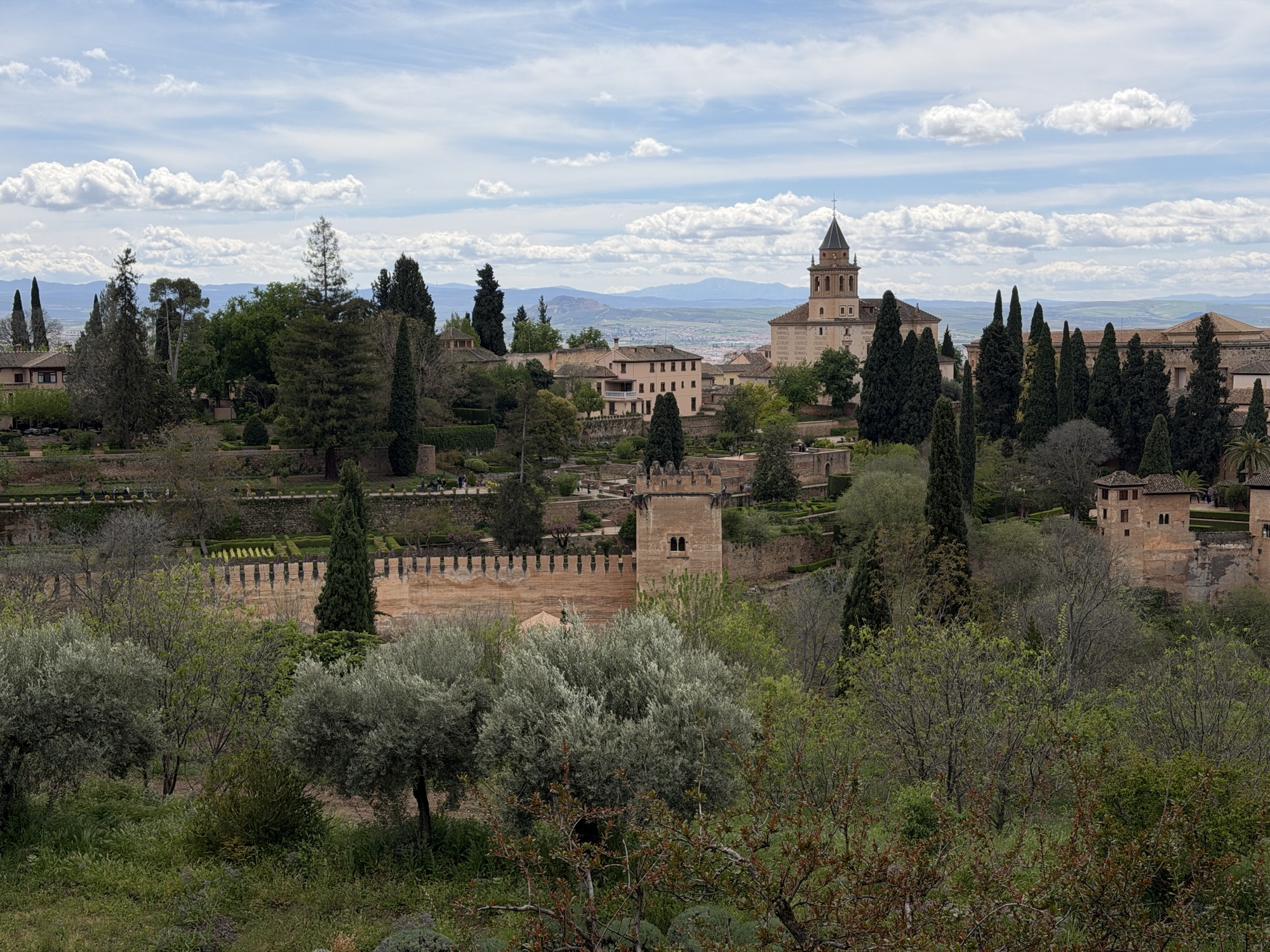
The greater Alhambra complex has four different parts: the Generalife gardens, the Palace of Carlos V, the fortress of Alcazaba, and the Palacios Nazaríes (which is the main attraction). We started in the Generalife gardens. The views were great, but it’s still a bit early so not much was in bloom. (It was also plagued by swarms of large tour groups, which was expected but unfortunate.) #travel #Spain #Granada