Energy Storage

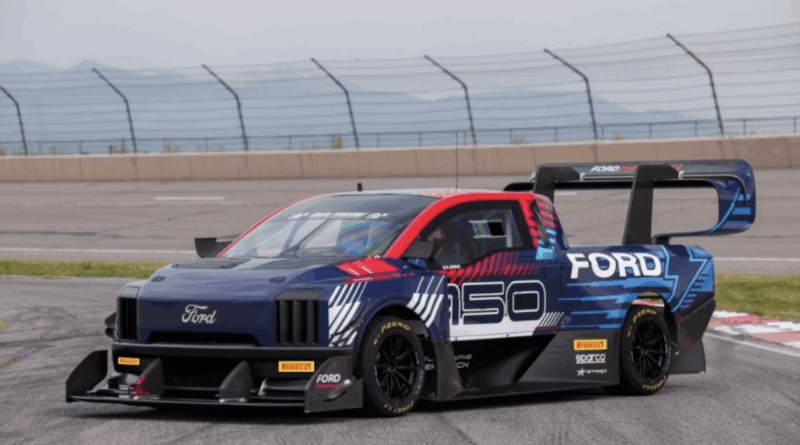
Not too long ago, Ford was hyping the electric F-150 Lightning Supertruck as the face of its EV lineup, and now it's all about energy storage (cropped, courtesy of Ford Motor Company).

New EV Energy Storage Study Sheds New Light On Ford’s EV Spinout

It seems like only yesterday that Ford Motor Company was all in on electric vehicles. Well, that was then. Today, good old-fashioned gasmobiles and hybrid gas-electric vehicles are the name of Ford’s game, along with a massively expanded interest in the energy storage industry. Like, massively expanding. For some insights … [continued]

Data centers, like those at NLR, could reduce their cooling energy use through reservoir thermal energy storage. Photo by Dennis Schroeder, NLR.

NLR Analysis Identifies Reservoir Thermal Energy Storage as a Solution for Data Center Cooling Needs

RTES System Cuts Energy Consumption and Costs Over a Simulated 20-Year Period By Hannah Halusker, NLR The rise of artificial intelligence, cloud platforms, and data processing is driving a steady increase in global data center electricity consumption. While running computer servers accounts for the largest share of data center energy … [continued]

Ford's EV battery partnership with the South Korean firm SK On has suddenly gone up in smoke, impacting new manufacturing facilities in Kentucky and Tennessee (cropped, courtesy of Ford).

It’s Splitsville For Ford & SK As EV Battery Plan Deconstructs Itself

The Intertubes practically erupted in flames on December 11 when word broke that the Ford Motor Company and the leading South Korean firm SK On abruptly dropped their EV battery manufacturing joint ventures in Kentucky and Tennessee. Although the breakup was reportedly mutual, Ford indicated that SK may have jumped … [continued]

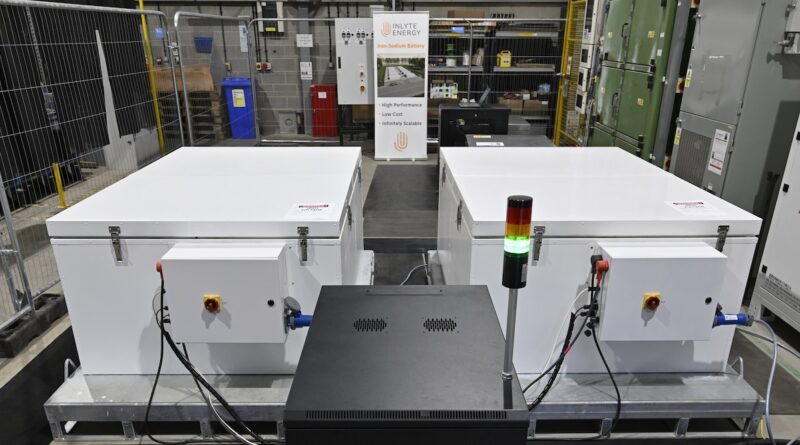
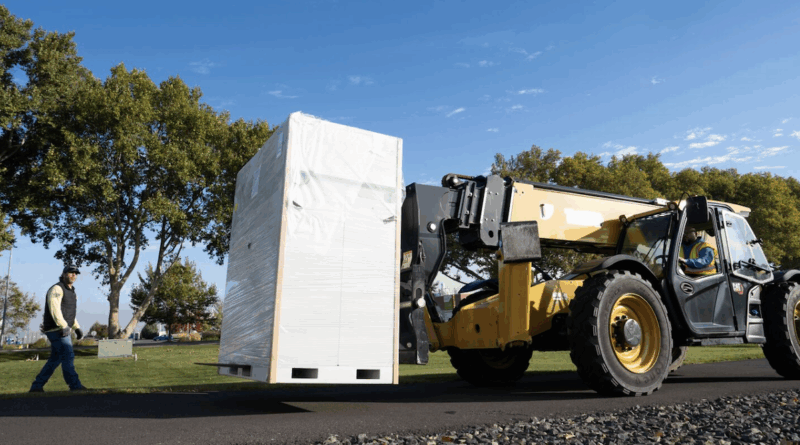
Following a successful test in the UK, a new, large scale iron-sodium energy storage system will be manufactured in the US, helping to shepherd more wind and solar energy into the nation's power generation profile (courtesy of Inlyte via PR Newswire).

New Large-Scale Iron-Sodium Energy Storage System Passes The Test

Fans of new sodium battery technology suffered a big disappointment earlier this year when the once-promising US energy storage startup Natron shuttered its doors. However, other US innovators have picked up the slack. That includes California-based Inlyte Energy, which has just completed a successful test of its full scale “salt … [continued]

Vanadium flow battery technology will be the first to take advantage of a new energy storage test facility hosted by the US Department of Energy's Pacific Northwest National Laboratory (courtesy of PNNL).

A New Flow Battery Will Get A Good Look-See From The US Dept. Of Energy

Vanadium flow battery technology will be the first to take advantage of a new energy storage test facility hosted by the US Department of Energy’s Pacific Northwest National Laboratory.

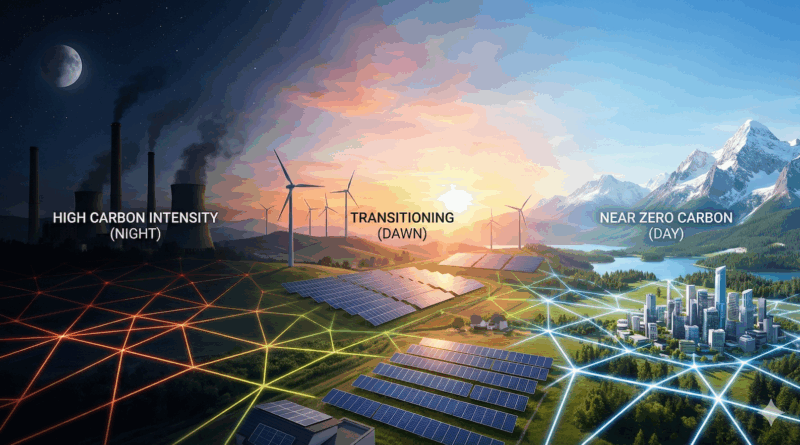
Google Gemini generated. Showing how grid conditions evolve across the transition stages.

Big Loads, Small Loads, & A Changing Grid: A Better Path for Scope 2 Accounting?

An advocacy piece published by WattTime and REsurety was brought to my attention because it reflects the tension building around the proposed revisions to the Greenhouse Gas Protocol’s Scope 2 accounting rules. These rules are not American regulations. They are global and voluntary, governed by the World Resources Institute and … [continued]

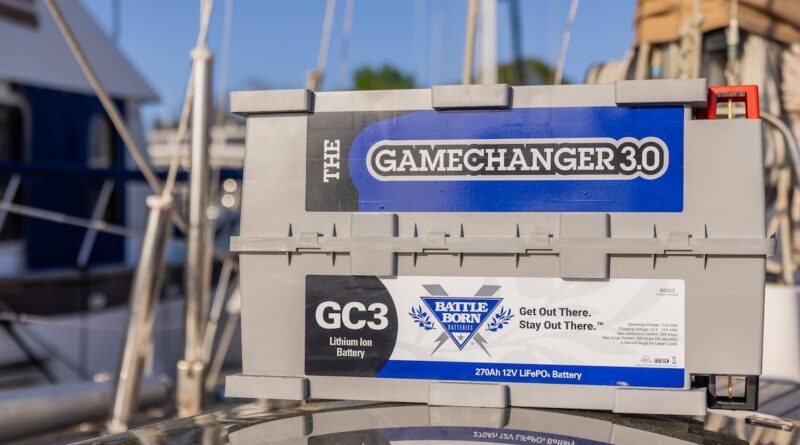
Dragonfly Energy Expands Marine OEM Footprint with World’s Largest Power Catamaran Manufacturer, World Cat

Reno, Nevada — Dragonfly Energy Holdings Corp. (Nasdaq: DFLI) (“Dragonfly Energy” or the “Company”), an industry leader in energy storage and maker of Battle Born Batteries®, today announced that World Cat, the world’s largest producer of power catamarans, has expanded its integration of Battle Born® power systems across new models. Following the … [continued]

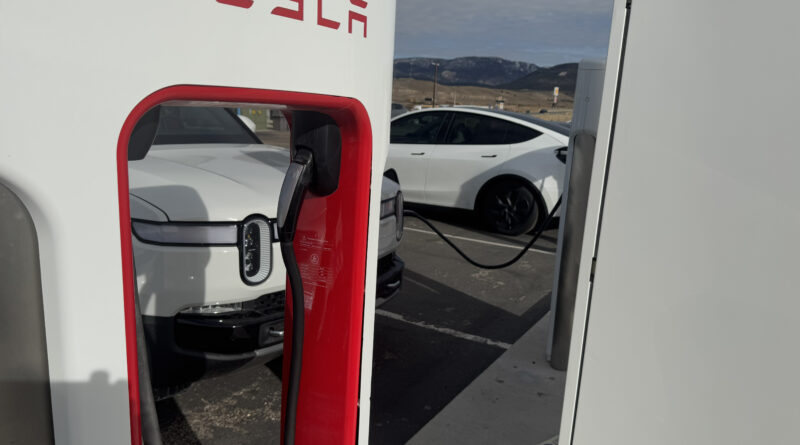
Rivian SUV supercharging. Tesla (NACS) Supercharger. Beaver, Utah. January, 1, 2024. Photo by Fritz Hasler

A New Billing Architecture To Transform EV Charging Economics

TL;DR — Public charging is expensive and messy because the business model is wrong. Instead of selling electricity, charging operators should just provide infrastructure — and utilities should bill drivers directly at their home rate. A single API can make this happen and unlock the kind of seamless experience Tesla … [continued]