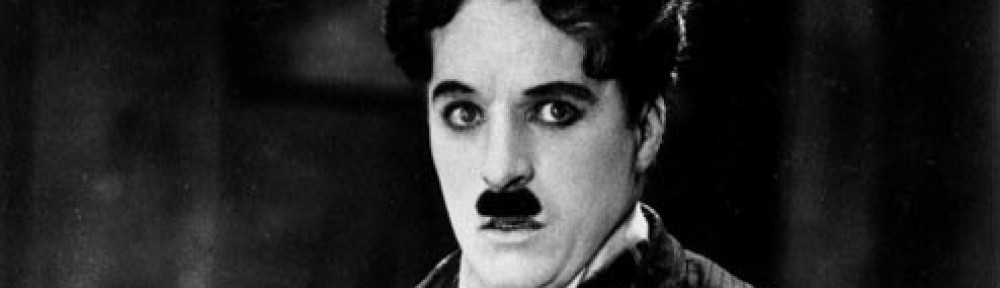

Release Date: 5 January 1967
Written & Directed by Charlie Chaplin
Duration: 107 minutes (revised cut)
With: Marlon Brando, Sophia Loren, Sydney Chaplin, Tippi Hedren, Patrick Cargill, Margaret Rutherford, Charlie Chaplin
Story: A beautiful Russian Countess stows away in the cabin of an American diplomat on a liner outbound from Hong Kong.
Production: There was a decade between A King in New York and Charlie Chaplin’s final film as writer and director (and his brief final onscreen appearance), A Countess From Hong Kong in 1967. Although it may be thought that Chaplin, now in his 70s, might have entered a period of contented retirement in his mansion house in Switzerland, nothing could be further from the truth. He was as busy and vital as ever during this time by all accounts.
The Chaplin family—growing with the addition of new children (six sons, five daughters, spanning his four marriages, eight with Oona—four of his children arrived after he turned 64) for a total of 11 in all—toured the world en masse on several occasions. Chaplin continued to revisit his older work, re-issuing revised versions of A Dog’s Life, Shoulder Arms, and The Pilgrim as a feature dubbed The Chaplin Revue (1959). His main occupation immediately following A King in New York was the process of compiling his autobiography, a work that grew from periods of reminiscence sparked by visits from his half-brother, Sydney.
 Although offered the services of a co-writer or even a ghostwriter, Chaplin insisted he must tell his own story in his own words. It was a process that soon got away from him. Rather than type his own work, Chaplin dictated his life story to his secretary, Eileen Burnier, relying on her to edit, clean up, and re-order his stream-of-consciousness anecdotes from all across his life and career. The book was promised for 1958, but it didn’t see publication, under the title My Autobiography, until 1964. Full of oversights and omissions, Chaplin’s autobiography was self aggrandising and indulgent. Lita Grey Chaplin—dismissed in a mere three lines despite being the mother of two of Chaplin’s surviving children—responded with a book of her own, Life With Chaplin, in an attempt to balance the scales. The spark behind the writing of Chaplin’s book, Sydney, died on 16 April 1965 aged 80—the same day was also Chaplin’s 76th birthday.
Chaplin was still intent on making new films and he toyed with various projects in the decade after A King in New York. One was a spoof Hollywood epic, perhaps based on the movies of the 1950s now so out-of-date in the swinging 1960s, while he also harboured ambitions to write for the stage, perhaps an opera based on Tess of the D’ubervilles. For a long time he developed a story about a convict, intending the part to revitalise the acting career of his son Sydney, now in his 40s (his most recent film had been 1961’s Follow That Man).
Instead, for his 81st film and the only one he made in colour (and widescreen, a 1950s cinematic innovation he’d decried in A King in New York), Chaplin returned to an idea that dated from almost four decades before when in the 1930s it had been intended as a vehicle for his then partner Paulette Goddard. Like A King in New York, the original story drew from real-life deposed aristocrats (in this case, escapees from the Russian revolution). Chaplin returned to the material, updating it for contemporary times but essentially telling the tale he had intended many decades before.

Thanks largely to his standing, the 76-year-old Chaplin was able to line up a stellar 1960s cast, including Marlon Brando, Sophia Loren, and Tippi Hedern, without even showing any of them a screenplay. Several of the actors came to regret their impetuous choice to commit to Chaplin’s film sight unseen, especially Brando who feigned illness to escape the set at Pinewood studios just outside London (where shooting began in January 1966), and Hedren, who complained to Chaplin that her ‘substantial’ supporting role was little more than a cameo towards the end of the film.
In 2016 Hedren recalled her experience making A Countess From Hong Kong in 1966, including her exposure to Chaplin’s ‘bizarre’ method of direction that was completely different to that of Alfred Hitchcock whom Hedren was more used to. ‘It was interesting to meet Chaplin after Hitchcock,’ she wrote, ‘their directing styles were so different. Chaplin’s method was to act out all our different roles, which was brilliant to watch. Instead of directing, he’d get out there on set and say: “OK, do this,” and show us how. He’d become Sophia Loren. He’d become me and Marlon. It was really unusual and I’d never seen it happen before.’ Which goes to show that across his entire career, Chaplin never wavered in his unique style of directing others.
 Chaplin’s instructional directing style was also difficult for Brando, who revered the ‘method’ style of acting, popular since the 1950s. Hedren recalled: ‘Charlie and Marlon put up with each other, you might say. Marlon was so insulted to see someone acting out his role and that’s why he wanted to leave. I thought it was charming and funny, but Marlon wanted to quit and Charlie had to convince him to stay on.’ Brando took to showing up late on set, dominating Loren, and attempted to ‘psych-out’ his elderly director. Chaplin was having none of it and very quickly restored his authority by threatening Brando with rival press conferences to air their grievances. ‘We’ll see who gets the biggest audience,’ he said, no doubt with a twinkle in his eye.
For the first time since 1918, Chaplin was working for a studio—Universal—and did not finance or totally control the film. He was paid a director’s fee of $600,000 (not that he needed the money) and had a share in the film’s box office gross (worthless, as it turned out, as the film flopped). Working at Pinewood, Chaplin faced more of the same unfamiliarity with the equipment and protocols of modern studio filmmaking a whole decade after he’d lasted worked behind the camera. ‘I am the servant of the Muses,’ said Chaplin at a November 1965 press conference announcing A Countess From Hong Kong, ‘and when they say “Get back to work, you lazy bum” I get back.’
 Chaplin made a small cameo in the movie—his only appearance in one of his own films in colour. He played an elderly ship’s steward who, unaccountably given his profession, seemingly suffers from seasickness, recalling scenes from earlier ship-board Chaplin shorts. Chaplin’s steward had few lines, and as this was his final appearance in his final films, he left the world of moving pictures as he’d come in, silently.
The final shots for A Countess From Hong Kong were actually the opening scenes of the film. Chaplin apparently deliberately scheduled this sequence as his final work as filming took place at the showrooms of tent maker John Edgington (doubling as a Hong Kong nightclub), located in the Old Kent Road, very close to where Chaplin had spent his troubled youth. The director had celebrated his 77th birthday during the shoot, so perhaps felt this might be his last time in London and took the opportunity of making his final film to return to the place where his life had begun.
A Countess From Hong Kong turned out to be an unremarkable, middling romantic comedy that was not greatly romantic nor particularly funny. If the film had not been made by the revered Charlie Chaplin, it is unlikely it would have received even the few positive notices that came its way. The film was out-of-step with the rebellious cinema of the late-1960s, a creaky would-be farce where a sharper, more youthful wit was required. It was the work of a filmmaker whose approach had changed little, and then exceedingly grudgingly, since the silent days before 1929. Now, in the late-1960s, his art was out-of-place and out-of-time—he was no longer capable of making films that were contemporary, with A Countess of Hong Kong stuck in some kind of vague wartime limbo, crossing the 1930s with the 1950s in its approach to comedy and drama.
 For the Sunday Express, the new Chaplin film was ‘old fashioned’ and ‘predictable’, while many critics complained about the miscast leads, deeming Loren and Brando unsuitable for such comedic farce material. Alexander Walker of the Evening Standard claimed Brando had been ‘directed to act in two styles, one reminiscent of a speak-your-weight machine and the other a sudden, manic frenzy peculiar to bedroom farce’. The Daily Mail was one of the few to lightly praise Chaplin’s late life effort: ‘Not by a long chalk the best of Chaplin, but all the same an agreeable escapist send-off for the New Year.’ In the United States, Time magazine called the film ‘probably the best movie made by a 77-year-old man. Unhappily, it is the worst movie made by Charlie Chaplin.’
A Countess From Hong Kong turned out to be Charlie Chaplin’s final film, but it wasn’t actually intended as such. Approaching the age of 80, he was still at work developing a new movie under the title The Freak, a fairy tale-like story following the fortunes of a young girl with wings found in Argentina by scientists. Chaplin planned to feature two of his daughters—Josephine and Victoria in the film; they had both made appearances in A Countess From Hong Kong along with Sydney (who shone) and Geraldine. It almost sounds like the kind of film Guillermo del Toro might make today, but it was not to come to fruition (although he was still talking about making it as late as 1972).
During post-production on A Countess From Hong Kong in October 1966, Chaplin had suffered a broken ankle following a fall in the street. He may have considered himself to be still young at heart, or at least mentally, but his body was beginning to let him down. He finally had to give up playing tennis, the one physical activity not involving women that he had pursued throughout his adult life. The much younger Oona, just 52 when Chaplin died, found her role as Chaplin’s wife morphing more into that of a care-giver, looking after a now elderly man. Chaplin continued working, composing new scores for his older films (such as 1928’s The Circus)
Throughout the 1960s, attitudes to Charlie Chaplin began to change, especially in America, the country that had expelled him in 1952. In 1962 The New York Times asserted ‘We do not believe the Republic would be in danger if yesterday’s unforgotten little Tramp were allowed to amble down the gangplank of a steamer or plane in an American port’. His work was being re-screened and re-evaluated, attracting new, younger audiences. He was awarded honorary degrees by Oxford and Durham universities. A year-long series of Chaplin’s lifetime of films began screening at New York’s Plaza Theater from November 1963, and his autobiography—despite its shortcomings and oversights—became a best-seller around the world (it spent six months on the American non-fiction best-seller list) in 1964.
Chaplin suffered a personal tragedy with the death of his son Charlie Chaplin Jr. on 20 March 1968, aged just 42, felled by a heart attack. The younger Chaplin had gone through two failed marriages and suffered from alcoholism. He’d attempted a career as an actor, but had felt professionally hamstrung by the famous name he’d inherited. He had been semi-estranged from his father for a long time, having been brought up largely by his mother, Lita Grey. He appeared in over a dozen movies, including Girls Town (1959), with the son of another famous silent comedian, Harold Lloyd, Jr., and in his father’s Limelight (1952). His autobiography, My Father Charlie Chaplin was published in 1960 and laid out the difficulties he’d had with his family. (‘My Father Charlie Chaplin’ was an odd title for a book about your own life; what with Chaplin’s ‘My Autobiography’—who else’s could it be?—and Michael Chaplin’s ‘I Couldn’t Smoke the Grass on my Father’s Lawn’ (1966), weird book titles clearly ran in the family.)
The 1970s were to be no quieter for Chaplin. He re-released revised versions of The Kid and The Circus and in 1971 won an award at the Cannes Film Festival, and then one at the Venice Film Festival in 1972. That same year, the Academy awarded Charlie Chaplin an honorary Oscar in recognition of his lifetime achievement in filmmaking. He was also finally accorded the long-overdue honour of a star on the Hollywood Walk of Fame. Accepting the Oscar meant returning to the nation that has so forcibly ejected him two decades before. Chaplin, nonetheless, decided to make the trip and won a 12-minute standing ovation from the Hollywood audience which visibly moved him.
Although still planning new work that was never to be achieved, during his final years Charlie Chaplin continued to revisit his past, reissuing A Woman of Paris with a new score in 1976 and adapting his autobiography for a photo-driven volume, the punningly-titled My Life in Pictures (1974). In 1975 the documentary The Gentleman Tramp was just the first of many that chronicled the old clown’s life and career. In 1975, Chaplin was knighted, making him Sir Charles Chaplin, an award he received aged 85 from his wheelchair so frail was he by this point.
 Charlie Chaplin died in his sleep on the morning of Christmas Day in 1977 at the age of 88 (Chaplin hated Christmas, and his daughter Geraldine even implied he may have deliberately chosen his moment of departure). A funeral two days later saw him buried at the local cemetery in Corzier-sur-Vevey, his home from the mid-1950s. There was a blackly comic postscript to Chaplin’s interment that he would no doubt have found humorously macabre—his body was stolen in March 1978 as part of a bungled ransom attempt. The police quickly caught the hopeless perpetrators, a pair of unemployed immigrants (Chaplin biographer David Robinson dubbed the pair ‘Keystone incompetents’). Chaplin’s coffin was recovered unharmed and re-interred, this time encased in reinforced concrete.
After a lifetime of screen work, spanning 1914 to 1967—an astonishing 53 years—what Charlie Chaplin left behind was not ongoing controversy about his private life or his politics but the fruits of that work: his films. Although revival screenings and reconsidered critical opinion had begun to emerge from the 1960s onwards, it wasn’t really until long after Chaplin’s death that his work became widely available for ordinary viewers to become acquainted with. Television screenings were rare, but the arrival of home video (VHS through DVD and Blu-ray) has allowed for meticulous, archive restorations of Chaplin’s films to become easily available for audiences to continually rediscover.
Shortly before Chaplin’s death, upon the 1976 re-release of Modern Times, Mike Harris of The Australian wrote of Charlie Chaplin: ‘Seeing his films helps one to understand how he has become legendary: they are his immortality.’
Trivia: Chaplin’s outline for The Freak saw the mysterious winged girl in Argentina kidnapped and brought to London where she is displayed in a circus/freak show as an ‘angel’. She escapes, but after various adventures is eventually recaptured only to be put on trial to determine her humanity. Chaplin started work on this idea in 1969 and continued to develop it over the next five or six years, on and off. The marriage of his daughter, Victoria, and her desire to ‘run off and join the circus’ in real life brought the project as originally outlined to an end. However, as late as his 85th birthday in 1975 (the same year he became Sir Charles Chaplin), Chaplin was still saying: ‘I mean to make it someday.’ Unfortunately, he never got the chance…
Charlie Says: ‘I sometimes sit out on our terrace at sunset and look over a vast green lawn to the lake in the distance, and beyond the lake to the reassuring mountains, and in this mood think of nothing but enjoy their magnificent serenity.’—Charlie Chaplin’s final paragraph in My Autobiography, 1964.
 Verdict: An unfortunately misfiring final effort from Chaplin. The film takes the better part of an hour to get going, Brando is miscast, and the farce is neither fast enough nor farcical enough. There’s good value to be had from Sydney Chaplin, Patrick Cargill, and (briefly, in the available cut) Margaret Rutherford. Chaplin’s twinkly cameo is another brief highlight, but A Countess From Hong Kong simply proves Chaplin should have stopped after A King in New York.—Brian J. Robb
 Project Postscript: This is the final regular posting in a project that has taken five years to complete, from 2014 to the end of 2019. Initially, I covered each Chaplin release from the beginning exactly 100 years on from the original release, a neat way of re-engaging with Chaplin’s work as it originally unfolded. Of course, as Chaplin’s work rate slowed and into his features, I had to move on from that (otherwise I’d still be at it in 2067 on the 100th anniversary of A Countess From Hong Kong, when I’d also be 100 years old!). So I started covering those films on a more-or-less monthly basis. The work will remain here to be consulted, and is also available as a series of revised ebooks with additional content (the later ones will be released soon). It’s been a fun ride, and I hope some readers got some enjoyment and perhaps enlightenment from Chaplin: Film by Film. Hopefully it has also helped to keep Chaplin’s work alive and may have introduced him and his films to some new fans. Thanks to all who have read the material and stuck with the project across half a decade. Now, what to do next…?—Brian J. Robb
CHARLIE CHAPLIN: A CENTENARY CELEBRATION
An 80,000 word ebook chronicle of Chaplin’s early films from Keystone (1914) and Essanay (1915), based on the first year of blog postings at Chaplin: Film by Film with 20,000 words of supplemental biographical essays.
Also available at Kobo, Nook, Apple, Scribd and other ebook outlets.

 The writer-director had decided not to return to London permanently as he felt the extradition arrangements with the United States meant he could not be sure of his own long-term safety. He turned in his void re-entry permit at the US consulate and issued a statement: ‘It is not easy to uproot myself and my family from a country where I have lived for 40 years without a feeling of sadness, but since the end of the last war I have been the object of vicious propaganda by powerful reactionary groups who by their influence and by the aid of America’s yellow press have created an unhealthy atmosphere in which liberal-minded individuals can be singled out and persecuted. I have therefore given up my residence in the United States.’ This ‘persecution’ of ‘liberal-minded individuals’ and America’s ‘unhealthy atmosphere’ would be the backdrop for A King in New York.
 Chaplin’s deposed monarch, King Shahdov (his name suggests a ‘shadow’ personality; curiously it is depicted as ‘Shadov’ on the film credits) of Estrovia, has been overthrown by a cabal within his government following his plans to use atomic power to improve the lot of his people. Having fallen on hard times (the money looted from his kingdom has in turn been looted by his prime minister), the King becomes a celebrity and takes on advertising contracts in order to pay off his expensive hotel bills. He encounters modern culture, such as movies, and decides it’s not to his taste. A relationship with Dawn Addam’s advertising advisor continues Chaplin’s infatuation (on- and off-screen) with women far younger than he was—Chaplin was in his mid-60s, Addams in her mid-20s.
 As with
  Many of those caught up in accusations of Communism relocated to Europe with several prominent American filmmakers working in 1950s London on both film and television projects. Chaplin’s leading lady this time was Dawn Addams, who first made her mark in 1952’s MGM musical Singin’ in the Rain and had married a Prince in 1954 (she had previously auditioned for Chaplin’s
  The film was completed relatively quickly across a tight nine-week period, with an additional week devoted to location filming. Chaplin himself was under a strict limitation as to how long he could stay in Britain, largely for tax reasons and because he was in fear of attracting the attention of the American authorities who might decide at any moment to have him arrested. It is little wonder, then, if he was somewhat paranoid and irritated when filming A King in New York. As soon as the filming wrapped in summer 1956, Chaplin left for the relative quiet and solitude of Switzerland once more.
 American audiences and critics would not officially see A King in New York for 16 years after its release, although some critics did sneak in a viewing, with the New Yorker dubbing it ‘maybe the worst film ever made by a celebrated film artist.’ British critics were more welcoming if not universally positive. ‘Never boring,’ was the conclusion of Kenneth Tynan writing in The Observer. ‘The points that are made—about the withdrawal of passports and the abject necessity of informing—are new to the screen, and it is about time somebody made them.’ For the Daily Mail, Chaplin’s latest was ‘a lumpish mixture of subtle slapstick and clumsy political satire’. In The Sunday Times, Dilys Powell described Chaplin’s character in A King in New York as the final step of his discarding of the Tramp guise, now he was simply playing himself onscreen. Some critics missed the ‘old-fashioned’ slapstick Chaplin and decried his ‘message-crammed’ later movies like
  Chaplin—unusually for the 1950s—was aware of the economic value of his back catalogue. Many other film comedians, especially of the early silent years, did not control their own material, and Chaplin in fact did not have any say over future use of his Keystone and Essanay films, either. Everything else post-1918, though, had been produced at studios under licence or via his own studio. In 1954, Chaplin called his long-term camera operator/cinematographer Rollie Totheroh to clear out the vaults of his old studio and ship all the film material stored there to Switzerland. He had special adjustable temperature controlled storage vaults built in the basement of his Swiss home to store the material.
 Trivia:

 That train of thought fed into his next movie, the final film he would make in the Unite States. By 1948 he was working on a project entitled ‘Footlights’—although he always intended it to be a film, he’d begun building the narrative in the form of a novella. He dictated his story, breaking occasionally to work on developing tunes with his piano that, as Peter Ackroyd puts it ‘might help to evoke the spirit of London immediately before the First World War’, filtered through the earlier London of his childhood. Although autobiographical in nature, the story as it unfolded was not about Chaplin himself, but a Chaplinesque figure that he would undoubtedly play. Towards the end of 1950, the novella had turned into a screenplay now called Limelight.
 Rehearsals for Limelight began in September 1951. Chaplin’s production methods had changed considerably since the early days of 1914 when he and a gang of clowns could simply turn up to a Los Angeles park, camera equipment in hand, and make up a slapstick entertainment on the spot. The rehearsal period was partly mandated by the need for Bloom to train to master her role as a ballerina (she would be doubled in some bed scenes by Oona O’Neill). Filming actually began in November, and while as involved in every detail as before, Chaplin followed his recent, more efficient production process on Limelight.
 While much of Limelight—a film that is overlong by at least half-an-hour—is maudlin and self-regarding, it is well-remembered for the only screen pairing of Charlie Chaplin and Buster Keaton. In his early days Chaplin had worked with such figures as Mabel Normand and Roscoe ‘Fatty’ Arbuckle, whom he later came to eclipse in terms of productivity and popularity. Chaplin was a contemporary of both Keaton and Harold Lloyd (and Lloyd had a serious claim to having been the most popular of the three comics with audiences). For the final musical number of Limelight, Chaplin brought in Keaton as his stage partner partly due to the fact that his comic rival had fallen on hard times following a divorce and loss of his fortune.
 When Limelight was released in October 1952, Chaplin summed up the critical reaction as ‘lukewarm’, which is at least better than outright hostility. Many critics noted how much this once silent comedian, who had so actively resisted the sound film for so long, now rather liked the sound of his own voice. This reaction was best summed up by Walter Kerr: ‘From the first reel of Limelight, it is perfectly clear that Chaplin now wants to talk, that he loves to talk, that in this film he intends to do little but talk!’ For others, though, Chaplin’s best moments in Limelight came with Calvero’s contemplative silences, where according to critic Robert Warshow Chaplin’s ‘true profundity’ lay.
 Limelight, however, did not get a wide release across the United States. It was not seen much beyond the East Coast and New York area in 1952, with many cinema chains simply refusing to show the picture in reaction to Chaplin’s unfavourable public profile following the Joan Barry scandal and the fuss over his personal politics. Several Los Angeles theatres dropped planned screenings of the film when threatened by anti-Chaplin pickets on behalf of the American Legion (the organisation attempted to have release of the film entirely banned across the US). This situation, bizarrely, allowed Chaplin to win his first competitive Oscar, even if somewhat belatedly. The film was re-released in 1972, by which time it had picked up a more positive critical reputation, and as this release saw its first screenings in Los Angeles Limelight was eligible for contention in that year’s Academy Awards. As a result, Chaplin (along with collaborators Ray Rasch and Larry Russell) won the Oscar for Best Music, Original Dramatic Score for Limelight.
 United Artists had been largely profitable since the late-1930s, although the business had declined in recent years. Chaplin’s involvement in the company had been minimal. Various management teams had come and gone, as had various ‘output’ deals with independent studios that would see UA distribute their films. By the start of the 1950s, only Mary Pickford and Chaplin remained of the original founders. They had allowed producers Arthur B. Krim and Robert Benjamin to run UA for a period of 10 years, with a view to them becoming co-owners if they were successful. The pair quickly released two successful films, The African Queen (1951) and Moulin Rouge (1952), both directed by John Huston. By 1955, following his departure from the US (see below), Chaplin had sold his 25 per cent of the company directly to Krim and Benjamin for just over $1 million. That left Pickford, who followed suit just a year later, selling up for $3 million. For the first time, United Artists was free to pursue a new destiny without any of its illustrious founders. Krim and Benjamin would take the company public in 1957, and decades of success (backing the James Bond franchise) and trouble (several near bankruptcies and takeovers, including by MGM and Turner) followed.
 The comedians initial reaction was to declare his unequivocal intention to return once he had launched Limelight in London. He would, he said, be more than happy to face any allegations or accusations that could be made against him—after all, he’d taken on both Joan Barry and HUAC and triumphed. At the back of Chaplin’s mind, however, was the potential loss of all his financial assets (his studio, bank accounts, and various remaining investments) if they were to be seized by the government—this would mean for him a return to the childhood poverty he had been running from all his life. He’d been lucky to avoid the financial crash of 1929, so he wasn’t prepared to lose everything to the American government without a fight.
 In November, Chaplin had Oona return to Hollywood via New York, where she spent several days retrieving Chaplin’s financial papers and redirecting his assets, including shifting over $4 million to European banks. She closed up Chapin’s home on Summit Drive, where he had lived the longest, and arranged for the furniture to be shipped to Europe. In her absence, Chaplin was said to be suffering a form of nervous exhaustion, fearing she might die in a plane crash or somehow be detained by FBI agents. It was no fanciful fear, as Oona found that FBI agents had been questioning the staff who remained at Summit Drive, clearly preparing a ‘morals’ case against Chaplin. Many in his circle of friends, work colleagues, and acquaintances were questioned, but little of any value was ultimately uncovered. However, once Oona was back safely in London, it was clear to Chaplin that his days as a non-citizen of the United States had firmly come to an end.
 Landru was notoriously known as ‘Bluebeard’. Between the end of 1915, just as Chaplin was enjoying his first fame, and early 1919 (between the release of Chaplin’s
  To play a role very far removed from his internationally recognised Tramp, Chaplin decide it was necessary to dramatically change his entire appearance . He spent six weeks growing a genuine moustache, wax-tipped in the approved French manner. He allowed the grey that featured in his natural hair to show through for the first time on screen, and he dressed in exquisite suits, complete with a range of hats and canes. As Henri Verdoux, Chaplin was, to all intents-and-purposes, the most polite and dapper ‘lady killer’ in town.
 Chaplin as Verdoux adopts a variety of aliases to access his various ‘wives’. At home waits his real wife, Mona (Mady Correll), looking after their young son, Peter. Also waiting is Lydia Florey (Margaret Hoffman), who believes Verdoux to be an engineer who has been travelling for three months. She’s the first victim we see Verdoux eliminate, only to make use of her funds the next morning. In his sights as his next victim is Marie Grosnay (Isobel Elsom) who comes to view his for-sale house. Also in play is the alarming Annabella (Martha Raye), who believes Verdoux to be a sailor, Captain Bonheur. She proves somewhat indestructible, surviving all of Verdoux’s attempts to remove her, whether through poisoned wine or the more direct approach of tossing her overboard from his boat. It is Annabella who ultimately thwarts his attempt to marry Grosnay. Also featured is ‘The Girl’, a young woman Verdoux finds on the street—a ‘derelict’, and in no way a prostitute, thanks to film censor intervention. He plans to try out his poison on her, but her commitment to looking after her now deceased injured war veteran husband stays Verdoux’s hand. She ultimately makes good in life as the wife, or perhaps companion, to an arms dealer making a fortune from war. That’s the core of Chaplin’s take on Verdoux—his individual acts are immoral, but society’s collective acts of war and destruction are seen as patriotic. It was a view that would bring Chaplin further trouble later.
 That was thought to be the end of the matter, and while things went quiet for a while, Joan Barry never really went away. By the end of 1942, she was back to trouble Chaplin once more. A couple of days before Christmas, Barry broke into Chaplin’s house, wielding a gun and threatening suicide. Apparently, with Chaplin’s willing acquiescence, she then stayed the night. She was back a week later, like a stalker, and this time Chaplin took her to the police. That apparent warning shot wasn’t enough to make her change her behaviour and she was found the following night on Chaplin’s grounds, once again armed.
 The use of the Mann Act in this way by prosecutors was targetted against those (like Chaplin) who’d spoken out in favour of a ‘second front’ during the war to help relieve pressure on Russia; a similar prosecution had been considered against writer Theodore Dreiser for similar reasons, but was not ultimately progressed. Now, Chaplin was the target. One newspaper commentator even went so far as to claim that Chaplin might have been the victim of a ‘fascist clique in America’ in retaliation for his caricature of Hitler in The Great Dictator. The Washington Times-Herald opined that ‘this is persecution of Chaplin by the Federal government’.
 On some posters for Monsieur Verdoux, a challenge was thrown out to audiences that had grown-up with the ‘old’ Charlie Chaplin, the knockabout Keystone Tramp: ‘Chaplin Changes!’ the poster declared, and then asked, pointedly, ‘Can You?’ Chaplin knew the film would be challenging to some audiences, and he expected critics to dislike it. At a press conference to launch the movie in New York in April 1947 he invited the attending reporters to ‘proceed with the butchery’. Many of the questions concerned what ‘message’ Chaplin was trying to communicate, and whether he felt audiences would be willing to follow him in this new, somewhat startling direction. Chaplin’s supposed ‘Communist sympathies’ were also queried, something he denied although he was happy to admit to having supported Russia as ‘a wartime ally’. The press conference rapidly became an inquisition with a free-for-all as journalists hurled questions to Chaplin about his nationality status, his income, and his refusal to fight for Britain in either of the World Wars. Getting back on topic, Chaplin was finally asked about his reaction to the reviews of his latest film: ‘Well, the one optimistic note is that they were mixed,’ said the screen clown.
 It may be relentlessly old fashioned in style and approach, but Chaplin’s Monsieur Verdoux held up a perhaps unwelcome mirror to contemporary society. The core of the film’s meaning comes in the words of Verdoux uttered towards the end of the film. They are a briefer, more refined version of the passionate declaration that had climaxed The Great Dictator, and they are all the more effective for it: ‘As for being a mass killer, does the world not encourage it? Is it not building weapons of destruction for the sole purpose of mass killing? … As a mass killer, I am an amateur by comparison. … Wars, conflict—it’s all business. One murder makes a villain; millions, a hero. Number sanctify.’ The fact his victims were women could perhaps be read as Chaplin’s personal verdict following the Joan Barry case (as Henri Verdoux he admits: ‘I like women, but I don’t admire them’), even though he had begun formulating the film before that ‘landmark miscarriage of justice,’ as Los Angeles attorney Eugene L. Trope had described the case.
 Trivia:
 The odd similarity between the appearances of Chaplin and of Hitler was hard to ignore in the later 1930s. It had inspired a comic song by British performer Tommy Handley entitled ‘Who is That Man Who Looks Like Charlie Chaplin?’ and was often used by newspaper cartoonist to make satirical political points. The similarity was not simply in their appearance—Chaplin and Hitler had been born in the same April week in 1889. This was something Chaplin could not ignore, especially when in the wake of Modern Times the German authorities at the direction of Hitler began to ban his films.
 Direct inspiration came from a viewing of the Leni Rienfenstahl German propaganda film The Triumph of the Will (1935). Chaplin saw the film with fellow director Rene Clair, who found it horrifying while Chaplin thought it a hilarious production, so ridiculously over-the-top was the propaganda element. Watching Hitler giving speeches, Chaplin began to see how he could imitate and so satirise Hitler’s mannerisms and movements, even his vocal inflections. He followed a viewing of the Rienfenstahl film with careful study of newsreels of Hitler’s speeches, and slowly developed his caricature of the dictator’s oratory. The core of The Great Dictator lay in this simple conceit.
 Shooting actually started just days after the war began and ran through until March 1940, a rather rapid production process in comparison to some of Chaplin’s past endeavours (but not as rapid as Hitler’s assault on the countries of Europe). His first drafts of the script are, at their core, remarkably similar to what was to finally end up onscreen, including a shorter version of the climatic speech. For the first time Chaplin deviated from his use of the regular supporting cast members he’d worked with over many years in favour of hiring several well-established acting names. Henry Daniell, with a reputation for playing villains, took on the Goebbels-like role of Garbitsch and played it rather straight in stark contrast to the comic acting going on around him, particularly from Chaplin as Adenoid Hynkel and Jack Oakie as the Mussolini-equivalent, Benzino Napaloni, dictator of Bacteria. Billy Gilbert, familiar from his work with Laurel and Hardy especially in 1932’s Oscar-winning The Music Box, partnered Daniell by playing the Goering inspired character of Herring.
 Chaplin cast Goddard as Hannah (presumably deliberated named for his mother), the waif-like companion to the little barber, a role not a million miles away from that she had on
  Chaplin’s detailed attempts to guide his wife’s performance didn’t help matters. Dan James noted: ‘There was some anger on both sides, but he worked very hard with her. Sometimes he would make 25 or 30 takes. He would stand in her place on the set and try and give her the tone and the gestures. It was a method he had been able to use in silent films; it could not work so well on a talking picture.’ Part of the problem for Chaplin was that filmmaking had changed, as had screen acting, but his infrequent filmmaking endeavours had not allowed him to keep up with the trends or further develop his art. Essentially, he wasn’t keeping up with the times, and was at least a decade behind everyone else in sound filmmaking techniques. Just as the events between the wars had bypassed the Jewish barber, so developments in modern 1930s filmmaking had bypassed Chaplin who worked as though it were still 1918.
 There is some debate about whether Chaplin’s Jewish barber is the same Tramp figure he’d been playing since 1914. In his autobiography, Chaplin himself refers to the character as ‘the tramp’, and while he speaks it is rather infrequent and not at any length (until the climatic speech, when he is dressed as Hynkel), suggesting that the Jewish barber is perhaps a development of the Tramp figure rather than a simple reproduction (as in
 Making a film with recorded sound was somewhat discomfiting to Chaplin, who had been used to the audible whirr of the camera equipment (Peter Ackroyd argues that Chaplin even used this audible rhythm to time some of his comedy) as well as the responsive laughter of the stagehands and others on the set. In fact, sound filmmaking required so many additional people that Chaplin was supposedly unsure of who some of them were and what they were doing (although this seems unlikely for a filmmaker who was at pains to control every aspect of his work, sound or no sound). According to some the always dictatorial Chaplin became even more so on set when dressed as and in character as Adenoid Hynkel. Wearing the costume and getting into character saw some of that fantasy dictator spill over into the real world of the filmmaking. According to his writing assistant Dan James, Chaplin had ‘in himself some of the qualities that Hitler had. He dominated his world. He created his world. And Chaplin’s world was not a democracy either. Charlie was the dictator of all those things.’
 Following the release of The Great Dictator, Charlie Chaplin had to face yet another plagiarism claim. This time, a writer named Konrad Bercovici (a friend of Chaplin’s since 1915) claimed he had originated the ideas behind The Great Dictator and had, in fact, discussed them at great length with Chaplin. He wanted to be paid $6 million for not only originating the core idea of Chaplin as Hitler, but also as the originator of such specific scenes as the globe balloon ballet sequence (although this dated back to a 1920’s party piece Chaplin performed, as home movies later revealed). The matter finally came to trial, where Bercovici testified he had written a five page outline for the proposed film and that he and Chaplin had discussed it for several hours. Chaplin was, Bercovici claimed, concerned that ‘the State Department says we cannot ridicule the heads of two states with which we are at peace’. For his part, Chaplin testified he had never seen Bercovici’s outline, despite their lengthy friendship. Bercovici had form in Hollywood; he was regarded as a radical writer (dislike by left and right almost equally) and his ‘Red Revolution’ novel The Volga Boatman had been turned into a film in 1926 by United Artists’ co-founder, D. W Griffith.
 Encompassing 559 days of production, only 168 of which were actual shooting days, and costing over $2 million, The Great Dictator proved to be the most expensive Chaplin film yet. It was also one of his most successful, taking more at the box office (taking about $5 million) than any previous Chaplin release. The Great Dictator premiered in two New York theatres on 15 October 1940, a time when America was still equivocating when it came to taking action in the war and at a time when there was still a degree of Nazi support in the country. Chaplin had not only gone against United Artists (whose executives had predicted the film would be a disastrous flop)and the general Hollywood establishment (which was busy appeasing the Nazi party at every opportunity), but he’d also produced a picture that would not gain complete support from the American public, many of whom still felt that they should simply ‘stay out’ of European affairs, as they viewed the war at that stage. ‘More than ever now,’ said Chaplin, ‘the world needs to laugh.’
 There was much concentration on the climatic speech, a clear call-to-action from Chaplin, that the UK’s The Daily Herald dubbed ‘electrifying’ while The Times saw the overall film as ‘a logical development of the mood of Modern Times’. The newspaper noted that the film included ‘a wealth of wit and invention … [and] brilliantly conceived and executed essays in caricature.’ While the film was being made, there had been a suggestion it might be banned in Britain, but that was before the country was at war with Germany. Released just as the Blitz kicked off, The Great Dictator was a very welcome fillip on the British home front (and a suggestion that there may be some support for the anti-Nazi cause in America after all).
 According to Jerry Epstein, the main target of Chaplin’s caricature did see his film, with Hitler’s architect Albert Speer claiming that Chaplin’s Hynkel saw the comic come closer to impersonating Hitler than anyone else had managed. The story goes that despite his banning of Chaplin’s film, Hitler himself had a print of The Great Dictator smuggled into Germany from Portugal and watched it not once, but twice! He supposedly watched it alone, both times, so there is no eye-witness report of Der Fuhrer’s reaction to Chaplin’s ribbing of him and all he stood for. A defector from the Nazi Ministry of Culture apparently related the tale directly to Chaplin, with the filmmaker supposedly responding: ‘I’d give anything to know what he thought of it!’
 Chaplin’s travels through Europe, particularly in support of the release of
  At the climax of the film, Chaplin’s Tramp did indeed ‘talk’ in a delightful and surprising sequence. While responding to all the calls in the media for the Tramp to finally speak, Chaplin undermined these requests by responding with a gibberish song sung by the Tramp as a singing waiter. It is a sly and clever move, and the performance itself is a delightful treat, one of the highlights of Chaplin’s entire oeuvre… yet the Tramp doesn’t actually speak in any real sense. Critic James Agee noted: ‘Half the secret of that wistful Tramp, that pilgrim of eternity … lies in the fact that he has walked the silent screen guessed at by all the world, yet never wholly revealed.’
 Chaplin met Paulette Goddard, then doing mere bit parts for comedy producer Hal Roach, shortly after his return to the US when he was invited to spend some time aboard Joseph Schenck’s yacht. Goddard had been born Marion Levy in New York in 1910 (she often claimed a birth year of 1915, however), was a child fashion model and stage performer before becoming a teenaged Ziegfeld girl in the late-1920s. Her stage work brought her to Hollywood, where she played bit parts in a handful of Roach’s Laurel and Hardy shorts (she can be spotted in 1929’s Berth Marks and 1932’s Pack Up Your Troubles). She’d been briefly married for two years from 1927, and had won a $375,000 divorce settlement. She continued appearing in minor films during the early-1930s, but all her roles were uncredited.
 The opening title card of Modern Times describes the film about to unfold as a ‘story of industry, of individual enterprise—humanity crusading in the pursuit of happiness’. Chaplin’s awareness of the increasing mechanisation of the world of employment was the driving force behind the film, but he also had a personal nightmare from his childhood that he drew upon in relation to the fear of all-devouring machines. Aged just 12 in 1901, Chaplin had a temporary position working as a ‘printer’s devil’ in a printing plant where he had to tend a huge (from his diminutive youthful perspective) Wharfdale printing machine. To work the equipment, the young lad had to scale a five foot high platform and wait as his foreman sparked the machine to life. Unearthly noises emerged from the machine’s mysterious innards, as its gears ground round and its mechanical protuberances sprang into action. ‘I thought it was going to devour me,’ claimed Chaplin of the demonic device. A lot of Modern Times’ assembly line sequence and the Tramp’s tackling various machines came from that nightmare experience.
 There is something of Fritz Lang’s Metropolis (1927) in the early factory scenes of Modern Times, with its seemingly pointless labour and all-pervasive surveillance by the boss. It was, however, this sequence’s similarity to scenes in another film that was to get Chaplin into hot water. Chaplin was sued by the French producers of Rene Clair’s A Nous la Liberte (1931) on the grounds that Modern Times had plagiarised the production line sequence. Chaplin maintained that neither he nor anyone else involved in making Modern Times at the Chaplin studio had ever seen Clair’s film. Clair himself joined the debate, noting that if Chaplin had indeed ‘borrowed’ from him and his work he was in fact honoured and flattered, not furious. After all, Clair concluded, ‘I have certainly borrowed enough from him.’ The case was quietly dropped with a settlement, but only after the conclusion of the Second World War.
 Encoded within Modern Times’ theme of technology and obsolescence is a reflection of Chaplin’s growing antipathy to sound filmmaking and his own fear of redundancy. Given the new filmmaking technology, that he was largely ignoring, and the audience expectation that characters in films, including comedies, should talk, Chaplin was growing ever more fearful about his own obsolescence and that of his character of the Tramp. ‘I was obsessed by a depressing fear of being old-fashioned,’ he said. ‘Dialogue does not have a place in the sort of comedies I make … I cannot use dialogue.’ Although Chaplin shot sound tests of himself and Paulette Goddard for Modern Times, he ultimately decided to restrict the use of sound to simple sound effects, noises off, and—ultimately—to his nonsense song at the climax.
 Modern Times opened on 5 February 1936 at the Rivoli Theatre in New York, five years after the release of
  He and Goddard would be together until 1942, and she would feature in his next film The Great Dictator, making this one of his longest lasting relationships (second only to that with his final wife, Oona O’Neil). Immediately after the release of Modern Times, Chaplin and Goddard embarked upon a five month long around the world trip. They sailed to Honolulu in February 1936 on the SS Coolidge, and according to Chaplin they were married while in Canton. Goddard recalled: ‘We got married and travelled … Bali, Indochina, China, those sorts of places.’ There appears to be no paperwork to confirm this supposed marriage, though, and it may have simply been seen by the pair as an expedient story to tell upon their return in order to quieten some of their more vocal moralistic Hollywood critics.
 Chaplin, meanwhile, had revived his idea of filming a life of Napoleon, perhaps with Goddard as Josephine. He went so far as to acquire the film right to a book about Napoleon’s life and times, and developed potential scripts with both Alistair Cooke and John Strachey. He was also developing an idea he’d come up with during his travels for a story about a stowaway (revealed to be poor Russian countess) who falls in love with a rich America while travelling on a luxury liner. The film would later emerge much later as Chaplin’s final project, A Countess From Hong Kong (1967). Eventually, he and Goddard would reunite professionally and personally to make The Great Dictator (1940), but it wouldn’t last. They separated in an amicable manner, more than could be aid for Chaplin’s past romantic exploits, and were divorced (giving credence to the marriage claim) in 1942 in Mexico, with Chaplin paying what has been described as ‘a generous settlement’.
 Trivia:
 ‘[I was told] a harrowing story of big industry luring healthy young men off the farms who, after four or five years at the [factory] belt system, became nervous wrecks. It was that conversation that gave me the idea for Modern Times. I used a feeding machine as a time-saving device, so that the workers could continue working during lunch time. The factory sequence itself revolved around the Tramp having a nervous breakdown. … The theme is about two nondescripts trying to get along in modern times. They are involved in the Depression, strikes, riots, and unemployment. … Before the opening of Modern Times a few columnists wrote that they had heard rumours that the picture was Communistic. … However, the liberal reviewers wrote that it was neither for nor against Communism and that metaphorically I had sat on the fence…’
 Verdict: Chaplin’s finest and funniest film, Modern Times is a politically-engaged 1930s satire that doesn’t forget to deal with character and comedy. It flows from classic sequence to classic sequence: the production line, the food machine, the street demonstration, the jail ‘nose powder’, the fantasy home, the department store, the shack, and the Chester Conklin bit. Everything culminates in the Tramp’s delightful nonsense song, my absolute favourite Chaplin bit, and such a clever response to the whole should-the-Tramp-talk dilemma. It is Chaplin’s finest work, perhaps second only to The Great Dictator.
 Production:
 Chaplin had many things to think about. Would the arrival and dominance of sound cinema mean the end of silent movies? Would his past work suddenly become passée, old fashioned, out of tune with the times? Could he still make films in this brave new world he was so fearful of? If the Tramp were to speak, what would he sound like? Chaplin’s own speaking voice featured a soft, cultured, English accent—surely that’s not what his huge audience of American (and international) filmgoers thought the character they’d loved on screen for so many years would sound like. It was certainly a conundrum, one that threatened Chaplin’s very abilities as an entertainer.
 The ideas for what would become City Lights (‘A Comedy Romance in Pantomime’, according to a title card) had come to Chaplin during the production of
  Cherrill’s first scene, in which she offers a flower up to the Tramp, became legendary not so much for its content but for the reputed 342 takes that Chaplin indulged in to get exactly what he wanted. Even though the film was silent, he insisted that she say her line ‘A flower, sir?’ just so. If her expression did not touch him, he would take the scene again. Sometimes it was her gesturing that was off, or the way she looked at him, or looked past him. Little details obsessed Chaplin, and this repeated striving to get Cherrill to do exactly what he wanted was the inevitable downside of his dependence on an actress he openly called ‘an amateur’.
 Also fired during production was Chaplin’s assistant Harry Crocker, who’d played the tightrope walker Rex in Chaplin’s preceding film,
  Chaplin wrapped filming in the autumn of 1930 (after many stop-start delays), and then decided that his only concession to the demands of sound cinema would be an original score of his own composition. It was a new delay to the completion of the picture, and a new, artistic and creative distraction for Chaplin himself. It was also the start of a slippery slope, because having decided to add music, he then considered working in some spot sound effects and even little bits of gibberish dialogue for crowd scenes. In fact, his use of a kazoo sound for the speech of the dignitaries was both a dig at such pompous people but also at talking films themselves. He made clever use of a whistle sound, having the Tramp swallow one and so almost ‘talk’ through it. These were all compromises with the way the art of cinema was going, and each of them no doubt struck at Chaplin’s heart, but he was fearful that if he did nothing and simply presented City Lights as a ‘true’ silent picture that audiences, now used to the new world of sound, would simply reject it outright.
 What Chaplin had achieved with City Lights was a successful combination of some of his most successful shorts (such as
  City Lights cost Chaplin over $1.5 million to make, a huge sum for a near-silent movie under 90 minutes in length and without any big stars besides Chaplin himself. The average Hollywood feature film in 1930 cost $375,000, suggesting that City Lights cost a whopping four times as much as the average feature. Chaplin’s efforts to recover this expenditure led him into a conflict with United Artists. D. W. Griffith, one of the four original founders, was long gone and the business was now being run by Joseph Schenck, who’d come from the exhibition side into production largely through his wife, actress Norma Talmadge (he would later be a founder of Twentieth Century Pictures and would engineer the merger with the Fox Film Corporation to create 20
 Chaplin demanded that United Artists pay him fifty per cent of the gross takings of City Lights, a deal far in excess of that offered to any other filmmaker. United Artist’s management were already concerned that Chaplin was putting out an essentially silent movie, when even Fairbanks and Pickford had released a ‘talkie’ film of The Taming of the Shrew in 1929. When they refused his demands, Chaplin decided to distribute City Lights through a ‘roadshow’ method, and charged a higher than usual ticket price of $1.50 (15c higher than regular prices for the new sound films). The film—which took 190 filming days spread over a period of two years and eight months to complete—would go on the gross in excess of $2 million in the US, easily returning Chaplin’s investment; overseas distribution brought in an additional $3 million, making for an overall worldwide gross of $5 million. City Lights remains one of his most successful and most appreciated feature films, and it was Chaplin’s own personal favourite.
 Charlie Says:
 In 1920 Chaplin had claimed: ‘My greatest ambition is to make a film about a clown.’ The ideas that eventually formed into The Circus had been running around in Chaplin’s head for a number of years. The making of the film would fulfil that ambition, but it would also cover a period of intense personal turmoil for Chaplin that included a major fire at his studio, estrangement and eventually divorce from Lita Grey, and demands from the Internal Revenue Service for unpaid back taxes. Through all the delays and distractions, Chaplin soldiered on in the making of a film that is often overlooked as part of his overall filmography. The Circus may not be an acclaimed classic, but it is still a great Chaplin film and deserves greater attention.
 Chaplin had already hired a new leading lady for his next picture, 20-year old red head Merna Kennedy. Born to Maude Kahler in 1908 in Kankakee, Illinois, Kennedy was one of Lita Grey’s best friends. Her family background was troubled, with a parental divorce and much moving around, before settling in California where her mother remarried. Despite Kennedy’s friendship with his wife (or perhaps because of the taboo), Chaplin embarked upon an affair with her. She was an athletic dancer, ideal for the role of the bareback rider in The Circus, although at the time she had no acting experience beyond some limited stage vaudeville (it was Chaplin’s habit to pick co-stars with little experience he could shape as he wanted). She would go on to a series of minor roles in silents (Broadway, 1929) and into the talkies (King of Jazz, 1930; Son of a Sailor, 1933), only to retire in 1934 and marry choreography Busby Berkeley. That only lasted a year and the pair divorced in 1935, although Kennedy appears to have been economically independent following the divorce (there is no evidence of subsequent stage or film work). Later, in 1944, she would marry Master Sergeant Forrest Brayton in Las Vegas (having waited three years for him to complete his service in the Pacific), only to drop dead of a heart attack four days later. Merna Kennedy was only 36 years old.
 On the run from the law (as he ever was), the Tramp stumbles into a circus tent mid-performance and proves to be the most popular clown with the audience. Hired to entertain the crowds, the tramp simply cannot get the hang of the gag routines. He’s fired, but retained as a prop man. Once more, he accidentally interrupts a performance while carrying a stack of dishes, and once more proves a hit. The wily circus owner keeps the Tramp around and manipulates him to enter the ring and inadvertently perform. He becomes the hit of the show (which was on its last legs), but is entirely unaware of this until the ringmaster’s daughter, the bareback rider (Kennedy), tells him. In between, there is comic business with lions, donkeys, and monkeys. Now the actual star of the circus (with his own dressing room) the Tramp romances the horse rider, only to face competition in the shape of new arrival, Rex the tightrope walker. The Tramp feels he can only compete by being as daring as Rex and so prepares to walk the tightrope. In the end, he realises that Rex and the girl belong together, and the circus leaves town without him.
 Early in January 1927, Lita Grey finally filed for divorce, recognising that the breakdown in relations between her and Chaplin was beyond saving. She left the family home taking their two children with her (by this point, she had given birth to a second son, Sydney). A major part of the allegation against Chaplin made by Grey concerned repeated attempts by him to pressure her into an abortion that included boasts that several women had done this for him, one of them twice (widely believed to have been Edna Purviance). Even more salaciously, Grey accused Chaplin of making her perform acts in service of his ‘abnormal, unnatural, perverted and degenerate sexual desires’. The complaint ran for 52 pages (at the time such documents were more usually only three or four pages) and made for sensational headlines in the press just at a time when Chaplin was at his lowest ebb. A statement was issued that the filmmaker had suffered ‘a serious nervous breakdown’ that had led to a suicide attempt in New York when he’d tried to jump out of a hotel bedroom window. At one point, Chaplin and his brother Sydney plotted a move to England, where Chaplin could resume his work unmolested.
 Although the majority of The Circus had been completed by November 1926, Chaplin returned to the film at the end of August 1927 to finish it (after a delay of eight months) a changed man—his black hair had turned almost completely silver/white nearly overnight. ‘I was shocked, profoundly shocked,’ said Henry Bergman in response to Chaplin’s changed appearance. ‘If anybody ever wanted proof of what Charlie had been through, that was it.’ Chaplin worked hard to achieve the right feeling for the final scene of the film that shows him alone where the circus ring had been, everyone else having left. It was first shot in Glendale, then a suburb of Los Angeles, but Chaplin kept revisiting it and reshooting it. Watching dallies of the scene, he repeatedly found things to criticise, from his own performance to the lighting, to the way the Tramp was wearing his hat. Nothing was quite right, but in the end he had to pick a final shot, as the film was mere months from opening.
 Chaplin was somewhat wary of the reception his latest film might get from a critical press that had reported every development in his divorce from Lita Grey with some glee. He was also aware that the acclaim that had followed The Gold Rush was unlikely to be repeated—perhaps critics were ready for Chaplin to fail? In the event, he need not have worried. Billed by Chaplin as ‘a low-brow comedy for high brows’, he claimed that The Circus makes ‘no attempt at great drama but [is] intended purely and simply as a laugh provoker.’ This over cautious defensive stance was not necessary as The Circus was largely met with positive reviews.
 Career and personal analogies abound in The Circus. Produced during one of Chaplin’s most troubled times, the film can be read as reflecting (consciously or unconsciously) what was going on in his world during its creation. He returns the Tramp figure to his roots, on the street but becoming intrigued by the circus that has come to town. Some comic business with a pick-pocket sees the innocent Tramp and the guilty thief alike on the run from the police. This flight brings him into the circus’s hall of mirrors, where he confronts several distorted versions of himself.
 Later, walking on the tightrope, the Tramp is assailed by monkeys that proceed to steal his trousers. Supposedly drawn from a dream or a nightmare Chaplin had (according to Henry Bergman), this could be seen as reflecting his battle with Lita Grey, the fear that she’d have the shirt off his back (or his trousers) by attaching his film to her divorce complaint and so upset his ability to make a living. Or, alternatively, it could just be a bit of comedy business with some monkeys…
 It was during a breakfast meeting at Pickfair, the home of Chaplin’s friends and business partners (in
  With Edna Purviance not under serious consideration (although Chaplin continued to pay her a ‘salary’ until her death) for the leading female part of the dance hall girl that the Tramp falls for, Chaplin began looking elsewhere. While shooting tests of the rocking hut and the blizzard effects, Chaplin and studio manager Alf Reeves filmed tests of various actresses. Lobbying for the role was Lillita McMurray (Lita Grey, as would be), who had appeared in the dream sequence of
  Filming on The Gold Rush had begun the previous month, February 1924, with some of the cabin scenes and the opening sequence of the Tramp getting lost in the blizzard were efficiently captured (some of the scenes featured a genuine large brown bear). Later in the month, Chaplin and his colleagues embarked upon a location scouting trip to Truckee, near Lake Tahoe in the Sierra Nevada, 400 miles north of Hollywood, where they hoped to shoot some genuine snow-laden scenes. This was part of a misguided quest for authenticity on Chaplin’s part, driven by his jealousy of the achievement of Erich von Stroheim’s shot-on-location Greed (1924). Back in the studio, after the recce north, Chaplin returned to shooting the cabin scenes featuring Mack Swain as Big Jim. Three days and 63 takes were spent on shooting the scenes in which the Tramp, suffering great pangs of hunger, meticulously prepares and eats his boot. Through each of those days, the director refined his comic material, increasing the comedy by increments, such as transforming a rusty nail into a wishbone. For the filming, the boot and laces were made of liquorice. By mid-March, Chaplin had developed the scene in which Big Jim imagines the Tramp to be a chicken. Initially, this was no more than a vision of a roast chicken on the cabin table, but inspiration struck leading to Chaplin to obtain a full-size chicken suit he could wear. The effect was achieved in a near faultless cross-fade carried out ‘in camera’ rather than through a post-production optical effect (as would become standard later for such scenes).
 Having been efficient in production on the film thus far, things soon ground to a halt on The Gold Rush with the studio lying idle throughout May and June, much to the annoyance of Chaplin’s associates. While Chaplin worked on further ‘story material’, a recreation of the location mountain range was built in studio while Lita Grey posed for photographs in a variety of diverse costumes. People were kept busy, but they weren’t actually making the movie. The cameras turned again at the start of July, filming more (ultimately unused) cabin scenes between Chaplin and Swain (who struggled under the heavy furs in the Californian heat). Work then moved to the cabin on the ravine edge scenes, achieved with a mix of the full-size hut and cleverly made miniature models.
 To escape his personal troubles, Chaplin followed his habitual reaction to such drama—he threw himself into his work. His first act was to replace Grey in The Gold Rush, using her pregnancy as a spurious excuse. By Christmas 1923, the Chaplin studio had announced that unknown Georgia Hale would be Chaplin’s new co-star in The Gold Rush (then 17-year-old Carole Lombard was among those tested). Chaplin was once more treading on dangerous ground in that his replacement for 16-year-old Grey was only herself 18—Chaplin was then 35 years old. At 16, Hale had won the Miss Chicago title and had come to Hollywood in the summer of 1923 seeking stardom. She’d won a few parts as a background extra, including in the Mildred Harris-starring film By Divine Right (1924, directed by Roy William Neill). Joseph von Sternberg then cast Hale as the lead in The Salvation Hunters (1925), his directorial debut, which was where Chaplin first saw her. Chaplin then ‘stole’ Hale from Fairbanks who had subsequently cast her as the Queen in his Don Q., Son of Zorro (1925, Hale was replaced by Stella di Lanti), a sequel to his 1920 film The Mark of Zorro. Hale had been a fan of Chaplin’s since she was a teenager, so working with him on his latest film was a dream come true for her.
 Chaplin described The Gold Rush as a ‘dramatic comedy’ revealing his new balance between drama and laughs in his films going forward. Where
  The Gold Rush features a slightly different version of Chaplin’s Tramp, a more mature figure whose outlook on life is still optimistic but who has admitted to himself his lonely station in life as the perennial striver who, despite his own ambition and persistence, repeatedly fails to make the big time or get the girl. The Tramp’s hunger pangs call back to Chaplin’s own early life, aspects of which were also explored in
  Version Control: Chaplin reissued The Gold Rush in 1942 in a new cut that deleted 20 or so minutes, used alternate takes in some scenes, deleted the inter-titles, and added sound effects, as well as narration and dialogue performed by Chaplin himself. The most significant alteration is on the ending, where the passionate kiss between the Tramp and Georgia is deleted. This new version of The Gold Rush no doubt extended the commercial life of the film at that time, but the alterations were really unnecessary, and the best version of the film is the full-length 1925 original. It can be hard to see however—the Chaplin estate insist on making only the 1942 cut-down version available (this is the one on Blu-ray). However, in 2003 MK2/Warner Bros. included the original 1925 longer version of The Gold Rush as an extra on the DVD release of the film (a 1993 restoration by Kevin Brownlow and David Gill), so don’t ditch that DVD if you move up to Blu-ray!
 Charlie Says: ‘I read a book about the Donner Party who, on the way to California, missed the route and were snowbound in the Sierra Nevada mountains. Out of 160 pioneers, only 18 survived, most of them dying of hunger and cold. Some resorted to cannibalism, eating their dead, others roasted their moccasins to relieve their hunger. Out of this harrowing tragedy I conceived one of our funniest scenes…’—Charlie Chaplin, My Autobiography, 1964
 The inspiration for A Woman of Paris came from one-time Ziegfeld girl Peggy Hopkins Joyce, an apparently much-married ‘gold digger’ (the term was coined for her by a newspaper reporter) with whom he had a brief two-week affair in the midst of making The Pilgrim. Mary Pickford’s favourite director, Marshall Neilan introduced them during the summer of 1922—Chaplin biographer David Robinson implies Neilan was looking to get her off his hands! During their limited time together, Joyce regaled Chaplin with tales of her raucous adventures in early-1920s Paris, so laying the groundwork for his ‘drama of fate’. Realising that Chaplin would not be an easy conquest as her prospective sixth millionaire husband, Peggy Hopkins Joyce quickly moved on to romance future MGM ‘boy wonder’ Irving Thalberg, then working at Universal with Erich von Stroheim on Foolish Wives (1922). After his dalliance with Joyce, Chaplin moved on to rekindle his relationship with Pola Negri, who was now in Hollywood set to pursue a screen career of her own.
 Four years on from the incorporation of United Artists, Charlie Chaplin was at last free to begin making movies for the upstart talent-focused studio. Pickford and Fairbanks had already been hard at work producing films for the new venture, and they now expected Chaplin to contribute what would no doubt prove to be a highly successful moneymaking comedy (D. W. Griffith, the fourth founder, would drop out of the company the following year, 1924). The independent distributor had been running at a financial loss during its first three years, so a moneymaking Chaplin feature comedy would be very welcome to United Artists’ principals. Instead, always willing to confound expectations, Chaplin declared his intention to make a non-comedic romantic melodrama in which he would not star, much to the horror of his long-suffering partners.
 Chaplin had tired of the Tramp and was determined to move on to pastures new—there had to be more to him and his filmmaking than the comic little character he had created almost by accident getting on for a decade ago… Surely his audience would go with him in whatever new direction he decided to take—they would see that there was more to Charlie Chaplin than the Tramp, wouldn’t they? Chaplin’s Destiny (as the film was first titled) would feature a young woman who travels to Paris and becomes the mistress of a rich gentleman (modelled after the stories Peggy Hopkins Joyce had told Chaplin). Her artist former boyfriend follows her, but upon discovering he has lost her love, he shoots himself (this was yet another personal story from Joyce). As Chaplin refined and focused the emerging story in order to tell it in distinctly visual terms, it became more his own creation and less reliant on the tattle tales of Joyce. It was the baldest of melodramas, but Chaplin hoped through his filmic technique to turn the story into something special. As his leading actor Adolphe Menjou noted: ‘Chaplin’s genius transformed the very ordinary story.’
 For the leading role of Marie St. Clair, Chaplin reached out to his own ex, 28-year-old Edna Purviance. Her screen career as a comedienne had suffered a wobble, and she’d turned to drink. Chaplin hoped to help her out by offering her the chance to switch to playing straight drama roles, toying at one time of featuring her as Josephine opposite his own Napoleon (a long held ambition he was not to fulfil, something Chaplin had in common with Stanley Kubrick). Adolphe Menjou was cast as the Parisian gentleman Pierre Revel (pretty much setting the path for the rest of his screen career; ironically, it was a role Chaplin had considered playing himself), while Carl Miller played St. Clair’s spurned suitor Jean Millet, with Lydia Knott and Charles K. French as his parents. Chaplin’s oft-favoured co-star Henry Bergman appeared without credit as a waiter, while Chaplin himself made a cameo appearance (out of his Tramp outfit) as a clumsy porter (oddly, a cameo he more or less repeated in his final film A Countess From Hong Kong, 1977).
 A Woman of Paris shot for seven months from the end of November 1922, with Chaplin employing his usual method of working without a script, a situation that confused Menjou. Everything was in Chaplin’s head, and the success of the picture would depend upon him communicating this to his actors. It also depended upon careful notation being taken for continuity purposes between scenes and shots so that the final film would adequately cut together. Where Chaplin has several notions, he would shoot variations upon the scene, allowing him ultimately to pick that which best served his purposes during editing. Only a trio of scenes were shot that did not end up in the final film, although many takes were needed of certain scenes before Chaplin was satisfied that he’d achieved the desired effect. Chaplin also filmed A Woman of Paris in strict story order, a technique that has long fallen by the wayside due to expense and the fact that efficiency can be gained by shooting all the scenes required on one particular set (no matter where they occur in the story) before striking that set and moving on, as films are largely made today (there are, of course, exceptions).
 A Woman of Paris was without a definitive ending right through to the summer of 1923. That June Chaplin was still juggling various options, including a happy marriage between the Purviance and Menjou characters, emigration for Marie to America or Canada, or her leaving Menjou to devote herself to charitable works, possibly working at a leper colony! Chaplin was moody at the best of times (Robinson’s account has his staff being able to tell his mood in advance depending upon what colour of suit he was wearing—his green suit was said to be a particularly bad omen). Towards the end of filming on A Woman of Paris, he became particularly put out, picking fights with—among others—both Sutherland and Totheroh. He would often apologise later, but it made for a fraught working atmosphere at the Chaplin studio.
 For Chaplin, the direction he offered his actors on A Woman of Paris was instinctual. Although he had years of experience behind him, and repeated viewing of his own work had taught him much in terms of screen technique, this was his first proper ‘straight’ drama. He knew what he didn’t like, but he had no conscious rationale for what he wanted to achieve. He said he just knew that it ‘felt’ right. Adolphe Menjou, once he’d surpassed his own confusion about what Chaplin wanted, came to regard his director as a genius of the screen. ‘The word “genius” is used very carelessly in Hollywood,’ the actor said after his experience on A Woman of Paris, ‘but when it is said of Chaplin, it is always with a special note of sincerity. If Hollywood has ever produced a genius, Chaplin is certainly first choice.’
 Chaplin: Film by Film