Papers by Dorothea Nicolai
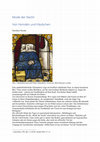
Süßer Schlummer. Exhibition Catalogue, 2006
Eine spätmittelalterliche Glasmalerei zeigt ein friedlich schlafendes Paar, in einem luxuriösen B... more Eine spätmittelalterliche Glasmalerei zeigt ein friedlich schlafendes Paar, in einem luxuriösen Bett. Unter einem weißen Bettlaken, auf der eine kostbare Bettdecke drapiert ist, liegen die beiden nackt-jedoch mit Nachthauben auf dem Kopf. Ein kleiner Hund schläft zusammengerollt am Fußende des Bettes. Uns interessiert in diesem Zusammenhang: Wie zogen sich Männer und Frauen im Bett an? Genau in dieser Doppeldeutigkeit, im europäischen Abendland, wenn der tätige Tag vollbracht war. Dazu gehört das Thema Schlafzimmer, heute der exklusive Raum für Intimität und Sexualleben. Immerhin verbringen wir ein Drittel unseres Lebens dort. Das Schlafzimmer hat in seiner Entwicklung einen langen Weg hinter sich mit vielen Wandlungen vom Gemeinschafts-Schlafraum für die Großfamilie mit Tieren bis zum heutigen privaten Refugium. 1 Die offizielle Mode des Tages ist ausreichend dokumentiert. Abbildungen und Beschreibungen für die "Mode der Nacht" sind jedoch nur schwer zu finden. Ähnliches gilt für die Unterwäsche. Ganz sicher gab es immer den Bedarf, ganz praktisch aus hygienischen Gründen oder als Schutz gegen die Kälte, aber nicht als offizieller Teil der Geschichtsdokumentation. Diese Tatsache spiegelt unsere moralische Haltung und den Umgang der Geschlechter miteinander. Selbst heute ist nur ein kleiner Teil der Nachtwäsche
Mode und Gender, 2025
Zurich University of the Arts, Conference "Mode und Gender"
Cahiers Bruxellois. Promenades Vestimentaires, 2012
ICOM IC Costume Proceedings Lyon, 2009
Liste des matériaux et ci-dessous, tissuthèque de l'Opéra de Zürich.
Proceedings ICOM IC Costume Annual Meeting, 2021
Margarethe Wallmann's staging of Puccini's Tosca at the Vienna State Opera premiered on April 3, ... more Margarethe Wallmann's staging of Puccini's Tosca at the Vienna State Opera premiered on April 3, 1958, with set and costume design by Nicola Benois, starring the famous soprano Renata Tebaldi in the title role. Since then, it has been performed over 600 times at the Vienna State Opera with a list of celebrated sopranos as Floria Tosca-still wearing the same "old dress"; meanwhile, six more copies of the same design have been carefully conserved and altered by the seamstresses and wardrobe ladies of the repertory tailor shop on the sixth floor of the Vienna State Opera. This paper explores the anachronism of this dress and staging in the ephemeral and fast changing reality of theatre and opera: the luxury not to change and renew. Contents
Proceedings of the Annual Meeting of the ICOM Costume Committee Toronto, Canada, 2015
The exhibition The Paramour's Dresses was an installation of nine costumes of different actresses... more The exhibition The Paramour's Dresses was an installation of nine costumes of different actresses performing the role of the Paramour in the play Jedermann/Everyman by Hugo von Hofmannsthal (1874-1929). It took place in the Northern Oratory in the cathedral, framing the former Salzburg Archbishop's residence the Cathedral Place, where the play has been performed since 1920. It marks the founding of the Salzburg Festival. The Paramour is a minor role, but of high public attention and her-mostly red-costume is seen from afar. She embodies temptation, love and beauty. The role has always been performed by famous actresses of the German language.
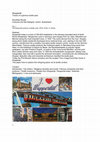
Proceedings ICOM IC Costume General Conference Milan, 2016
Wuppertal today is a town of 350,000 inhabitants in the densely populated land of North Rhine-Wes... more Wuppertal today is a town of 350,000 inhabitants in the densely populated land of North Rhine-Westphalia / Bergisches Land in Germany and merged from six cities, Elberfeld and Barmen being the most important ones, in 1929. The name derives from the river, Wupper, along which textile handicraft developed since medivial times, and, starting in the mid-18th century, transformed into a wealthy innovative textile industry centre, known as the German Manchester. Famous quality products like Goldzack elastic or Bemberg lining came from there, it's the birthplace of Aspirin by Bayer, the Rauhfasertapete (a popular ingrain wallpaper), but also Friedrich Engels, co-author of the Communist Manifest, and the poet Else Lasker-Schüler were born here. In 1900 the Schwebebahn (suspension railway) was inaugurated, then and still a symbol for technical innovation, connecting the city following the Wupper. Beautiful villas and industrial architecture manifest the textile past. Today the Pina Bausch dance company and the sculptor Tony Cragg found their home in Wuppertal. This paper tries to explore this intriguing place via its textile context.
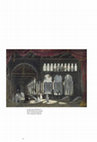
Le tutu romantique. La transparence des spectres., 2013
La création du tutu romantique trouvait lieu avec la prémière de la Grand Opéra Robert le Diable ... more La création du tutu romantique trouvait lieu avec la prémière de la Grand Opéra Robert le Diable du compositeur Giacomo Meyerbeer le 21 novembre, 1831 à l'opéra Le Pélétier à Paris, sous la direction de Louis Véron. L'opéra raconte l'histoire du Robert, né comme fils du diable avec la duchesse de la Normandie, une malédiction, dont il essaie de s'en fuir. Chassé de la Normandie, il se réfuge en Sicile, ou il tombe amoureux d'Isabelle, la fille du roi. Le diable se rapproche de lui en déguisement d'un vieil homme pour obtenir son âme à l'enfer. Il lui raconte, pour se marier avec Isabelle, de cueillir la branche de l'arbre qui pousse au tombeau de la Sainte Rosalie. Il doit aller à minuit à la cimetière d'un couvent abandonné. Quand il y arrive, les tombeaux s'ouvrent, les nonnes mortes-guidées par l'abesse Hélène-quittent leurs cerceuils, enlèvent leurs habits, et glissent autour de Robert en forme de jolies jeunes filles en robes transparentes. Quand il cueille la branche, elles se transforment en vieilles femmes et disparaissent. Robert se marie avec Isabelle, le diable n'obient pass on âme. Robert le Diable était un des plus grand succès dans l'histoire d'opéra avec plus de 750 réprésentations à Paris jusqu'à 1893 et des mises en scènes partout dans le monde dans les grandes maisons d'opéra.
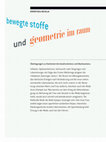
Ausdruckstanz und Bauhausbühne , 2019
Erstmals werden die Tanzaktivitäten der Bauhausbühne zu den verschiedenen tänzerischen Reformbewe... more Erstmals werden die Tanzaktivitäten der Bauhausbühne zu den verschiedenen tänzerischen Reformbewegungen in Beziehung gesetzt, die sich seit dem beginnenden 20. Jahrhundert in Deutschland entwickelt hatten und die zumeist unter dem Schlagwort Ausdruckstanz zusammengefasst werden. Denn die Tanzszenen waren vielfältig miteinander verknüpft. Bauhausmeister wie Oskar Schlemmer oder László Moholy-Nagy nahmen an Tänzerkongressen teil, und die junge Ausdruckstänzerin Palucca tanzte mehrfach im oder im Umfeld des Bauhauses. In verschiedenen Essays und aus unterschiedlichen Perspektiven wird den kulturellen und tänzerischen Netzwerken der Avantgarde nachgespürt in ihrer historischen Entwicklung ebenso wie in ihrer Bandbreite. Dabei geraten neben Weimar, Dessau und Berlin auch immer wieder andere Schauplätze in den Blickpunkt, Dresden beispielsweise oder Hannover. Eine Vielzahl historischer Fotos dokumentiert Bauhausfeste, Bühnenaktivitäten und Tanzaufführungen.
Kestner Museum, Hannover
Die Weltbühne.100 Jahre Salzburger Festspiele., Aug 14, 2020
Rokoko and Zeitgeist.
Die Oper ist tot - es lebe die Oper!, 2023
Margarethe Wallmann's staging of Puccini's Tosca at the Vienna State Opera premiered on April 3rd... more Margarethe Wallmann's staging of Puccini's Tosca at the Vienna State Opera premiered on April 3rd, 1958 with set and costume design by Nicola Benois, starring the famous soprano Renata Tebaldi in the title role. Since then, it has been performed over 600 times at the Vienna State Opera with a list of celebrated sopranos as Floria Tosca-still wearing the same "old dress", and meanwhile six more copies of the same design, carefully conserved and altered by the seamstresses and wardrobe ladies of the repertory tailor shop in the 6th floor of the Vienna State Opera. This paper explores the anachronism of this dress and staging in the ephemeral and fast changing reality of theatre and opera: the luxury not to change and renew.
Die Nadelherstellung in Aachen am Beispiel der Nadelfabrik Leo Lammertz, 2018
Jahrbuch Netzwerk Mode Textil 2018
Der Theater-Magier. 150 Jahre Max Reinhardt., 2023
Max Reinhardt staging his own elegant style of dressing.
Dress and Politics. Proceedings of the ICOM IC Costume Annual Meeting Athens/Nafplio , 2014
Journey from the Ancient Colour of Power to the First Synthetic Fashion Dye Inspired by Alexander... more Journey from the Ancient Colour of Power to the First Synthetic Fashion Dye Inspired by Alexander Theroux’s essay “Purple”
The art of dyeing the colour purple in ancient time is attributed to the Phoenicians. They were spreading it from Egypt, Israel, Crete and Mesopotamia to Greece and Rome. The pigments for purple dye were obtained from sixteen different kinds of sea snails which all belong to the Murex family in the Mediterranean Sea. It was a complex dyeing process using these pigments. This is why purple coloured fabric was rare, precious and reserved to men of power and wealth. So it is also the reason why this kind of purple was called ‚Imperial Purple' and ‚Tyrian Purple', named after the Phoenician capital of Tyros. After the Roman Empire the colour Imperial purple became the most important symbol of power. It was the time of the Byzantine culture. Since then the idea of using Murex snails to obtain the Imperial purple pigments was abandoned 1. Similar pigments were used for dying fabric without achieving the original beauty of ‚Imperial Purple'. In the middle of the 19th century the British chemist Henry Perkin invented by accident the first synthetical dye named Mauveine which achieves the similar colour result on dyeing fabric like using purple pigments of Murex snails. At this time the beauty of ‚Imperial Purple' became achievable for everyone. In the beginning of the 20th century the chemical formula of Murex snail pigments was defined.
Water and Earth. Reconstructing two Baroque Dance Costumes by Johann Meßelreuther, 1723, 2019
This paper retraces the complex journey of bringing two Baroque dance costume designs to life. Be... more This paper retraces the complex journey of bringing two Baroque dance costume designs to life. Beginning with the original 1723 sketches and research in the dance archives in Salzburg and the Baroque theatre at Çeske Krumlov, a team of seven experts was assembled to realize the designs: in addition to the author were three cutters, an embroiderer, a hat-maker, and a theatre trompe l'oeil specialist. The goal was to retain the Baroque spirit for a costume wearable by a modern classical ballet dancer on stage today.
Proceedings of the ICOM IC Costume Annual Meeting in Utrecht/Netherlands, 2018
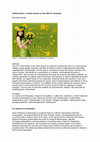
The 25 th of November is the saint's day of St Cathrine of Alexandria and it is a very special ho... more The 25 th of November is the saint's day of St Cathrine of Alexandria and it is a very special holiday among people working in the field of fashion in Paris: traditionally the workshops celebrate their Catherinettes. On this day an unmarried 25 year old woman working in the field of fashion, specifically as a seamstress or a milliner, automatically becomes a Catherinette. She receives an extraordinary hat made out of green and yellow materials. St Cathrine generally is a patron saint of librarians and scholars as well for all people who work with wheels: the spiked wheel of her martyrdom shattered when she touched it. How did it happen that Saint Catherine became the patron saint of seamstresses and milliners in Paris and some other places in France? The tradition of this custom reflects the women's role in society and it is well surprising how this custom reinvents itself by adapting to modern changes. This text tries to trace this tradition via old postcards, statues, hats and balls all celebrating the Catherinette.


Uploads
Papers by Dorothea Nicolai
Kestner Museum, Hannover
The art of dyeing the colour purple in ancient time is attributed to the Phoenicians. They were spreading it from Egypt, Israel, Crete and Mesopotamia to Greece and Rome. The pigments for purple dye were obtained from sixteen different kinds of sea snails which all belong to the Murex family in the Mediterranean Sea. It was a complex dyeing process using these pigments. This is why purple coloured fabric was rare, precious and reserved to men of power and wealth. So it is also the reason why this kind of purple was called ‚Imperial Purple' and ‚Tyrian Purple', named after the Phoenician capital of Tyros. After the Roman Empire the colour Imperial purple became the most important symbol of power. It was the time of the Byzantine culture. Since then the idea of using Murex snails to obtain the Imperial purple pigments was abandoned 1. Similar pigments were used for dying fabric without achieving the original beauty of ‚Imperial Purple'. In the middle of the 19th century the British chemist Henry Perkin invented by accident the first synthetical dye named Mauveine which achieves the similar colour result on dyeing fabric like using purple pigments of Murex snails. At this time the beauty of ‚Imperial Purple' became achievable for everyone. In the beginning of the 20th century the chemical formula of Murex snail pigments was defined.