Showing posts with label FDA. Show all posts

Saturday, February 21, 2009

What We've Been Reading This Past Week

~ Stem-cell ‘tourists’ travel to where they have access to controversial stem-
cell therapies/ treatments.

~ Every baby born a decade from now will have its genetic code mapped at
birth
predicts head of genomics company. Just because we can, does that
mean we should?

~ More docs tell pharma reps to keep out. Does this mean no more free post-
its?

~ Comprehensive reform bill that would have banned pharma gifts to docs voted
down in Colorado.

~ Experts say consumers should have more facts in drug ads so they can make informed decisions.

~ Glaxo to cut prices on drugs sold in poor countries. They will also invest
profits in building clinics in those countries.

~ The U.S. drug industry has shifted most of its clinical trials to overseas
sites raises serious ethical concerns.

~ U.S. court: No link between vaccines and autism.

~ Pfizer owes damages for bilking Wisconsin Medicaid.

~ EU governments have no right to conceal the location of field trials of genetically modified (GM) crops.

~ Men may be their own worst enemy when it comes to their health.

~ Women on the other hand …: Coffee drinking lowers women’s stroke risk. Ooooh, imagine a Starbucks ‘pharmacy’ on every corner …

~ BUT, too much soda can kill a girl’s kidneys.

~ Deadly bacteria defy drugs, alarming doctors. Is this an argument for or against anti-bacterial soap? You decide!

~ Llama’s have unique antibodies that one day might be used to treat immune system diseases in humans.

~ Scientists have unraveled the genetic code of the common cold. Spectacular!

~ Decoy molecules drive cancer cells to suicide.

~Altered virus effectively delivers new gene to replace faulty one that causes CF and completely rids the lung of disease. I wonder if these researchers have seen I Am Legend?

~ Researchers have discovered that the good bacteria found in dairy products might also be an effective vehicle for an oral vaccine that can provide immunity to anthrax exposure.

~ A new study indicates that a pneumonia vaccine can significantly cut the risk of heart disease.

~ Oh, Baby: A prenatal link to Alzheimer's?

~ Doctors have identified two genetic mutations that control the growth and
development of malignant gliomas; maybe good news for brain tumor patients.

~ Cotton candy as a substrate to re-grow vascular tissue.

~ Biotechnology's potential barely exploited.


~ Stimulus package includes funds for comparison of the effectiveness of
medical
treatments.

~ President Obama to lift ban on embryonic stem cell research soon.

~ Scientists and doctors try to qualm public fears about vaccines and autism.

~ Scientists preparing to storm Capitol Hill on March 25 (a.k.a. the million
scientist march?). Registration ends Feb. 23.

~ No European stem cell patent for spinal cord repair.

~ Retired nurse invents cough, sneeze cover. Maybe she can convince the
airlines to make these standard issue …

~ FDA approves new and improved treatment for gout (the first in 40 ~years!).

~ But agency second guessing another …Savient gout drug faces approval delay.

~ FDA orders Bayer to correct earlier claims in Yaz birth control ad.

~ FDA deliberately backed off of "Good Laboratory Practice" requirements for
medical device makers.

~FDA wants one strain changed for next flu vaccine.

~ Orphaned baby chimpanzees cared for by humans in a loving, attentive manner have been found to be more cognitively advanced than some human infants. But, then, is this really that weird? They do share over 99% of our DNA.


~ Parody: FDA Approves Depressant Drug For The Annoyingly Cheerful.


[Thank you to Lisa von Biela, JD candidate, 2009, UMN, Editor of the BioBlurb, from which this content is partially taken and edited. BioBlurb is a weekly electronic publication of the American Bar Association's Committee on Biotechnology, Section of Science & Technology Law. Archived issues of the BioBlurb, as well as further information about the Committee on Biotechnology, are available here.]

Monday, September 15, 2008

More evidence for a mandate?: FDA approves Gardasil For Prevention Of Vulvar, Vaginal Cancers

We and other blogger friends have blogged about Gardasil before here and there -- and in a quick and dirty drive-by post, we thought we'd update you on the latest developments:

The AP press reports that federal health officials approved expanding the use of Gardasil, the cervical cancer vaccine, to prevent cancers of the vagina and vulva:

"The Food and Drug Administration first approved Gardasil in 2006 for the prevention of cervical cancer in girls and women ages 9 to 26. The vaccine works by protecting against strains of the human papillomavirus, or HPV, that cause about 70 percent of cervical cancers. The HPV virus, transmitted by sexual contact, causes genital warts that sometimes develop into cancer.

'There is now strong evidence showing that this vaccine can help prevent vulvar and vaginal cancers due to the same virus for which it also helps protect against cervical cancer' said Dr. Jesse Goodman, director of the FDA center that oversees vaccines."

Full Story can be accessed here.

Saturday, May 24, 2008

Senator Boxer calls for FDA Accountabilty For Medical Devices

Some of you maybe remember the great post on the Beauty and the Breast blog Supreme Court Rules You Can’t Sue Medical Device Makers Because the FDA Does Such a Great Job Assessing Safety?

In response to the ruling, Senator Barbara Boxer (D-CA) introduced a bill last week that would bring greater accountability and transparency to the Food and Drug Administration’s (FDA) regulation of all medical devices. Millions of Americans are implanted with devices ranging from pacemakers to breast implants, yet don’t realize that medical devices are not rigorously approved like pharmaceuticals. The bill (S.3020), the Food and Drug Administration Accountability and Transparency Act, will provide the FDA with several tools to help ensure the safety of these devices.

Because of less stringent safety approval mechanisms, the FDA allows manufacturers to conduct post-approval studies. But in many cases these studies are altered or not completed and consumers are left in the dark about safety problems.

“The FDA has been charged with a central role in safeguarding the health of our nation. Since the creation of this agency more than 100 years ago, the role of the FDA has expanded to ensuring the safety of foods, drugs, medical devices, and even cosmetics. Too often, however, the FDA lacks the authority or the resources to safeguard the health of our nation….[this act] would give the FDA several tools to ensure the safety of medical devices, including larger fines to hold these companies accountable,” Senator Boxer said.

Medical device manufacturing is a $75 billion industry, with considerable lobbying power, which enables them to secretly waive or alter post-approval agreements with the FDA, without informing consumers. This bill would end this practice by requiring such changes to be placed in the Federal Register.

Senator Boxer also stated: “If the Secretary of Health and Human Services determines that a manufacturer’s failure to conduct post-market surveillance is a risk to public health, this legislation give the Secretary the authority to notify health professionals that have been using these devices about any safety concerns.”

Sybil Niden-Goldrich, a long-time advocate of the breast-implant issue, applauded Senator Boxer: “More than 360,000 women received breast implants last year—a 40% increase over the last five years. Yet none of these women knew silicone implants were approved on the basis of post-approval studies that subsequently were watered down by FDA and aren’t being conducted. Senator Boxer’s bill would correct these grave injustices.”

Thursday, May 01, 2008

Cochlear Implant Manufacturer Facing Multi-Million Dollar Fine

As a quick search on this blog for the word deaf shows, I am a pretty vocal advocate of Deaf rights, and quite anti-cochlear implant for d/Deaf children. Because of the nature of the procedure, and its permanence, I do believe it's a choice that an autonomous agent should consent to rather than have pushed onto them. And this article from the LA Times just adds to that belief: the FDA wants to fine cochlear implant manufacturer Advanced Bionics $2.2 million for apparent manufacturing violations that actually put patients at risk for additional hearing loss, electrical shocks, and other issues. (Frankly, those two are enough, as far as I'm concerned.)

As for my other objections, they are relatively simple from a technological standpoint. Unless technology has rapidly changed in the last few years, one of the major drawbacks of cochlear implants is that they do destroy any residual hearing. This is why many doctors suggest only implanting one ear, in case a better technological or biological solution comes along later down the line. So you are wedded to the device implants, and that technological level, for the remainder of your life.
Stop and think about this for a minute. Go dig around in your junk drawer and take a look at your cell phone from three or four years ago. Or better yet, go find a computer from the 1980s.

How would you like to have that technology (in all it's now unsupported glory) embedded as a part of you that you are reliant upon for the remainder of your life, regardless of whether or not people continue to support that level of technology?

From a purely technological, I spent too long in the software industry, standpoint (and leaving out all notions of Deaf culture), it's simply a bad idea.

This Advanced Bionics lawsuit is just another in a long list of reasons cochlear implantation is a decision that should be made only by competent adult agents.
-Kelly Hills

Tuesday, April 29, 2008

The FDA blows it ... again.

Despite all of the recent, largely negative press that the US Food and Drug Administration has received, one of their biggest screw-ups has so far slipped under the radar.

In yesterday's Federal Register, the FDA published its amended rule for accepting for regulatory review data collected from in foreign clinical trials not performed under an IND.

I'm thrilled that the FDA wants all trials submitted to it for review to be conducted in accordance with Good Clinical Practice (GCP) guidelines, including review and approval by an independent ethics committee such as an IRB or a REC. In doing so, however, the FDA removed from its regulations all reference to the Declaration of Helsinki.

Many of us in the advocacy arena have been arguing against this proposed change for years, suggesting instead that the FDA should work towards harmonizing the substantive requirements of GCP with the ethical aspirations of the Declaration of Helsinki. But the Agency chose to ignore us, leaving many of us to wonder if this is just another example of the FDA kowtowing to corporate business interests ... particularly their oft-stated opposition to Paragraph 30 of the Declaration:

"At the conclusion of the study, every patient entered into the study should be assured of access to thebest proven prophylactic, diagnostic and therapeutic methods identified by the study
."

Thursday, March 20, 2008

Tainted Drugs

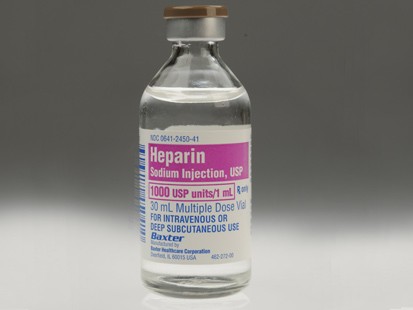
For the sake of people susceptible to earworms everywhere, I won't actually parody the Soft Cell song further than using it as a title here. And as alliterative and 80s-referential as the title is, it's also accurate: in recent weeks, almost two dozen people have died, and their deaths have been linked to contaminated heparin. This morning, the contamination (hypersulfated chondroitin sulfate) was announced, as was the fact that the contamination happened somewhere in China. Because hypersulfated chondroitin sulfate mimics heparin in standard safety tests, it looks likely that the contamination was intentional, likely done by someone trying to either cut costs or boost profits somewhere along the production line.

Congress is, of course, clamouring for action, and the FDA is defending itself, saying it's chronically undermanned and cannot realistically fulfill its broadranging mandate. The same exact reactions we saw in 1999, when contaminated antibiotics from China were linked to almost as many deaths. And since then, China has grown in exports, while the FDA has remained virtually stagnant in the number of inspections; latest numbers indicate the US imports almost a quarter of its medications from China, and only 6% are inspected by the FDA.

With this latest tainted drugs scandal, the Senate has passed a 20% increase in budget for the FDA, but realistically, when the FDA is admitting that they are violating their own policies, suffering from poor management, and whatever other excuse it can pull out of its hat'o'excuses, it seems likely that the additional $375 million is just going to be a bandaid over a much greater problem: the need to reorganize the FDA.

Connecticut Democratic Representative Rosa DeLauro joins me on the skeptic train, saying that she doesn't "want to throw money at an agency that doesn’t have the infrastructure to carry out its mission.” Going a step further than I've actually said, she also notes that top agency officials are incompetent, and the only way any genuine change will happen is a completely new administration for the agency.

News of contaminants from China is not new - this time around, it was heparin. It's been antibiotics in the past. A year ago, dozens of people lost beloved pets to contaminated pet food. Our children's toys have been recalled because of lead and other contaminants. There are two trends here, that cannot be ignored: the FDA is unable to protect the American public, and there is rampant and dangerous corruption in China that does more than just hurt its own population, it affects us all. We, as a people, need to step up and stop accepting the excuses of the FDA and demand reform - and we need to demand a very different sort of relationship with China and the goods we import from them.
-Kelly

Monday, March 10, 2008

Got Posilac? Afact should be Ashamed

NYT reports on an advocacy group that is attempting to block the sale of milk produced without synthetic hormones.
The group, called American Farmers for the Advancement and Conservation of Technology, or Afact, says it is a grass-roots organization that came together to defend members’ right to use recombinant bovine somatotropin, also known as rBST or rBGH, an artificial hormone that stimulates milk production. It is sold by Monsanto under the brand name Posilac.

Monsanto spokespersons insist that the group is "led by farmers" even though it has been funded by both a marketing firm hired by Monsanto and by Monsanto itself. But we all know how to play "follow the money", so let's get to the cream of the matter:
Afact has come together as a growing number of consumers are choosing milk that comes from cows that are not treated with the artificial growth hormone. Even though the Food and Drug Administration has declared the synthetic hormone safe, many other countries have refused to approve it, and there is lingering concern among many consumers about its impact on health and the welfare of cows.

The marketplace has responded, and now everyone from Whole Foods Market to Wal-Mart Stores sells milk that is labeled as coming from cows not treated with the hormone. Some dairy industry veterans say it’s only a matter of time before nearly all of the milk supply comes from cows that weren’t treated with Posilac. According to Monsanto, about a third of the dairy cows in the United States are in herds where Posilac is used.

And the trend might not stop with milk. Kraft is planning to sell cheese labeled as having come from untreated cows.

But consumer demand for more natural products has conflicted with some dairy farmers’ desire to use the artificial hormone to bolster production and bottom lines, and it has certainly interfered with Monsanto’s business plan for Posilac. (bold mine)

Note the flow of the process: consumers choose, the market responds, and producers who are interested in continuing business adapt to what consumers demand through the free market. In this case, consumers have potentially legitimate concerns not only about the health impacts of the products, but also about animal welfare concerns – both of which are valid factors in the consumer choice algorithm. And in this case, the burden of proof is not on the consumer to show the safety of non-rBST milk, but on the industry to reassure the consumer that rBST-enhanced milk is of comparable safety and quality – as soon as we forget where the burden of proof lies in this, we undermine our rights as consumers to choose what we eat and drink.

The central question at the heart of this issue is whether we should make an exception to the paradigm of consumer-driven marketing that is supposed to be a mainstay of a capitalist and free-market economy. Yes, producers should be free to choose whichever methods they like to make their product, so long as it is within basic safety standards established by federal regulation and is accurately labeled to allow consumers to choose their products. But in the end, it is supposed to be the consumer who is allowed to choose which brand and which type of product they exchange their money for to take home. In other words, you have a right to sell whatever you want, but you don't have a right to make other people buy it if they don't want it – Capitalism 101.

If there were a risk of negative impacts on consumers for choosing milk without artificial hormones, then there may be a case for debate. But when the argument is fueled by economic protectionism of what is essentially a monopoly on a technological intervention designed, not for consumer health, but for increased productivity and profit, there is no debate. The rights of consumers to choose the product they want trump the rights of industry to skew the rules of capitalism in order to make a profit. And the right to use a technology should never be conflated with a mandate to use a technology unless there is an urgent and severe threat to public health.

I would like to add that it is ridiculous that we are now on the defensive on this issue – forced to defend the rights of consumers to even buy milk that is produced using more favorable methods. Don't forget that the FDA already requires all milk produced without rBST to be labeled with a disclaimer stating that there is no recognizable difference between milk treated with and not treated with artificial growth hormones; this is a blatant kowtow to the interests of conventional milk producers and their supporting biotech industries to protect their economic interests.

Apparently, consumers think there is a difference.

Thursday, February 28, 2008

NanoCosmetics? Really?

As I'm sure every student remembers, when you're in the middle of studying for a test, you often end up doing the most counter-intuitive thing to studying: you surf the net in search of procrastination. This, I admit, seemed like a much better idea than trying to decide whether or not Emily had a justified true belief that there was a cat in her house, and I somehow ended up on the most fascinating of NPR stories, about nano-cosmetics.

It would seem that the newest thing in anti-aging is nanosomes. Nanospheres. Buckyballs. Some of the ingredients are just smaller versions of chemicals that have been used for years, like nano-particles of zinc oxide, but others are genuinely new, like buckyball enhanced day cream; apparently the buckyballs are an anti-oxidant that prevent skin aging?

The concern, however, isn't minor. No one knows for sure what nano-particles will do; in many cases chemical compounds that are familiar at a larger level take on new properties when they become so small (this is, after all, part of the appeal of nanotechnology). Another concern is one that admittedly sort of freaks me out with it's unknown-ness: can nano-particles penetrate your skin? Is that day cream really seeping into your tissues, oozing into your blood and muscle and ick? (It's like the beginnings of a Robin Cook horror novel...) And this isn't just some random, too much horror-scifi reading as a kid concern; Sally Tinkle, a researcher at the National Institute of Environmental Health Sciences in North Carolina, has shown in her lab that at least some nano-particles can seep through the skin, which means they could potentially get into our blood stream or interfere with our immune system. (I have the sudden urge to check all my cosmetic products for nanoanything...)

Of course, cosmetic companies point out that if what they were using in their products wasn't safe, the FDA wouldn't let it go on the market. But the FDA typically only investigates cosmetics if safety issues come up after the product is on the market; unlike drugs, there is no safety level testing, studies, or trials that have to be done on cosmetics, and no final approval or rejection process prior to marketing.

But at least some people are making an effort to track the claims of nanotech on the market. The Woodrow Wilson International Center for Scholars has a Project on Emerging Nanotechnologies where they track all of the supposed nanotech out and about in our products, in everything from iPhones to face cream. They make this information available to the public, via their website, and it's incredibly easy to lose a few hours of time there browsing and marveling at all of the nanotech that has quietly become part of the marketplace.

In the meantime, I think I have something else to add to my labels watch list aside from high fructose corn syrup - it might be a slightly luddite reaction, I'll grant you that, but the idea of unknown nano-particles being a part of my beauty routine just makes me hesitant in a way that only being raised on a lot of science fiction can probably explain.
-Kelly

Tuesday, February 26, 2008

sign me up for a sugar pill

It's midterms, which means my awareness of the world has shrunk to the space between my coffee pot and desk, but a friend insisted that I pay attention to this story right now - and I'm glad he did. PLoS Medicine has just published a report titled Initial Severity and Antidepressant Benefits: A Meta-Analysis of Data Submitted to the Food and Drug Administration; granted, it's one of those titles that doesn't immediately tell you what it's about (and since I'm in the middle of preparing a few abstracts, as well, my brain is itching to red pencil it, but I digress). So what is this unwieldily-titled paper about? According to the succinct title The Guardian gave their report of the issue, it's simple: prozac, used by 40 million people, does not work. From that article,
Prozac, the bestselling antidepressant taken by 40 million people worldwide, does not work and nor do similar drugs in the same class, according to a major review released today.

The study examined all available data on the drugs, including results from clinical trials that the manufacturers chose not to publish at the time. The trials compared the effect on patients taking the drugs with those given a placebo or sugar pill.

When all the data was pulled together, it appeared that patients had improved - but those on placebo improved just as much as those on the drugs.

The only exception is in the most severely depressed patients, according to the authors - Prof Irving Kirsch from the department of psychology at Hull University and colleagues in the US and Canada. But that is probably because the placebo stopped working so well, they say, rather than the drugs having worked better.
Kirsch and company go on to emphasize that counseling should be the first choice, and medication a very last recourse. But the researchers also go on to emphasize that this raises broad questions about drug data reporting and drug licensing; in an article at BBC News, Dr. Tim Kendall argues that drug companies should be forced to publish all their data, regardless of conclusion - something that many people have been arguing for years, and has come up in this blog recently.

Part of the reason that this is a new, and believed to be groundbreaking study (at least by the researchers) is that Kirsch and colleagues requested the full set of trial data on four drugs (prozac, seroxat/paxil, effexor, and serzone) from the FDA via the freedom of information act; two newer drugs (celexa and zoloft) were excluded because the full information wasn't yet available via the FOA. They argue that this additional and unpublished research shows that there is simply no benefit to the drugs.

Now it should go without saying that this is a research study, and anyone taking these drugs shouldn't decide to stop taking them without first consulting your prescribing physician. That said, while I take an anti-depressant that's not on the list, under the theory that it will decrease the pain I experience by increasing the dopamine in my brain, I think I'll be printing out the PLoS Medicine report and taking it in for a discussion with my own doctor.

Perhaps most to the point, I do agree with the researchers and commentators who say that this, more than anything, emphasizes that all research collected on a medication should be reported - positive, negative, or neutral. It's becoming obvious that we can't trust the FDA to make decisions on the effectiveness of these drugs; that doctors and patients are going to have to become the experts, or at least have all the data at their fingertips in order to make their own informed decisions.

And with that, I ought to get back to midterms. See you all in another day; I've got a collection of things to bring up once I'm out from under this epistemological cloud.
-Kelly

Friday, February 22, 2008

Supreme Court Ruling Favors Medical Device Firms

Professor Elizabeth Malloy over at the Health Law Professors Blog sums up my reaction to the recent Supreme Court on medical devices manufacturers being shielded from liability:

"The New York Times reports on the Supreme Court's decision in which the Justices ruled "that the manufacturer of a federally approved medical device cannot be sued under state law if the device causes an injury." The Times reports,

The 8-to-1 ruling in favor of Medtronic, the Minneapolis-based maker of cardiovascular devices, made it much more difficult for patients and their families to sue makers of medical devices that have been granted federal approval.

In 1996, a balloon catheter burst and severely injured Charles R. Riegel while he was undergoing an angioplasty. Mr. Riegel and his wife, Donna, sued the company in federal court, contending that the catheter had been designed, labeled and manufactured in a way that violated New York state law, and that those defects had caused severe and permanent injuries to Mr. Riegel.

But a federal district court and the United States Court of Appeals for the Second Circuit, in Manhattan, dismissed the Riegels’s suit on the ground that the catheter had been given pre-market approval by the Food and Drug Administration, thus protecting the manufacturer from liability under state law. (The case of Riegel v. Medtronic was tried in federal court because the plaintiffs and defendant were based in different states.)

The Supreme Court upheld the lower federal courts on Wednesday, with Justice Antonin Scalia writing for the majority that Medtronic and other manufacturers were protected under the Medical Device Amendments of 1976, which in its section on pre-emption bars states from imposing on medical devices “any requirement which is different from, or in addition to, any requirement applicable under this chapter.”

But the justices’ ruling was hardly the last word on when F.D.A. approval bars patients from suing. They are already considering at least three cases involving drugs and drug-labeling.

In 1996, when there was a different lineup of justices, the Supreme Court ruled that medical devices approved by the F.D.A. under a different, more expedited process were not shielded from state liability. At the time, the federal government took that position.

But in 2004, the Bush administration reversed the government’s position and began to take the side of manufacturers. In the Medtronic case, the administration argued that there would be “serious undermining of F.D.A.’s approval authority and its balancing of the risks and benefits” if juries could second-guess the agency.

Justice Ruth Bader Ginsburg was the lone dissenter on Wednesday, asserting that the majority had adopted an unnecessary “constriction of state authority.” Justice Ginsburg said she did not believe that Congress had intended to bring about “a radical curtailment of state common-law suits seeking compensation for injuries caused by defectively designed or labeled medical devices.”

But, will the Supreme Court have the last word on this topic . . . we discover that perhaps not -

“The Supreme Court’s decision strips consumers of the rights they’ve had for decades,” said Representative Henry A. Waxman of California, the chairman of the House Committee on Oversight and Government Reform. “This isn’t what Congress intended and we’ll pass legislation as quickly as possible to fix this nonsensical situation.”

Senator Edward M. Kennedy of Massachusetts, the chairman of the Senate Health, Education, Labor and Pensions Committee, agreed, saying: “Congress never intended that F.D.A. approval would give blanket immunity to manufacturers from liability for injuries caused by faulty devices. Congress obviously needs to correct the court’s decision. Otherwise, F.D.A. approval will become a green light for shoddy practices by manufacturers.”

If I had a better feeling about how the people running our government, I probably wouldn't be upset by this decision but it doesn't appear that everyone is playing on a level field. With all the stories in the news about recalls for tainted products and food, I am a bit concerned about the regulators being influenced too greatly by those they are supposed to be regulating."


I couldn't have said myself, Elizabeth -- thank you for posting this.

Monday, February 11, 2008

Embryonic Stem Cell Trials in Humans Could Begin in Months

If all goes as planned, a California biotech firm will begin human testing using human-based embryonic stem cells by Spring of 2008.

Dr. Thomas Okarma, CEO of Geron, said the firm plans to conduct embryonic stem-cell studies in subjects with spinal cord injuries, involving up to 40 patients. The planning, of course, is pending the greenlight to proceed from the FDA, which is said to be setting a "high bar" on regulations governing what is certain to be one of the most significant pioneering research procedures of the century. Economic analysts predict the regulatory process alone will be daunting, and time-consuming because these are uncharted waters. It will be the first time that the FDA reviews a human embryonic stem-cell application.

Controversy has raged on both sides over the debate of stem cells and the ethical use in human therapeutic applications. In 2001 President Bush placed limits on federal funding of experiments involving then-existing human-derived stem cell lines, and in 2007 vetoed an attempt by Congress to lift those restrictions. No doubt the impending research will only raise more ire, questions and a major regulatory conundrum of the likes never witnessed before.

Thursday, January 31, 2008

Tainted Drugs*

A state-owned Chinese pharmaceutical company is at the heart of an international drug scandal after it's been revealed that over 200 patients were paralyzed or otherwise hurt by tainted leukemia drugs last summer. But in what we sometimes cynical Westerner's might consider a surprise, given recent cover-up history (especially regarding lead in toys), China's Food and Drug Administration has been at the heart of chasing down the pharma company managers, and responsible for closing the plant when the tainted drugs were discovered.
This would be alarming news to receive about any major pharma company, regardless of their involvement in the import/export industry, but the fact that Shanghai Hualian is the sole supplier of mifepristone (RU-486) for the United States raises even bigger concerns.

So far, the contaminated medications have been isolated to a factory about an hour away from the one that makes RU-486, but obviously when a company has one manufactoring problem, concern spreads to the entire system.

The United States Food and Drug Administration declined to answer questions about Shanghai Hualian, because of security concerns stemming from the sometimes violent opposition to abortion. But in a statement, the agency said the RU-486 plant had passed an F.D.A. inspection in May. “F.D.A. is not aware of any evidence to suggest the issue that occurred at the leukemia drug facility is linked in any way with the facility that manufactures the mifepristone,” the statement said.

When told of Shanghai Hualian’s troubles, Dr. Sidney M. Wolfe, a leading consumer advocate and frequent F.D.A. critic, said American regulators ought to be concerned because of accusations that serious health risks had been covered up there. “Every one of these plants should be immediately inspected,” he said.

The director of the Chinese F.D.A.’s drug safety control unit in Shanghai, Zhou Qun, said her agency had inspected the factory that produced mifepristone three times in recent months and found it in compliance. “It is natural to worry,” Ms. Zhou said, “but these two plants are in two different places and have different quality-assurance people.”


And while I do see this point, and agree with it to a degree, but given recent concerns both about the FDA and it's process, as well as China covering up manufacturing and health issues... I would certainly feel a lot better if the FDA released something more concrete than a no comment. That the FDA won't reveal what other medications are made/imported by the company also is worrisome. Again, on the one hand, I can understand not wanting to run consumers off by fear - but on the other hand, a lot of pets died because of contaminated food. Do we want to see the same health risks in our medications?

-Kelly

(*And as an aside, apologies to anyone else who now has Soft Cell's Tainted Love spinning 'right round in their head.)
-Kelly

Sunday, January 20, 2008

More on Big Pharma and Disclosure

I want to agree with Kelly Hills that the FDA as currently structured and funded is not capable of reviewing the information disclosed by insurance companies. It must be a two part plan. First, all the data must be disclosed so that anyone, including independent oversight groups, can look at the data. But second, the FDA needs to be given resources to do the kind of review of this data that safety requires before releasing a drug on the market. Others know more about this than I do, but I have not seen any particular evidence that the FDA has become so politicized that they would not do this review if they had the resources. If, however, that were the case then it would be necessary to fund independent oversight.

Closing the Loopholes for Big Pharma

Today's New York Times reports that about a third of the studies done on Paxil and Prozac went unpublished and (not surprisingly) if those studies were included these drugs were much less effective than when only the positive studies were published. http://www.nytimes.com/2008/01/17/health/17depress.html?
This is only the latest in a series of revelations about the way that pharmaceutical companies (“Big Pharma”) control the data about new drugs which they make available to the FDA in seeking approval and then to the public. No one disputes that these failures to disclose are harmful to the public’s health. Doctors prescribing drugs and using medical devices must have complete information in order to make the best treatment decisions. However, what is lost amidst the hand-wringing is that there is a very simple way to end this pattern and to make this information available to those who need it: require that all information, positive and negative, about drugs submitted for approval to the FDA be made available to a public data base. Current regulatory changes to require greater disclosure are inadequate because if there are any places left to hide negative data, Big Pharma will find a way to get there. Moreover, the arguments that it is somehow unfair to require companies to benefit from information about what doesn't work makes no sense because companies would only have to disclose AFTER they decide it is worth submitting the drug for approval.

Pharmaceutical companies are businesses like any other and are entitled to make a profit and to keep business information private—but only to the extent that it does not harm the public’s health. Having a drug approved for sale in the United States by the FDA is a privilege and it should come with the responsibility of making available all the available information—not just the information which the company chooses to disclose.

While it has always been the case that pharmaceutical companies were able to hide negative results in studies they conducted themselves, the need is much greater following a recent Supreme Court decision, Garcetti v. Cebalos, which held that government employees do not have First Amendment protection for divulging information—even information vital to the public’s safety-which they learn at work. Most people do not know that a growing number of research companies conducted by pharmaceutical companies are channeled through academic medical centers. While Garcetti v. Cebalos, did not involve research scientists it clearly suggests that a medical researcher at a state university which conducts drug trials for pharmaceutical companies could put his or her job at risk by divulging negative results. This silencing of whistleblowers means that without specific legislation that requires the disclosure of all data, wherever acquired, companies can continue to shield negative results from public view.

Of course is o.k. for pharmaceutical companies to make a profit, just as it is for auto companies, but when the product is one that can endanger the public’s health there must be a requirement of full disclosure.


Jennifer S. Bard, J.D., M.P.H.
Alvin R. Allison Professor of Law and Director, Health Law Program Texas Tech University School of Law Associate Professor (Adjunct) Texas Tech University School of Medicine
1802 Hartford Avenue
Lubbock, Texas 79409-0004
Jennifer.Bard@ttu.edu
806.742.3990, ext. 349


http://www.nytimes.com/2008/01/17/health/17depress.html?ex=1201237200&en=bff3cb16e49ff5f0&ei=5070&emc=eta1

Friday, January 18, 2008

Supremes tell Abigail no: why this is a good thing

Earlier this week, the US Supreme Court declined to hear the appeal of the Abigail Alliance--news from the LA Times here. The advocacy organization sought to change the Food and Drug Administration's policy of prohibiting the use of experimental and unapproved drugs to treat patients. While there are procedures on the books for compassionate use, which allows access for some patients to some drugs under some circumstances, the Abigail Alliance and its supporters believe that the current approach is too narrow, too onerous, and too time-consuming to help all those who could benefit. They sought to make access easier for terminally ill patients who are unable or ineligible to participate in clinical trials.

The Abigail Alliance makes a stirring argument: none of us would want to feel that we were unable to get access to the "silver bullet" that would make our loved one (or ourselves) well again or extend life because of some bureaucratic requirement. And certainly the story of Abigail Burroughs--by all accounts a lovely young woman, who died of a rare form of cancer when she was just 21--is terribly sad.

But does it mean FDA is wrong to deny access to unproven drugs? I don't think so. The FDA's mission is to ensure that the medicines and devices we use to improve human health are safe and effective. This is a vital function and one that must be preserved.

We--by which I mean the general public--have a tendency to assume that drugs are good, that they work, and that they generally don't make people sicker. This is not a great assumption: check out the news earlier this week about Zetia and Vytorin (cholesterol drugs that could actually increase atherosclerosis), or the Vioxx settlement (a pain-reliever that caused heart attacks and strokes in some patients), or reports that suggest that several common drugs for schizophrenia may increase diabetes risk, or fen-phen (an off-label use for weight loss caused permanent heart damage in some patients). These are just a few examples. Drugs can be dangerous. They can make people sicker, and in some cases, they can give people worse problems than they started out with.

"Aha!" the advocates say, "But what about if somebody is already dying? They're as sick as they're going to get. Surely they should be granted access!" Still, in general, I think not. Patients who are terminally ill are the very last people we should be treating with unproven agents. Clinical trials aren't all beer and skittles: If you doubt that drugs can be dangerous, check out reports of the TeGenero trials last summer, in which 6 previously healthy young men ended up in the ICU with permanent immune system damage. These were Phase I safety trials, not Phase II--the category the Alliance wants to make available--but my point is, should we really subject patients to such an ordeal in the pursuit of what is likely an understandable, but unrealizable, dream of a cure?

A key point to understand is that research is different from treatment. Research is directed toward the development of new solutions, and it may or may not benefit those individuals who volunteer to participate. It sounds harsh, but helping volunteers isn't the point of research. Treatment, on the other hand, is all about managing symptoms and effecting cures. It's just plain wrong to represent one as the other.

The legal questions are more subtle: argument in the original case focused on whether terminally ill patients have a Constitutional right to drugs that have passed Phase I clinical testing. Our very own Linda Glenn did a nice overview here.

Thursday, December 20, 2007

FDA to require contraceptives to contain new warnings

According to a press release issued today, the FDA is requiring a new warning on all over the counter stand-alone vaginal contraceptive and spermicidal products. This warning is to inform the public that the spermicide nonoxynol 9 doesn't prevent the spread of sexually transmitted diseases, including HIV.

While this, on the one hand, makes sense - the clinical studies in Africa and Thailand that the press release refers to did show that nonoxynol 9 can irritate mucus membranes, actually increasing the risk for a variety of infections. But on the other hand, do people actually commonly believe, again as the press release suggests, that nonoxynol 9 is an effective barrier against STDs? They very clearly are a contraception, but doesn't our STD education - or even separate HIV education - explain the concept of bodily fluids transmitting infection?

So I admit that while I am neutral on the new packaging (I don't have a lot of faith that people read the directions and warnings in any great detail), I'm sort of baffled with its justification.
-Kelly

Sunday, March 04, 2007

FDA set to ignore advice of countless experts


The following article from the Washington Post describes the FDA's plans to approve the use of cefquinome, a broad-spectrum, powerful "last-resort"-type antibiotic, to help our poor cows recover from respiratory infections that are mainly caused by the poor living conditions imposed upon them by industry standards.

http://seattletimes.nwsource.com/html/nationworld/2003599980_anti040.html

Never mind that there are several other antibiotics available and already on the market to treat these infections. Never mind that several panels of experts, including the American Medical Association and their own internal review panel, cried foul against cefquinome's approval.

Widespread use of cefquinome (yes, even in animals) will most certainly deal a potentially devastating blow to our ability to fight infections in humans. Decades of science, on top of recent evidence of advancing antibiotic resistance in pathogens, are behind the experts here. What's changing minds at the FDA? Well, they've gotta stand behind their new "guidance document"--the wording of which was apparently influenced by industry reps--which, according to the article, stays the FDA's hand unless they can show a direct impact of the drug on human mortality. Honestly.

Cefquinome is used in European livestock, and there appears to be some evidence that pathogens are developing resistance to this high power antibiotic:

http://www.fda.gov/cvm/VMAC/VMAC0906White.htm

http://www.ucsusa.org/food_and_environment/vmac-testimony.html