Friday, November 09, 2012

Aging (GSA) Meeting in San Diego, November 15-18

Dear Friends and Colleagues,

If you plan to attend annual meeting of the Gerontological Society of America (GSA) in San Diego on November 15-18, we would like to invite you to three GSA events there with our participation:

(1) Thursday, November 15, 2012, 8:00 AM-9:30 AM, Room 7A (San Diego Convention Center)
      Symposium "Frailty: from the Cell to Society"
      L.A. Gavrilov, N.S. Gavrilova "Familial Factors in Longevity: Exploring Complex Environmental and Genetic Effects"

(2) Friday, November 16, 2012, 7:00 - 8:30 PM, Room 14B (San Diego Convention Center)
     GSA Interest Group Meeting "Societal Implications of Delaying Aging." 
      Convener: Leonid Gavrilov
     Abstract:  Foreseeable interventions against aging would constitute true preventative medicine for diseases and disabilities of old age. Learned debate on the immense social implications is thus timely at GSA, challenging biologists, clinicians and sociologists to    explore an area where their expertise particularly intersects. Informal round table discussion

(3) Sunday, November 18, 2012, 8:00 AM-9:30 AM, Room 1A (San Diego Convention Center)
     Symposium "Biodemography of Aging and Longevity"
     N.S. Gavrilova, L.A. Gavrilov  "Biodemography of Old-Age Mortality in Humans and Rodents"

Feel free to disseminate this invitation among your colleagues, who may be interested.

Hope to see you there!

Kind regards,

-- Leonid

-------------------------------------------------
 -- Leonid Gavrilov, Ph.D., GSA Fellow
 Convener for Interest Group "Societal Implications of Delayed Aging"
 Center on Aging, NORC at the University of Chicago
 Website: http://longevity-science.org/
 Blog: http://longevity-science.blogspot.com/
 

Labels: , , , , ,

Sunday, August 26, 2012

Aging & Longevity studies in Tallinn, Estonia

Greetings,

We wonder whether some people here may know interesting researchers who is doing aging and longevity studies in Tallinn, Estonia?

We will be in Tallinn, Estonia on September 3 - 9, and we would be delighted to establish scientific contacts with local scientists there.  We will take part in the international scientific conference there, where we will give a scientific presentation about survival to extreme old ages.

You can see recent media coverage of this topic by clicking on these titles: Chicago Sun-TimesChronicle of Higher EducationDiscovery NewsReutersU.S. News & World ReportUnited Press International, UPI  and  Wall Street Journal.

If you know interesting scientific contacts in Tallinn, Estonia, please advise.

Thanks!

Kind regards,

-- Leonid and Natalia

P.S.:  By the way, if you were in Tallinn, Estonia before,  what would be your advice what to do and to see there?

-------------------------------------------------
-- Leonid Gavrilov, Ph.D., GSA Fellow
-- Natalia Gavrilova, Ph.D., GSA Fellow
Center on Aging, NORC at the University of Chicago
Website: http://longevity-science.org/
Blog: http://longevity-science.blogspot.com/
Our books: http://longevity-science.org/Books.html

Labels: , , , ,

Tuesday, July 17, 2012

The Future of Humanity and Human Longevity

Greetings,

A new book about the future of mankind and human longevity has become publicly available now at:

Global Population and the Planetary Future - 2100
http://www.futurefoundation.org/documents/PUB_ExecSum_Population_web.pdf 

See in particular:

Section 4:
Technology Futures, Aging and Human Capital, Biomedical Longevity Revolution,  pages 11 - 13  (see also pages 15-16, 25-28).

Comments are welcome!

Labels: , , , , , , ,

Friday, June 29, 2012

'Longevity' Lecture at Duke university

Greetings,

We wonder whether some readers of  this blog work at Duke university or nearby?   We will be giving invited lecture there:

http://ipl.econ.duke.edu/seminars/node/3675

Would be glad to meet in person with those who are interested.  Feel free to e-mail us, if you like to talk to us after presentation.

Kind regards,

-- Leonid and Natalia

-------------------------------------------------
-- Leonid Gavrilov, Ph.D., GSA Fellow
-- Natalia Gavrilova, Ph.D., GSA Fellow
Center on Aging, NORC at the University of Chicago
Website: http://longevity-science.org/
Blog: http://longevity-science.blogspot.com/

==========================

Duke University Population Research Institute (DuPRI) Seminar, Thursday, September 27, 3:30 PM to 5:00 PM,  111 Social Sciences Building

New Estimates of Mortality Trajectories at Extreme Old Ages

Leonid A. Gavrilov and Natalia S. Gavrilova,  Center on Aging, NORC at the University of Chicago

Abstract

A growing number of persons living beyond age 85 underscore the need for accurate measurement and modeling of mortality at advanced ages. This is also very important issue for making correct forecasts of population aging and related demands for medical services and social support.  Earlier studies indicate that exponential growth of mortality with age (Gompertz law) is followed by a period of mortality deceleration with slower rate of growth. This study challenges earlier conclusions with new datasets and data analysis.

In this study we used U.S. cohort survival data for people born in the same calendar year.  For this purpose we obtained data from the U.S. Social Security Administration Death Master File to estimate hazard rates for 15 single-year extinct birth cohorts born in 1881-1895.   We found that mortality deceleration is far less pronounced when it is measured for shorter monthly age intervals rather than for traditional annual intervals.  To find out why does it happen we have made a simulation study and found that traditional measures of hazard rate (like the Nelson-Aalen hazard rate estimate) underestimate mortality force at extreme old ages (underestimation bias) when death rates are exceptionally high. 

We also found that mortality deceleration is far less pronounced when datasets with higher data quality (age reporting) are analyzed.  Mortality modeling found that the Gompertz model demonstrates better goodness-of-fit in age interval 88-106 years compared to logistic (Kannisto) model when used for data of good quality.  Study of mortality among other mammalian species (mice and rats) also found no mortality deceleration at advanced ages. It appears that the earlier reports of mortality deceleration for ages below 106 years may be a result of age exaggeration and the use of biased estimates of hazard rate.  This study was supported in part by the National Institute on Aging (R01 AG028620 grant). 

For more information on this study see our recent peer-reviewed article:

Gavrilov L.A., Gavrilova N.S. Mortality measurement at advanced ages: A study of the Social Security Administration Death Master File. North American Actuarial Journal, 2011, 15(3): 432-447.
Full text available at:
http://longevity-science.org/pdf/Mortality-NAAJ-2011.pdf
and
http://www.ncbi.nlm.nih.gov/pmc/articles/PMC3354762/

You can see media coverage and discussion of our new study by clicking on these titles:  Chicago Sun-TimesChronicle of Higher EducationDaily HeraldDiscovery NewsReutersScripps Howard NewsU.S. News & World ReportUnited Press International (UPI)Wall Street Journal, and  Wall Street Journal Blog, or see the summary of media coverage here.

=================================

Home:
Longevity Science Blog
and
'Longevity' Lecture at Duke university
Shorter weblink:
http://tinyurl.com/Duke-Lecture
.

Labels: , , , , , , , , , , , ,

Monday, February 20, 2012

Any Interesting Contacts in Taiwan?

Dear Friends and Colleagues,

We wonder whether you may know any interesting scientists in Taiwan?

We are thinking of possible trip to Taiwan this May 24 - 28, and we would be interested to meet aging & longevity researchers there.

Please advise.

Thank you, and looking forward to hear from you,


-- Leonid and Natalia

P.S.: Topics of our possible lectures in Taiwan are listed here:

http://longevity-science.org/invited_talks.html


-------------------------------------------------
-- Leonid Gavrilov, Ph.D., GSA Fellow
-- Natalia Gavrilova, Ph.D., GSA Fellow
Center on Aging, NORC at the University of Chicago
Website: http://longevity-science.org/
Blog: http://longevity-science.blogspot.com/


.

Labels: , , , , ,

Thursday, October 06, 2011

Conference on Biomarkers of Aging in Chicago, October 25

Dear Friends and Colleagues,

I am pleased to alert you about upcoming Conference on Biomarkers of Aging and Health in Chicago on Tuesday, October 25th, 2011:

http://biomarkers.uchicago.edu/ChicagoBiomarkerWorkshop.htm

If you are interested in participating in this Conference you can register at the following link:

http://biomarkers.uchicago.edu/Reg2011.asp

Hope this information may be interesting to you,

Looking forward to see you there!


-- Leonid

-------------------------------------------------
-- Leonid Gavrilov, Ph.D., GSA Fellow
Center on Aging, NORC at the University of Chicago
Website: http://longevity-science.org/
Blog: http://longevity-science.blogspot.com/
Our books: http://longevity-science.org/Books.html
Donate: http://tinyurl.com/donate-to-longevity-science


Home:
Longevity Science Blog
and
Conference on Biomarkers of Aging in Chicago, October 25
Shorter weblink:
http://tinyurl.com/CCBAR-conference


.

Labels: , , , ,

Friday, August 05, 2011

New Study on Human Aging, Mortality and Longevity

Dear Friends and Colleagues,

We are pleased to share with you the results of our new study, just published by a professional journal Demografie:

Ageing and Longevity:
Mortality Laws and Mortality Forecasts for Ageing Populations
Demografie
, 2011, 53(2): 109-128.

Full text is available online at:
http://longevity-science.org/pdf/Demografie-2011.pdf

If you have any difficulty reading Czech, the English translation is available here:

http://longevity-science.org/pdf/Demografie-English-2011.pdf

Abstract:
The increase in the number of people surviving to an advanced age poses a serious challenge to the government pension systems of industrialised societies. Therefore, accurate estimates of mortality at advanced ages are essential to improve forecasts of mortality and the population size of the oldest old age group.

In this article the authors present some new approaches to mortality and population projections at older ages using Swedish period life table data. Using two simple assumptions about age- and time patterns of mortality change (log-linear decline of mortality over time and exponential growth of hazard rates with age up to very advanced ages), the authors made mortality projections for Swedish males and females for the next fifty years.
Keywords:
ageing population, mortality laws, Gompertz-Makeham law, background (component of) mortality, senescent (component of) mortality, mortality at advanced ages, mortality forecast
Comments and suggestions are most welcome!

To read and post comments, click here.

Best wishes,

-- Leonid and Natalia


-------------------------------------------------
-- Leonid Gavrilov, Ph.D., GSA Fellow
-- Natalia Gavrilova, Ph.D., GSA Fellow
Center on Aging, NORC at the University of Chicago
Website: http://longevity-science.org/
Blog: http://longevity-science.blogspot.com/
Our books: http://longevity-science.org/Books.html


Home:
Longevity Science Blog
and
New Study on Human Aging, Mortality and Longevity
Shorter weblink:
http://tinyurl.com/Demografie-2011


Help Us Fund the Research on Extension of Healthy Lifespan, by clicking here:


Thank you!


.

Labels: , , , , , , , , ,

Saturday, April 30, 2011

Meetings in Belgium and France ?

Dear Friends and Colleagues,

We wonder whether some of you are located in Belgium or France?

We will be there on May 7 - 11 (in Belgium) and May 23 - 28 (in France and Belgium), giving presentations on aging and longevity studies.

We may have some time slots for informal meetings and conversations there, if you are interested.

If you are interested, please write us to:

gavrilov(AT)longevity-science.org

Best wishes,


-- Leonid and Natalia

P.S.: Here is our travel itinerary, just in case:

- Arrive to Brussels on Sunday, May 8
- Leave Brussels on Thursday, May 12
- Arrive to Brussels again on Sunday, May 22
- Leave Brussels on Tuesday, May 24
- Arrive to Paris on Tuesday, May 24
- Leave Paris on Sunday, May 29

Possible topics of our talks:

http://longevity-science.org/invited_talks.html
and
http://longevity-science.org/present.html


-------------------------------------------------
-- Leonid Gavrilov, Ph.D., GSA Fellow
-- Natalia Gavrilova, Ph.D., GSA Fellow
Center on Aging, NORC at the University of Chicago
Website: http://longevity-science.org/
Blog: http://longevity-science.blogspot.com/
Our books: http://longevity-science.org/Books.html


Home:
Longevity Science Blog
and
Meetings in Belgium and France ?
Shorter weblink:
http://tinyurl.com/Belgium-France


.

Labels: , , , , , ,

Sunday, March 06, 2011

Our best papers on aging, mortality and longevity

Dear friends,

We are pleased to share with you our best (most cited) papers on aging, mortality and longevity studies. You can easily get the full text of each publication just by clicking on the titles below. Comments and suggestions are most welcome!

1.
Gavrilov L.A., Gavrilova N.S. The reliability theory of aging and longevity. Journal of Theoretical Biology, 2001, 213(4): 527-545.
Cited 211 times, Journal Impact Factor: 2.574

2.
Gavrilov, L.A., Gavrilova, N.S. Evolutionary theories of aging and longevity. TheScientificWorldJOURNAL, 2002, 2: 339-356.
Cited 74 times, Journal Impact Factor: 1.658

3.
Gavrilova, N.S., Semyonova, V.G., Evdokushkina G.N., Gavrilov, L.A. The response of violent mortality to economic crisis in Russia. Population Research and Policy Review, 2000, 19: 397-419.
Cited 68 times, Journal Impact Factor: 0.718

4.
Gavrilova, N.S., Gavrilov, L.A., Evdokushkina G.N., Semyonova, V.G., Gavrilova, A.L., Evdokushkina, N.N., Kushnareva, Yu.E., Kroutko, V.N., Andreyev, A.Yu. Evolution, mutations and human longevity. Human Biology, 1998, 70(4): 799-804.
Cited 51 times,
Journal Impact Factor: 0.531

5.
Gavrilov, L.A., Gavrilova, N.S. Season of birth and human longevity. Journal of Anti-Aging Medicine (now Rejuvenation Research), 1999, 2(4): 365-366.
Cited 50 times, Journal Impact Factor: 4.138

6.
Gavrilov, L.A., Gavrilova, N.S. Parental age at conception and offspring longevity. Reviews in Clinical Gerontology, 1997, 7: 5-12.
Cited 42 times

7.
Gavrilov L.A., Gavrilova, N.S., Kroutko, V.N., Evdokushkina, G.N., Semyonova, V.G., Gavrilova, A.L., Lapshin, E.V., Evdokushkina N.N., Kushnareva, Yu.E. Mutation load and human longevity. Mutation Research, 1997, 377(1): 61-62.
Cited 39 times, Journal Impact Factor: 3.556

8.
Gavrilov, L.A., Gavrilova, N.S. Biodemographic study of familial determinants of human longevity. Population, 2001, 13(1): 197-222.
Cited 29 times, Journal Impact Factor: 0.542

9.
De Grey, Aubrey D. N., Leonid Gavrilov, S. Jay Olshansky, L. Stephen Coles, Richard G. Cutler, Michael Fossel, and S. Mitchell Harman. Antiaging technology and pseudoscience. Letter. Science, 2002, 296: 656-656.
Cited 28 times,
Journal Impact Factor: 29.747

10.
Carnes, B.A., Olshansky, S.J., Gavrilov, L.A., Gavrilova, N.S., Grahn, D. Human longevity: Nature vs. Nurture - fact or fiction. Perspectives in Biology and Medicine, 1999, 42(3): 422-441.
Cited 25 times, Journal Impact Factor: 1.084

11.
Gavrilov, L.A., Gavrilova, N.S. Is there a reproductive cost for human longevity? Journal of Anti-Aging Medicine (now Rejuvenation Research), 1999, 2(2): 121-123.
Cited 24 times,
Journal Impact Factor: 4.138

12.
Gavrilov, L.A., Gavrilova, N.S. When Fatherhood Should Stop? Letter. Science, 1997, 277(5322): 17-18.
Cited 21 times,
Journal Impact Factor: 29.747

Total number of citations for 10 top articles: 616

Book:
The biology of life span: a quantitative approach
LA Gavrilov, NS Gavrilova - 1991 - Harwood Academic Publishers
Cited
323 times

Book in Russian:
Биология продолжительности жизни
ЛА Гаврилов, НС Гаврилова - 1991
Cited
40 times

Source:
http://scholar.google.com/


Home:
Longevity Science Blog
and
Our best papers on aging, mortality and longevity
Shorter weblink:
http://tinyurl.com/best-papers


.

Labels: , , , , , , , , , , , ,

Tuesday, September 21, 2010

International Longevity Conference in Brussels

Dear Friends,

International Conference on aging and longevity studies will take place in Brussels on October 9 -10, 2010:

http://www.imminst.org/Conference2010

We are invited to give two lectures there:

1. Reliability Theory of Aging and Longevity

2. Demographic Impact of Life Extension

Hope to see you there!

By the way, what would be your advice what to do and to see in Belgium and nearby countries after the conference?

Also we have a nostalgic feelings about Louvain-la-Neuve, where we lived and worked in 1995-1996, having a EU grant. We would love to visit this place again after the conference for a couple of days. Do you know any people there, who are still actively involved in aging, mortality and longevity studies? Please advise.

Thank you, and looking forward to hear from you,

Kind regards,

-- Leonid and Natalia

--------------------------------------------------------
- Leonid Gavrilov, Ph.D. , GSA Fellow
- Natalia Gavrilova, Ph.D. , GSA Fellow
Center on Aging, NORC/University of Chicago
Website: http://longevity-science.org/
Blog: http://longevity-science.blogspot.com/
Our books: http://longevity-science.org/Books.html


Home:
Longevity Science Blog
and
International Longevity Conference in Brussels
Shorter weblink:
http://tinyurl.com/Longevity-Brussels-2010

.

Labels: , , , , , , , , , ,

Saturday, August 28, 2010

Birthday Idea

See also:
-- 'Books Forum' blog
-- 'Health Studies' blog


Dear Friends!

Today is my birthday.

I am 56 years old now.

It's hard to comprehend how fast the time is passing by.

In my heart I still feel myself like a student.

However in my mind I understand that the length of my remaining healthy life is declining every day because of aging.

Of course this is not just my own problem - aging affects everyone.


There is a hope that science may help to address the problem of human aging and limited lifespan:

http://longevity-science.blogspot.com/2009/03/unusual-source-of-inspiration.html
Shorter weblink:
http://tinyurl.com/d9mgga

To succeed with this life extension project we need support from clever wealthy persons.

Persons who clearly understand that their remaining lifespan is too short for them to use sensibly all their accumulated wealth.

If you do know personally such clever wealthy individuals, please forward them this message.

In this way you may help to yourself and your loved ones too.

Thank you, and loooong years of healthy and happy life to you!


Home:
Longevity Science Blog
and
Birthday Idea
Shorter weblink:
http://tinyurl.com/war-on-aging

.

Labels: , , , , ,

Friday, June 18, 2010

Scientific Meeting in Moscow - “From Homo sapiens to Homo sapiens liberatus”

See also:
-- 'Books Forum' blog
-- 'Health Studies' blog


Dear Friends!

We are pleased to share with you the program of international scientific conference on aging and longevity, which was held at Moscow State University recently (with our participation and presentation there)

You can see the Power-Point-Presentation of our study here:

"
Comparative analysis of parameters of human ontogenesis and senescence"

http://longevity-science.org/Ontogenesis-Senescence.ppt

Any comments and suggestions are most welcome!


========================================


Workshop “From Homo sapiens to Homo sapiens liberatus

25 May

9.15-9.45 Registration, coffee

9.45-12.00 Chairman, D.B. Zorov

9.45-10.00 V.P. Skulachev. Introductory remarks

10.00-10.45 V.P. Skulachev and M.V. Skulachev The present state of the art of SkQ Megaproject

10.45-11.00 Discussion

11.00-11.15 B. Cannon. Effects of SkQ1 on progeric “Mutator mice” (report 1)

11.15-11.30 Discussion

11.30-11.45 J. Nedergaard. Effects of SkQ1 on progeric “Mutator mice” (report 2)

11.45-12.00 Discussion

12.00-12.30 Coffee break

12.30-14.30 Chairmen, B. Cannon, V.I. Kapelko

12.30-12.45 D.B. Zorov. Effects of SkQs on kidney and brain ischemia/reperfusion injuries.

12.45-13.00 Discussion

13.00-13.15 B.V. Chernyak. SkQ1 accelerates dermal wound healing and arrests the age-dependent decline of this process

13.15-13.30 Discussion

13.30-13.45 N.G. Kolosova. Effects of SkQ on cataract and retinopathies in OXYS rats.

13.45-14.00 Discussion

14.00-14.15 A.A. Zamyatnin. Clinical trials of the SkQ1 drops in treatment of “dry eye”

14.15014.30 Discussion

14.30-15.45 Lunch

15.45-17.45 Chairmen, J. Nedergaard, E.I. Rogaev

15.45-16.00 V.N. Anisimov. Effects of SkQ on SHR and HER-2 mice.

16.00-16.15 Discussion

16.15-16.30 F.F. Severin. Two mechanisms of antioxidant activity of SkQs.

16.30-16.45 Discussion

16.45-17.00 D.A. Cherepanov. Possible role of the Complex III bound cardiolipin dimer in initiation of mitochondrial lipid peroxidation

17.00-17.15 Discussion

17.15-17.30 S. A. Nedospasov. Unexpected features in mice with mutant cytochrome c.

17.30-17.45 Discussion

17.45-18.15 Coffee break

18.15-18.30 R. Zinovkin. How counterproductive programs could escape elimination by natural selection?

18.30-18.45 Discussion

18.45-19.00 V. Gorbunova. Naked mole-rat, a rodent lacking the senescence program, in comparison with his senescing relatives.

19.00-19.15 Discussion

19.45-20.15 Chairmen, G. Libertini, L. Gavrilov

19.15-19.30 A. Siluanov. Naked mole-rat, a cancer-resistant animal.

19.30-19.45 Discussion

19.45-20.00 H.S. Saunders. Programmed vs stochastic aging mechanisms.

20.00-20.15 Discussion

26 May

9.30-12.00 Chairmen, J. Mitteldorf, S.A. Nedospasov

9.30-9.45 K. Lewis. Examples of counterproductive genetic programs in prokaryotes.

9.45-10.00 Discussion

10.00-10.15 N. Gavrilova. Comparative analysis of parameters of human ontogenesis and senescence.

10.15-10.30 Discussion

10.30-10.45 G. Libertini. Aging in wild nature.

10.45-11.00 Discussion

11.00-11.15 T. Goldsmith. Biological functions of aging.

11.15-11.30 Discussion

11.30-12.00 Coffee break

12.00-14.00 Chairmen, T. Goldsmith, B.V. Chernyak

12.00-12.15 J. Mitteldorf. Evolvability, a necessary component of biological evolution

12.15-12.30 Discussion

12.30-12.45 C.J. Hauser. Appearance of mitochondrial DNA and formyl methionine in the blood induces programmed death of organism, resembling septic shock.

12.45-13.00 Discussion

13.00-13.30 General discussion

13.30-13.45 A.G. Ryazanov. An enzyme which shortens the lifespan

13.45-14.00 Discussion

14.00-15.30 Lunch

15.30-16.45 Discussion on establishment of the Homo sapiens liberatus (HSL) movement. Chairman V.P. Skulachev

16.45-17.00 Concluding remarks


========================

Abstract of our presentation:

Comparative analysis of parameters of human ontogenesis and senescence


Natalia S. Gavrilova and Leonid A. Gavrilov
Center on Aging, NORC and The University of Chicago

The idea of this study is to compare standard deviations for parameters, which are known to be determined by the developmental program (such as ages of sexual maturity) with variation of characteristics related to aging (such as menopause and death).

One of the arguments used by the opponents of programmed aging is a too high variation in individual lifespans compared to the observed variation of programmed events (such as the age of sexual maturation). The main objective of this study is to test the validity of this argument.

Presentation provides the first results on this topic of scientific studies. In particular, data available in the scientific literature on variability of ages at sexual maturation (menarche), menopause and death are compared to results obtained from the nationally representative survey of adult population of the United States (MIDUS) as well as official life table data.

It is shown that standard deviations for age at onset of menarche are about 10 times smaller than standard deviations for ages of death. Such a difference corresponds well to a difference in mean values of ages when menarche and death occur. Thus, the adjusted variability (coefficient of variation) for age at death is of a similar order of magnitude as that for ages at onset of menarche.

=======================================


Comments and suggestions are welcome!


Home:
Longevity Science Blog
and
Scientific Meeting in Moscow - “From Homo sapiens to Homo sapiens liberatus”
Shorter weblink:
http://tinyurl.com/Moscow-2010


.

Labels: , , , , , , , , , ,

Tuesday, December 22, 2009

Season Greetings!

See also:
-- 'Books Forum' blog
-- 'Health Studies' blog


Dear Friends,

Our Season Greetings and Best Wishes for the New Year to you!

Season Greetings!


When a New Year approaches, we often try to summarize what has happened during the ending year.

This year our research team has published the following papers on aging and longevity topics:

Gavrilova N.S., Gavrilov L.A. Aging Populations: Russia/Eastern Europe. In: P. Uhlenberg (Editor), International Handbook of the Demography of Aging, New York: Springer-Verlag, 2009, pp.113-131.


Gavrilov L.A., Gavrilova N.S. Personal Profile. Interview with Leonid Gavrilov and Natalia Gavrilova. Rejuvenation Research, 2009, 12(5): 371-374.

Gavrilova N.S., Gavrilov L.A. Genetic Influences in Later Life. In: D. Carr (Editor), Encyclopedia of the Life Course and Human Development, Macmillan Reference USA, 2009, vol.3, pp.165-170.
Happy New Year!
Gavrilov L.A., Gavrilova N.S. Demographic Consequences of Defeating Aging. [Meeting Abstract]. Rejuvenation Research, 2009, 12( Suppl. 1): 29-30.

Gavrilova N.S., Gavrilov L.A. Search for Mechanisms of Exceptional Human Longevity. [Meeting Abstract]. Rejuvenation Research, 2009, 12( Suppl. 1): 30.

Gavrilov L.A., Gavrilova N.S. Body Size in Midlife and Exceptional Longevity: A Study of the US WWI Draft Registration Cards. [Meeting Abstract]. The Journal of Nutrition, Health & Aging, 2009, 13( Suppl. 1): 178-179.

Gavrilov L.A., Gavrilova N.S. Parental Longevity Influences on Mortality Trajectories in Humans. [Meeting Abstract]. The Journal of Nutrition, Health & Aging, 2009, 13( Suppl. 1): 551.

We hope perhaps you may find some of these publications interesting.

Please post your comments and suggestions below, by clicking here.


Russian mortality

Also this year we gave invited talks at:
-- Lectures "Contemporary methods of mortality analysis", Charles University, Prague, Czech Republic

-- International Scientific Conference "Strategies for Engineered Negligible Senescence" (SENS4), Cambridge, England

-- Scientific Workshop "War on Aging: Strategies", Pushino, Russia


As well as scientific presentations at:

-- Gerontological Society of America Annual Meeting, Atlanta, USA

-- XIXth IAGG World Congress of Gerontology and Geriatrics, Paris, France

-- Population Association of America Annual Meeting, Detroit, USA

-- Scientific conference of the International Network on Health Expectancy (REVES),Copenhagen, Denmark

This year we attended two fascinating scientific meetings:
-- Longevity Consortium, San Diego, USA

-- Longevity Summit, Manhattan Beach, USA

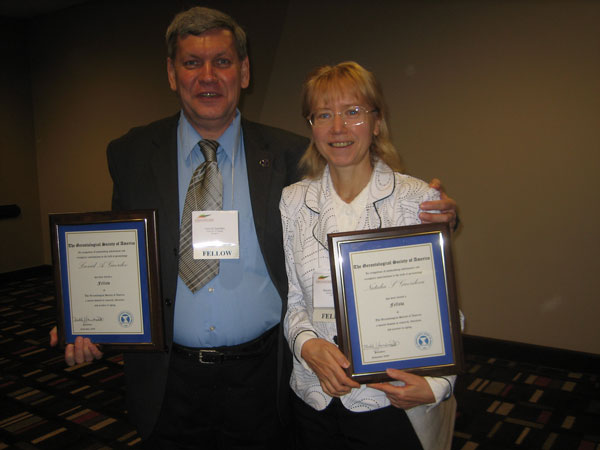
Also this year we are elected to become Fellows of the Gerontological Society of America:
-- GSA Fellowship for Leonid Gavrilov

-- GSA Fellowship for Natalia Gavrilova


If you are interested in our lectures and/or scientific cooperation, please contact us at:

gavrilov(at)longevity-science.org

Thank you, and Happy New Year!


Kind regards,
Leonid Gavrilov and Natalia Gavrilova


http://longevity-science.org/


P.S.: Please post your comments and suggestions below, by clicking here.


Fellowships of the Gerontological Society of America:
Season Greetings!

.

Labels: , , , , , , ,

Wednesday, December 16, 2009

New Interview on Aging and Longevity Studies

See also:
-- 'Books Forum' blog
-- 'Health Studies' blog


Greetings,

We are pleased to share with you our new interview given to a popular-scientific journal recently. It is planned to be published in January next year. Comments and suggestions are welcome!


1. You are a proponent of the virtually unlimited lifespan hypothesis, based on the engineering model of human damage-ability and repair-ability. What is the strongest evidence in support of this view? How soon can we expect implementation of therapies based on this paradigm?
Yes, we believe that there is no fixed upper limit to the duration of human life, and the evidence in support of this view is presented in our scientific book "The Biology of Life Span" ( http://tinyurl.com/3apdj9 ). Specifically, a section in this book entitled "Is there a species-specific life span limit?" (pages 125-132) presents data on human mortality at advanced ages, which are incompatible with the idea of absolute upper limit to human life span. Instead of anticipated catastrophic growth of death rates with age, as we approach to a hypothetical longevity "brick wall", the death rates actually grow slower than predicted (the phenomenon of the so-called "late-life mortality deceleration" and "late-life mortality leveling-off"). Thus the limits to human longevity are of probabilistic rather than deterministic nature.
As for the time schedule for implementation of anti-aging interventions, our position on this topic is published in the scientific magazine "Journal of Anti-Aging Medicine", 2002, 5(3): 255-263 ( http://longevity-science.org/Interview-JAAM.pdf ). In short, it looks like the rates of aging had already started to decline in developed countries after 1950s, presumably because of better control over chronic inflammation and micronutrient/vitamin deficiency, helping to decrease the rates of age-related degeneration. In other words, there is a significant plasticity of the aging process, allowing some positive interventions against it even today. Of course, we can expect implementation of much more efficient anti-aging therapies in the future, depending on the level of research funding in this area.

2. What is the current ideological picture of your field of study? We have seen lots of criticism aimed at views, like the one above, especially against A. de Grey's SENS. Is the tide turning?
Recently a new international research foundation has been established in Russia, named the ""Science for Life Extension" Foundation (http://www.scienceagainstaging.org/).
This foundation has developed a detailed research program named "Science against Aging"
( http://www.scienceagainstaging.org/Books/Program_ENG_06_2009_razv.pdf )

As for Dr. Aubrey de Grey, and his activities, he recently organized an international scientific SENS4 conference on anti-aging interventions in Cambridge, UK with hundreds of participants and reputable scientists. Detailed proceedings of this conference will be published in the scientific journal "Rejuvenation Research" early next year.

3. So, turning 100 depends on being a farmer and having at least four children. And city folks rarely live that long. What are the predictors for a long and healthy life today (bar cycling, of course :)? A few simple rules for longer life?
We have found that people born to younger mothers (younger than 25 years) have almost twice higher chances to live to 100 years, compared to later born siblings (brothers and sisters) born within the same family. This research finding is published in a peer-reviewed professional magazine "North American Actuarial Journal", 2007, 11(1): 49-67 ( http://longevity-science.org/Centenarians-NAAJ-2007.pdf ).

4. In reference to the above - haven't advances in medical care been outweighed by the proliferation of life-shortening factors (pollution, stress etc.)?
Yes, life expectancy can decrease in developed countries, as it was observed in Russia recently. Our study on this topic is published in peer-reviewed professional journal Population Research and Policy Review, 2008, 27: 551-574. ( http://longevity-science.org/pdf/Russia-PRPR-2008.pdf ).

5. Your research shows that in a few decades elderly people (60+) will become a massive 30 percent in Europe, Bulgaria being an especially extreme case. If your expectations that we can live 5000+ years prove true, the world may soon fill with centenarians (and later - with millenarians). What societal and economic changes can we expect in the short and the long run?
We do not expect that people will live 5000+ years any time soon. It should take at least 5000+ more years in order this to happen. Instead we anticipate incremental progress, when the onset of age-related diseases, disability and frailty is delayed through new anti-aging interventions. Our study on demographic consequences of defeating aging will be published in the scientific journal "Rejuvenation Research" early next year. When it happens, we will be able to provide more comments on this topic.

Meanwhile we would like to invite the readers to look for additional information at our scientific website 'Unraveling the Secrets of Human Longevity' (http://longevity-science.org/ ), and to participate in further discussions at our blog 'Longevity Science' (http://longevity-science.blogspot.com/ ).
-----------

Any comments and suggestions are welcome!

Please feel free to post your comments and suggestions below by clicking here.

Home:
Longevity Science Blog
and
New Interview on Aging and Longevity Studies
Shorter weblink:
http://tinyurl.com/yfv7jjm


.

Labels: , , , , , ,

Monday, November 30, 2009

News on Reliability Theory of Aging and Longevity

See also:
-- 'Books Forum' blog
-- 'Health Studies' blog


Greetings,

Here are some excerpts from the a new interview, which is just published by the scientific journal Rejuvenation Research:

Rejuvenation Research, 2009, 12(5): 371-374.
http://www.liebertonline.com/doi/abs/10.1089/rej.2009.0979
back-up copy:
http://health-studies.org/pdf/Interview-RR-2009.pdf

The excerpts are provided in their original, non-edited form, as they were initially presented before the publication.

Any comments and suggestions are welcome!

Please feel free to post your comments and suggestions below by clicking here.

-- Leonid Gavrilov

---------------------------------
-- Leonid Gavrilov, Ph.D. , GSA Fellow
Center on Aging, NORC/University of Chicago
Website: http://longevity-science.org/
Blog: http://longevity-science.blogspot.com/
Our books: http://longevity-science.org/Books.html

---------------------------------------------------

Excerpts from Interview

Question:

3. You have spearheaded the application of reliability theory to the modeling of aging and mortality. Reliability theory is designed to describe the behavior of man-made machines, which differ from living organisms in that they do not incorporate significant in-built self-repair machinery. To what extent do you feel that this difference diminishes the applicability of reliability theory to living organisms?


Answer:

Thank you for your kind comment on our 'spearheading' . Yes, we first started to apply reliability theory to the problem of biological aging more than 30 years ago, as early as in 1978 [1, 2], and since that time the reliability theory of aging and longevity has become well known in scientific literature [3 - 9]. To answer your question on applicability of reliability theory to living organisms, it is useful to consider separately two different topics: (1) applicability of reliability theory as a general concept; and (2) applicability of our particular mathematical models based on reliability theory.

Discussing the first topic, it is important to note that reliability theory is a general theory about systems failure. It allows researchers to predict the age-related failure kinetics for a system of given architecture (reliability structure) and given reliability of its components. Although historically it was initially applied to describe the behavior of man-made machines, nothing in this general mathematical theory prevents us from taking into account the in-built self-repair machinery, if this is needed. Therefore, there are no fundamental problems with applicability of reliability theory to living organisms, as there are no problems in applicability of mathematics in general to living organisms.

Discussing the second topic, it was our initial intent to find the most simple explanation for the major facts about aging and mortality (the very origin of aging, the Gompertz law of mortality, the compensation law of mortality, and the late-life mortality deceleration). We were interested in understanding the first principles and fundamental explanations of aging, before trying to create a comprehensive model, which takes into account all the complexities of living organisms. Therefore, in our models we were focused on accumulation of un-repaired damage as the final outcome of the damage-vs-repair process, leading to age-related decrease in systems redundancy (e.g. decrease in numbers of functional cells).

Now, when these intentionally simplified models with minimum number of assumptions gave us some general understanding of the nature of aging process and mortality laws, the way is opened to build upon them a more detailed and complex model of aging. This work is opened to everyone who can find a protected time to do it.

Another interesting feature of biological systems is that they are formed in evolution during a severe struggle for survival, and biological arms race with numerous infections and predators. Therefore they have many potentially harmful defense mechanisms, which may be useful for short-term survival in hostile wild environment, but not conductive for longevity in a protected environment (like the inflammation response).

So the analogy between living organisms and man-made machines is more appropriate for a man-made military machines, overloaded by weaponry and ammunition at the expense of their durability. Such machines could last much longer in protected environment if many dangerous fighting devices are removed from them.

The same is true for living organisms -- loss of some functions through introduced mutations or other interventions often leads to increased species longevity in a protected environment. Sometimes this observation is interpreted as a proof that aging is a programmed process, while in fact it simply means that organisms were selected by Nature for survival in the wild hostile environment, rather than for longevity in protected laboratory conditions.


References

1. Gavrilov, L.A. A mathematical model of the aging of animals. Proc. Acad. Sci. USSR [Doklady Akademii Nauk SSSR], 1978, 238(2): 490-492. English translation by Plenum Publ Corp: pp.53-55. PMID 624242

2. Gavrilov, L.A., Gavrilova, N.S., Yaguzhinsky, L.S. The main regularities of animal aging and death viewed in terms of reliability theory. J. General Biology [Zhurnal Obschey Biologii], 1978, 39(5): 734-742. PMID 716614

3. Gavrilov LA, Gavrilova NS. Reliability Theory of Aging and Longevity. In: Masoro E.J. & Austad S.N.. (eds.): Handbook of the Biology of Aging, Sixth Edition. Academic Press. San Diego, CA, USA, 2006, 3-42. ISBN 0-12-088387-2

4. Gavrilov LA, Gavrilova NS. Models of Systems Failure in Aging. In: P Michael Conn (Editor): Handbook of Models for Human Aging, Burlington, MA : Elsevier Academic Press, 2006. 45-68. ISBN 0-12-369391-8.

5. Gavrilov LA, Gavrilova NS. Why We Fall Apart. Engineering's Reliability Theory Explains Human Aging. IEEE Spectrum, 2004, 41(9): 30-35.

6. Gavrilov LA, Gavrilova NS. The Reliability-Engineering Approach to the Problem of Biological Aging. Annals of the New York Academy of Sciences, 2004, 1019: 509-512. PMID 15247076

7. Gavrilov L.A., Gavrilova N.S. The quest for a general theory of aging and longevity. Science's SAGE KE (Science of Aging Knowledge Environment) for 16 July 2003; Vol. 2003, No. 28, 1-10. http://sageke.sciencemag.org , PMID 12867663

8. Gavrilov L.A., Gavrilova N.S. The reliability theory of aging and longevity. Journal of Theoretical Biology, 2001, 213(4): 527-545. PMID 11742523

9. Gavrilov L.A., Gavrilova N.S (1991), The Biology of Life Span: A Quantitative Approach. New York: Harwood Academic Publisher, ISBN 3-7186-4983-7

----------------------------------------

Key words:
Reliability Theory of Aging and Longevity, Rejuvenation Research, Reliability Theory of Aging, Interview, Reliability Theory, , Leonid Gavrilov, Natalia Gavrilova, ageing, aging, gerontology, longevity, repair, mortality laws, the origin of aging, the Gompertz law of mortality, the compensation law of mortality, the late-life mortality deceleration


Home:
Longevity Science Blog
and
News on Reliability Theory of Aging and Longevity
Shorter weblink:
http://tinyurl.com/yh9tx5v


.

Labels: , , , , , , , , , , ,

Wednesday, November 25, 2009

New Interview on Aging and Longevity Studies

See also:
-- 'Books Forum' blog
-- 'Health Studies' blog


Greetings,

This is to invite you to comment here on new interview on aging and longevity studies, published recently by the 'Rejuvenation Research' journal:

Rejuvenation Research, 2009, 12(5): 371-374.
http://www.liebertonline.com/doi/abs/10.1089/rej.2009.0979
and:
http://health-studies.org/pdf/Interview-RR-2009.pdf

Any comments and suggestions are welcome!

Please feel free to post your comments and suggestions below by clicking here.

-- Leonid Gavrilov

---------------------------------
-- Leonid Gavrilov, Ph.D. , GSA Fellow
Center on Aging, NORC/University of Chicago
Website: http://longevity-science.org/
Blog: http://longevity-science.blogspot.com/
Our books: http://longevity-science.org/Books.html

P.S.:
Also, here are some excerpts from this published interview (original non-edited text):
1. How, in general, can demographers contribute to the effort to develop medical treatments to combat aging?

There are several ways how human population studies could be very useful for efforts to extend healthy life span.

First, there is an area of biodemography - a science, which integrates biological knowledge with demographic approaches in attempt to understand the dynamics of vital events in human populations, including mortality and longevity [1-4]. Looking back at the history of science we can see that such important health findings as the discovery of long-term harmful effects of smoking, hypertension, high cholesterol levels and hyperglycemia all came from statistical (epidemiological) studies on human populations. These significant findings from population studies served as a guide and justification for subsequent development of specific medical treatments and health policies already saving many human lives now.

Looking forward at the future of biodemographic studies, we anticipate 'unraveling the secrets of human longevity' -- the discovery of determinants for exceptional human survival, which allow some individuals to delay dramatically many diseases of aging, and to live a remarkably healthy long life (sometimes beyond 100 years). When we find out why some people are so resilient to aging, these findings could serve as a guide and justification for development of new medical treatments and health policies to combat aging. To make this happen we developed a new research project 'Biodemography of Exceptional Longevity', which was recently awarded a grant from the U.S. National Institute on Aging, NIA. Information about the progress of this research project is continually updated at our scientific website 'Unraveling the secrets of human longevity' ( http://longevity-science.org/ ), and it is opened for comments and public discussion at our blog 'Longevity Science' ( http://longevity-science.blogspot.com/ ). Some preliminary findings on this topic are already published [5-7].

Second, there is an area of traditional demography, which has tools to make demographic projections for different scenarios of life extension. This is an important issue, because a common objection against starting a large-scale biomedical war on aging is the fear of catastrophic population consequences (overpopulation). This fear is only exacerbated by the fact that no detailed demographic projections for radical life extension scenario were published so far. What would happen with population numbers if aging-related deaths are significantly postponed or even eliminated? Is it possible to have a sustainable population dynamics in a future hypothetical non-aging society? These are important questions, which could be answered through traditional demographic studies.

Recently we made a new study, which explores different demographic scenarios and population projections, in order to clarify what could be the demographic consequences of a successful biomedical war on aging. The results of this study supported by the Methuselah and SENS foundations were presented at the SENS4 conference in Cambridge, UK, this September, and are expected to be published [8]. In brief, we found that defeating aging, the joy of parenting and sustainable population size are not mutually exclusive. This is an important point, because it can change the current public perception that life-extension necessarily leads to overpopulation. Amazingly, when we were returning back to the USA from the SENS4 conference in England, the passport control officer asked us exactly the same question about overpopulation during the interview about the purpose of our international travel! This example indicates how deep is the penetration of overpopulation scare in the fabrics of modern society, and hence how important are the demographic studies on this topic.

References

1. Curtsinger JW, Gavrilova NS, Gavrilov LA. Biodemography of Aging and Age-Specific Mortality in Drosophila melanogaster. In: Masoro E.J. & Austad S.N.. (eds.): Handbook of the Biology of Aging, Sixth Edition. Academic Press. San Diego, CA, USA, 2006, 261-288.

2. Gavrilov L.A., Gavrilova N.S., Olshansky S.J., Carnes B.A. Genealogical data and biodemography of human longevity. Social Biology, 2002, 49(3-4): 160-173.

3. Gavrilov, L.A., Gavrilova, N.S. Biodemographic study of familial determinants of human longevity. Population: An English Selection, 2001, 13(1): 197-222.

4. Gavrilova, N.S., Gavrilov, L.A. Data resources for biodemographic studies on familial clustering of human longevity. Demographic Research [Online], 1999, vol.1(4): 1-48. Available: http://www.demographic-research.org/Volumes/Vol1/4/

5. Gavrilova N.S., Gavrilov L.A. Can exceptional longevity be predicted? Contingencies [Journal of the American Academy of Actuaries], 2008, July/August issue, pp. 82-88.

6. Gavrilova N.S., Gavrilov L.A. Physical and Socioeconomic Characteristics at Young Age as Predictors of Survival to 100: A Study of a New Historical Data Resource (U.S. WWI Draft Cards). Living to 100 and Beyond: Survival at Advanced Ages [online monograph]. The Society of Actuaries, 2008, 23 pages.

7. Gavrilova N.S., Gavrilov L.A. Search for Predictors of Exceptional Human Longevity: Using Computerized Genealogies and Internet Resources for Human Longevity Studies. North American Actuarial Journal, 2007, 11(1): 49-67.

8. Gavrilov L.A., Gavrilova N.S. Demographic Consequences of Defeating Aging. [Meeting Abstract]. Rejuvenation Research, 2009, 12( Suppl. 1): 29-30.
-------------------------------------

Key words:
Rejuvenation Research, Interview, Overpopulation, Reliability Theory, Predictors of Exceptional Longevity, Leonid Gavrilov, Natalia Gavrilova, ageing, aging, gerontology, longevity, centenarians, parental age


Home:
Longevity Science Blog
and
New Interview on Aging and Longevity Studies
Shorter weblink:
http://tinyurl.com/ydpnvhe


.

Labels: , , , , , , , , , , ,

Tuesday, April 28, 2009

Two Scientific Presentations on Longevity & Mortality in Detroit, May 1-2

See also:
-- 'Books Forum' blog
-- 'Health Studies' blog


Dear All,

I am pleased to invite you to our two scientific presentations that will take place in Detroit on May 1 and 2.

Both scientific presentations will take place in Detroit Marriott at the Renaissance Center, Detroit, Michigan 48243 USA (Phone: 1-313-568-8000)

First presentation:
Friday, May 01, 2:30 PM
Room: Mackinac West

Mortality Measurement at Advanced Ages
by Leonid A. Gavrilov and Natalia S. Gavrilova
at PAA Session 130: Methodological Issues in Health and Mortality

To see Power-Point Presentation of this lecture click here:

http://longevity-science.org/Mortality-PAA-2009.ppt

Second presentation:
Saturday, May 02, 11:30 AM
Room: Richard B

Midlife Predictors of Exceptional Longevity:
A Study of the U.S. WWI Draft Registration Cards

by Natalia S. Gavrilova and Leonid A. Gavrilov
at PAA Session 172: Early Life Conditions and Adult Health

To see Power-Point Presentation of this lecture click here:

http://longevity-science.org/Centenarians-PAA-2009.ppt

Looking forward to see you there!

Please feel free to post your comments and suggestions below by clicking here.

Key words:
Mortality Measurement, Advanced Ages, Predictors of Exceptional Longevity, Detroit, Scientific Presentations, PAA, Leonid Gavrilov, Natalia Gavrilova, ageing, aging, gerontology, longevity, centenarians


Home:
Longevity Science Blog
and
Two Scientific Presentations on Longevity & Mortality in Detroit, May 1-2
Shorter weblink:
http://tinyurl.com/cwr2lt


.

Labels: , , , , , , , , , , ,

Sunday, April 05, 2009

Call to Danish Colleagues

See also:
-- 'Books Forum' blog
-- 'Health Studies' blog


Greetings,

We will be in Denmark on May 26 - 29, and we would be delighted to meet Danish colleagues interested in aging and longevity studies.

If you are one of them, please contact us at:

gavrilov@longevity-science.org

This is our first trip to Denmark, but we have some prior experience of giving invited lectures in Canada, France, Australia, England, Germany, Japan, Italy, Belgium, Netherlands, Russia, Malaysia, and of course in the United States:

http://longevity-science.org/invited_talks.html

We would be glad to find some people in Denmark interested in aging and longevity studies for possible contacts.

We are invited to REVES meeting on 'Reducing Gaps in Health Expectancy' in Copenhagen, starting on May 26 and until May 29 (please see conference program attached below).

Looking forward to hear from you!

Kind regards,

-- Leonid Gavrilov, Ph.D.:
http://longevity-science.org/CV-gavrilov.htm

-- Natalia Gavrilova, Ph.D.:
http://longevity-science.org/CV-gavrilova.htm

--------------

The 21st REVES conference in Copenhagen 2009

Programme

26 May

Optional training session, 10.00‐15.00
Software for multistate calculations: Hands on SAS session for CI estimation; Bayesian method for HE calculation

Conference 27 - 29 May: Reducing gaps in health expectancy

Except for the concept and methods session (session 5), the presenters will be given 20 minutes each (including discussion).

27 May

8.00‐9.00 Registration
9.00‐9.15 Welcome remarks
9.15‐10.45 Session 1: Harmonization and International comparisons
Chair: Y Saito
- C Jagger, JM Robine, H Van Oyen and the EHLEIS team. A comparison of health expectancies in the EU25: results from the EHLEIS project.
- O Ekholm and H Brønnum‐Hansen. Cross‐national comparisons of non‐harmonized Healthy Life Years indicators may lead to more confusion than clarification.
- NK Rasmussen. Cross cultural comparability of questionnaire based data used for health expectancy calculations.
- M Smith and C White. An investigation into the impact of question change on estimates of general health status and healthy life expectancy in the United Kingdom.
10.45‐11.00 Break

11.00‐12.30 Session 2: Gender
Chair: DJH Deeg
- WJ Nusselder. Decomposition of gender differences in Healthy Life Years.
- H Van Oyen, B Cox, JM Robine and C Jagger for the EHEMU‐team. Patterns in gender gaps in the EU.
- L Frova, A Battisti and A Burgio. Are gaps in disability free life expectancies reducing in Italy?
- RS Goyal. Whether the poverty of women in childhood and adult ages affect their health disability status in later years?

12.30‐14.00 Lunch at Simplycooking, CSS

14.00‐15.45 Session 3: Methods – measures, models, simulations
Chair: MD Hayward
- A Andreotti, N Minicuci, P Kowal and S Chatterji. Multidimensional profiles of health status: An application of the grade of membership model to the World Health Survey.
- F Matthews and A van den Hout. The shape of life and healthy life expectancies.
- X Liu, CC Engel, H Kang and KL Gore. Reducing selection bias in analyzing longitudinal health data with high mortality rates.
- SD Grosse, VA Campbell and G Krahn. Disability or desirability‐adjusted life expectancies? How to interpret Health Adjusted Life Expectancies.
- L Cai. Health‐adjusted value of health care spending on the elderly in the United States, 1992‐2002.

15.45‐16.00 Break

16.00‐17.30 Session 4: Projections, forecasts and scenarios
Chair: H Brønnum‐Hansen
- D Banham. Targeting health expectancy gaps in South Australia.
- M Lagergren, M Thorslund and M Parker. Revised projections of the development of LTC costs in Sweden 2005‐ 2040.
- R Matthews, C Jagger and MRC CFAS. Trends in disease and how they will impact on disability in the older population.
- KJ Anstey and the DYNOPTA collaborators. Pooling longitudinal studies of ageing for epidemiological analysis and to model health futures: the DYNOPTA project.

19.0 Conference dinner at “Spiseloppen”, Christiania (Bådsmandsstræde 43, 2.th. 1407, København K)

28 May
9.00‐11.30 Session 5: Basic concepts and methods
Chair: JM Robine
- K Avlund. How to measure disability, the disablement process and early signs of disability
- C Mathers. The disability process and WHO classification systems, past and future
- Discussion
- Break
- F Matthews. Estimation and statistically considerations
- Y Saito. Software overview

11.30‐14.30 Lunch at Statens Museum for Kunst, National Art Gallery (Sølvgade 48‐50, 1307, København K)
14.30‐15.30 George Myers lecture by James W Vaupel
15.30‐15.45 Break

15.45‐17.15 Session 6: Oldest old and healthy aging
Chair: B Jeune

- LA Gavrilov and NS Gavrilova. Physical characteristics at the midlife and survival to age 100: A study of American men.

- H Engberg, A Oksuzyan, B Jeune, JW Vaupel and K Christensen. Healthy aging in Danish centenarians – a 29 year follow‐up of hospitalizations among 40,000 Danes in the 1905 birth cohort.
- T Sarkeala, M Vuorisalmi, A Hervonen and M Jylhä. Functional status among Finnish nonagenarians in 1996‐2007: Vitality 90+ Study, Tampere.
- VM Shkolnikov, EM Andreev, P Demakakos, A Oksuzyan, K Christensen, MA Shkolnikova and JW Vaupel. Patterns of grip strength in Moscow as compared to Denmark and England.

17.15‐17.30 Break

17.30‐18.30 Session 7: Trends I
Chair: F Matthews
- JW Bruggink. Health expectancies in the Netherlands since 1981.
- CH Van Gool, HSJ Picavet, DJH Deeg, MMY de Klerk, WJ Nusselder, MPJ van Boxtel A Wong and N Hoeymans. Trends in late‐life activity limitations: The Dutch population between 1990 and 2007.
- SL Reynolds and EM Crimmins. Trends in the ability to work among the older US working population, 1997‐2007.

29 May


9.00‐10.45 Session 8: Social, ethnic and other differences
Chair: SL Reynolds
- DC Brown, MD Hayward, JK Montez, MM Hidajat and RA Hummer. The significance of education for rectangularization of the survival curve in the United States.
- R Wilkins. The Canadian census mortality follow‐up study: a new resource for the study of socioeconomic disparities health expectancies.
- K Knoops, JW Bruggink and M van den Brakel. Healthy life expectancy and socio‐economical status in the Netherlands.
- A Burlison. Healthy life expectancy in Scotland.
- Z Zimmer, M Wen and T Kaneda. A multi‐level analysis of urban versus rural differences in functional status transition among older Chinese.

10.45‐11.00 Break

11.00‐12.45 Session 9: Risk factors and chronic diseases
Chair: WJ Nusselder
- L Bonneux, M Reuser and F Willekens. Disability trajectories and life style. A longer life in good health is closed by a longer period in more severe disability.
- B Klijs. Contribution of chronic diseases to the burden of disability in the Netherlands.
- R Ham‐Chande. Demographic structures and aging at the MX‐US border: Social and economic effects on health expectancies and care.
- EM León Diaz and M Gómez. Perception of health of older adults, Havana Cuba. Socio‐demographic and health determinants associated by sex.
- N Brouard, M Espagnacq, JF Ravaud and the Tetrafigap group. Life expectancy of tetraplegic spinal cord injured individuals in France: a ten years follow‐up.

12.45‐14.00 Lunch at Simplycooking, CSS

14.00‐15.00 Session 10: Trends II
Chair: R Wilkins
- LH Chen. Disability‐free life expectancy trends in Taiwan: Compression, expansion or dynamic equilibrium.
- SLK Cheung and SFP Yip. Are we heading to the compression of disability? The case of Hong Kong SAR, 1984‐2008.
- I Pool, W Boddington, J Cheung and R Didham. Differential trends in mortality compression: Assessing the antecedents to gaps in health expectancy in New Zealand.


15.00‐15.30 Closing ceremonies

---------------

Key words:
Denmark, Invited Lectures, REVES, Leonid Gavrilov, Natalia Gavrilova, ageing, aging, geriatrics, gerontology, longevity, centenarians


Home:
Longevity Science Blog
and
Longevity Science: Call to Danish Colleagues
Shorter weblink:
http://tinyurl.com/cqlnp6


.

Labels: , , , , , , , , , ,